
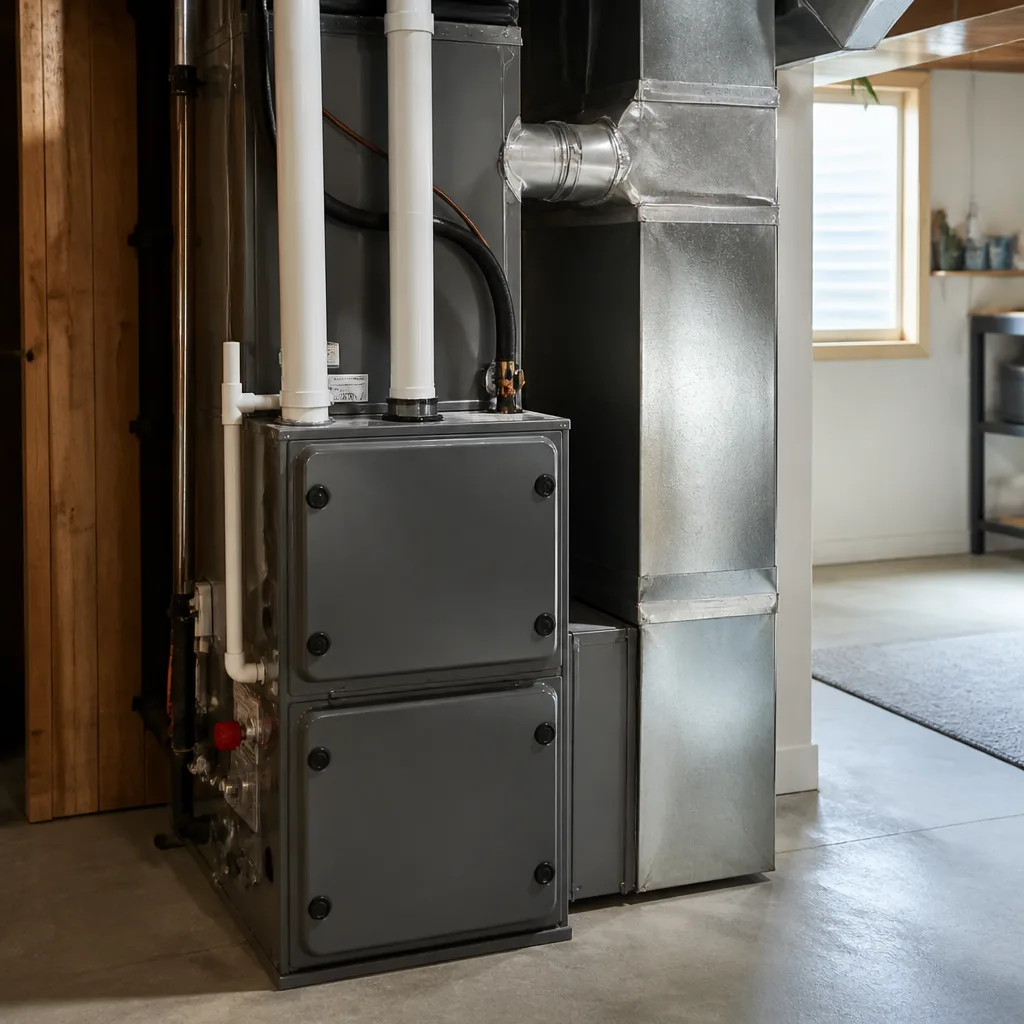
 Furnace & heating
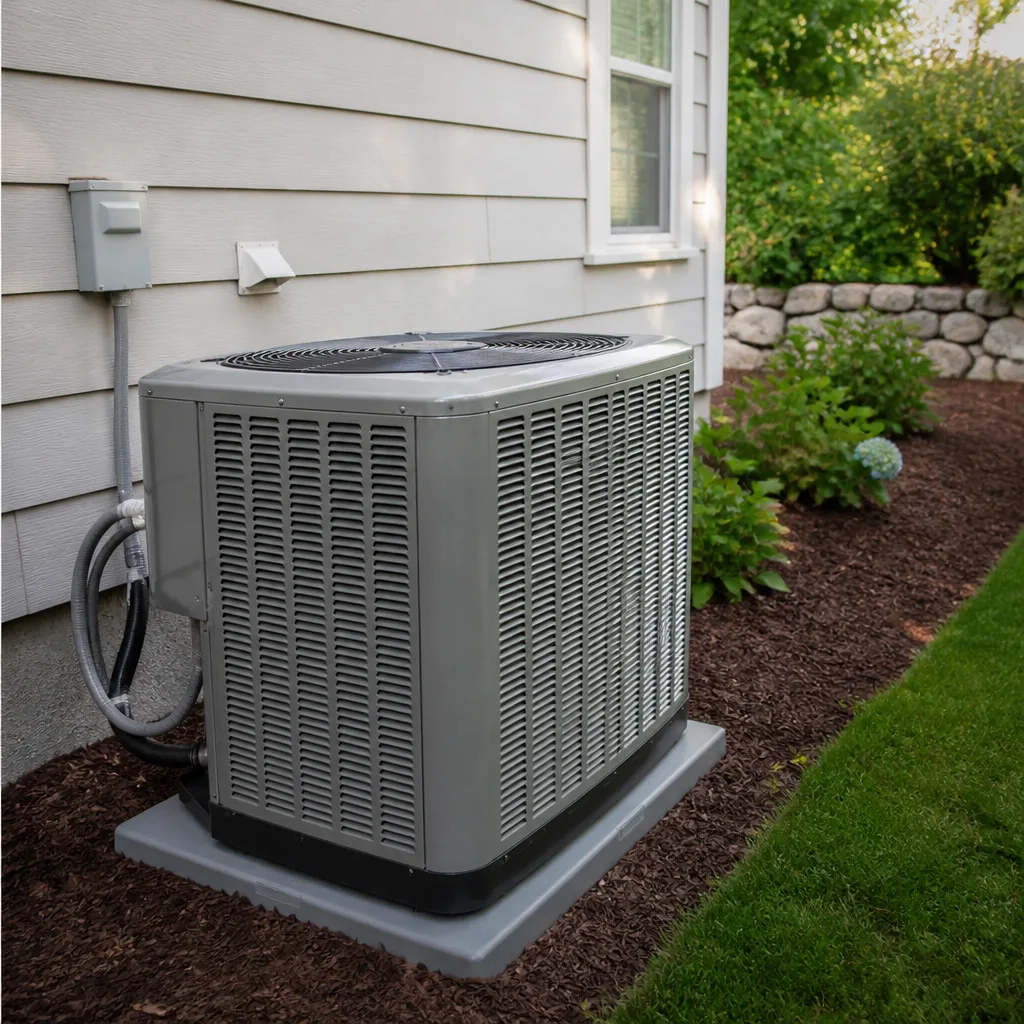 AC repair
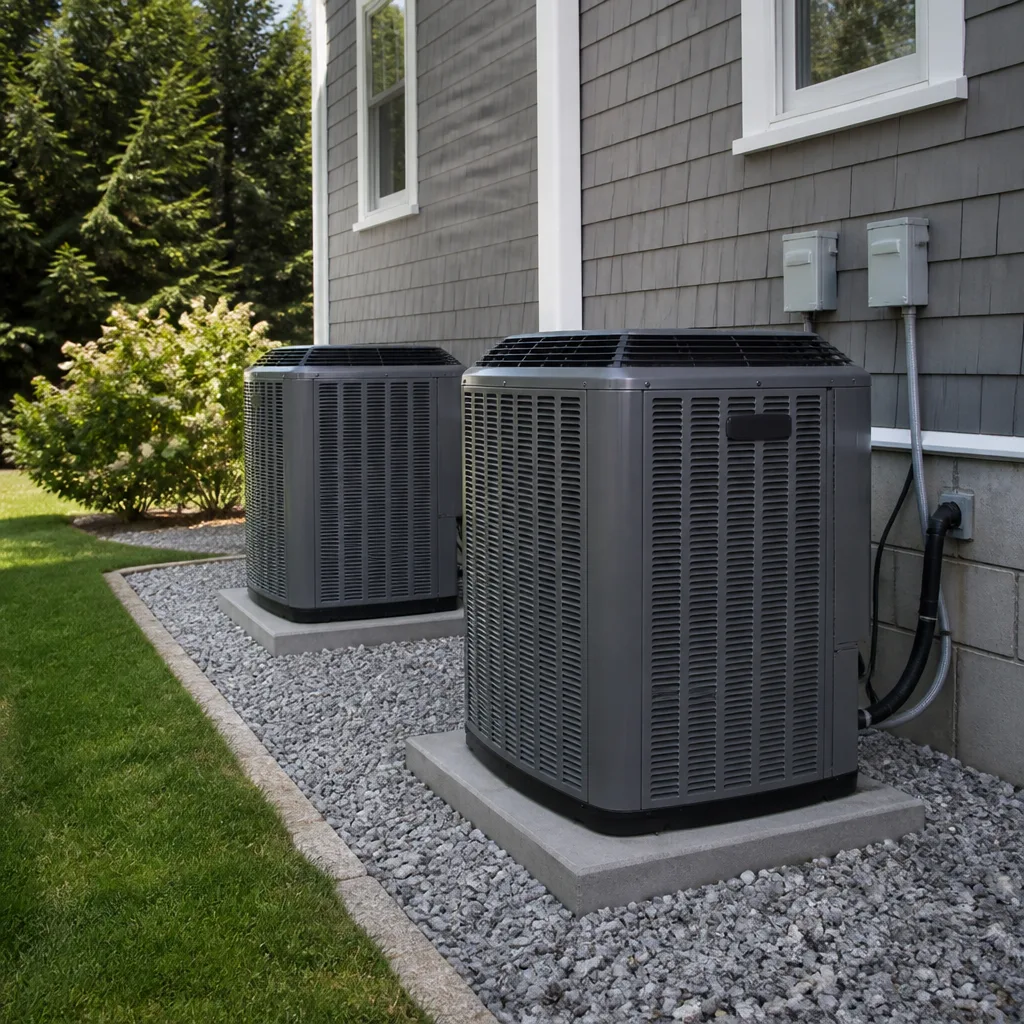 Heat pumps
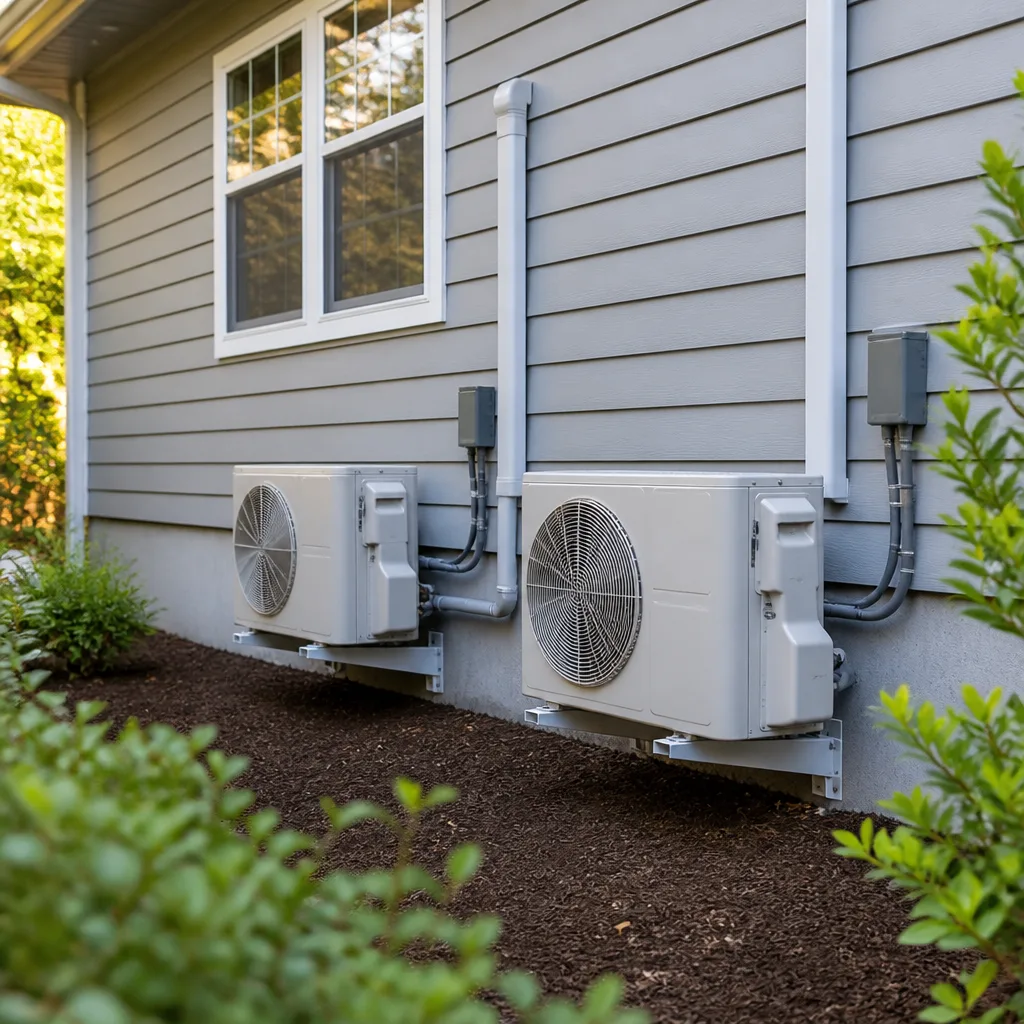 Ductless mini splits
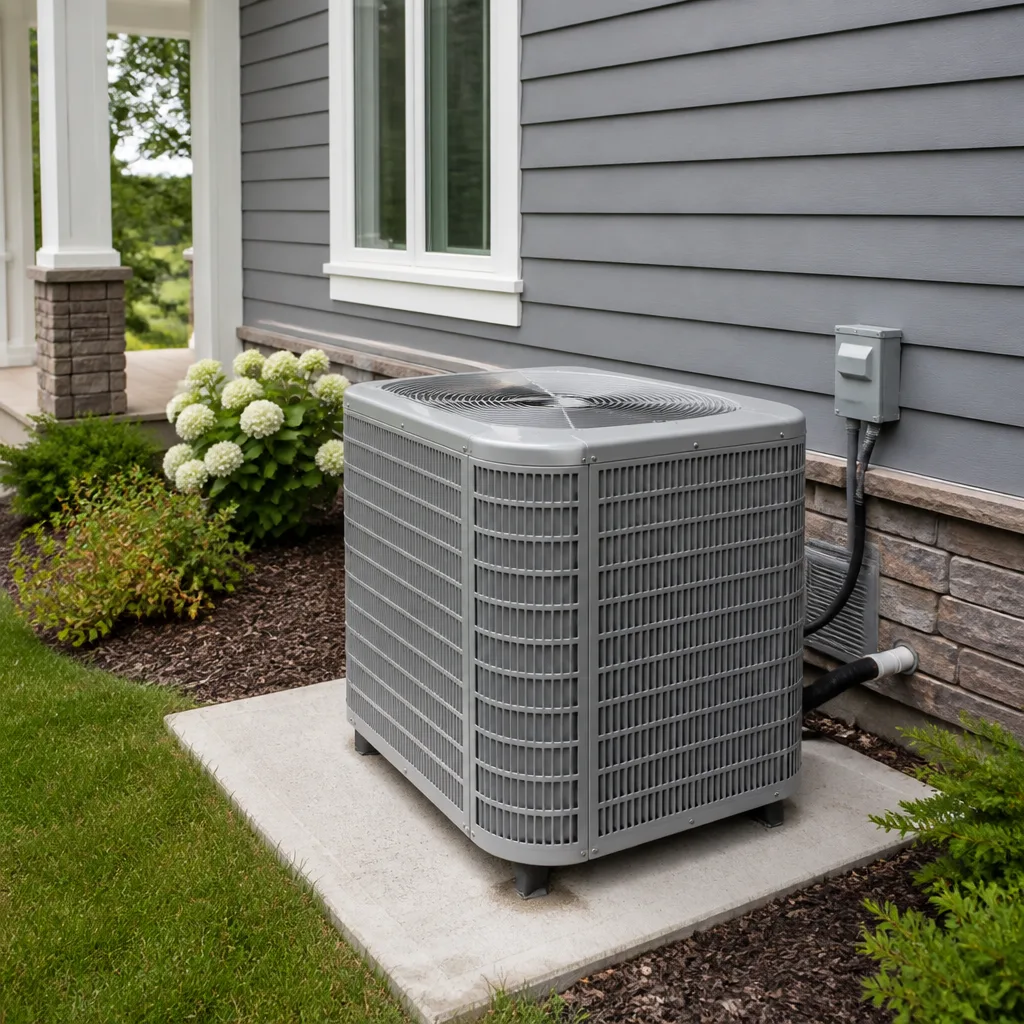 Carrier
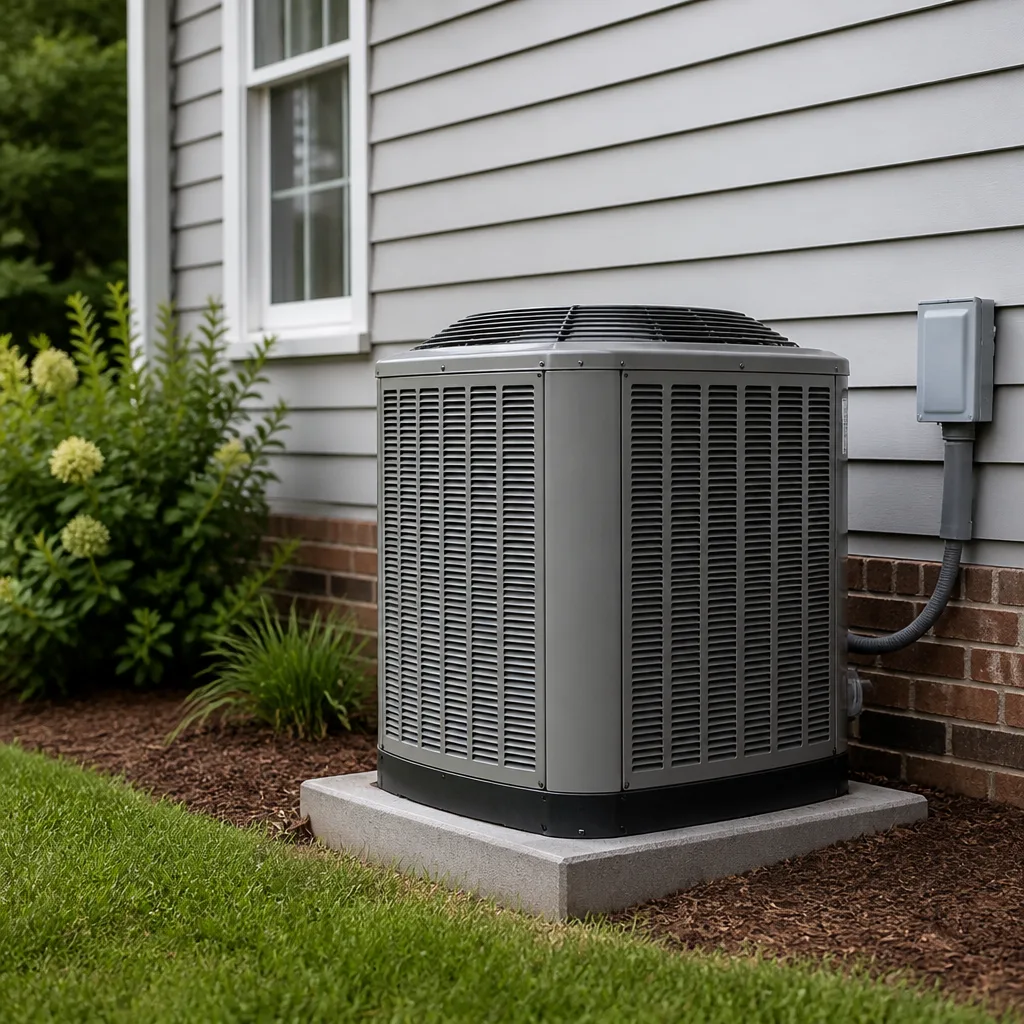 Trane
Trane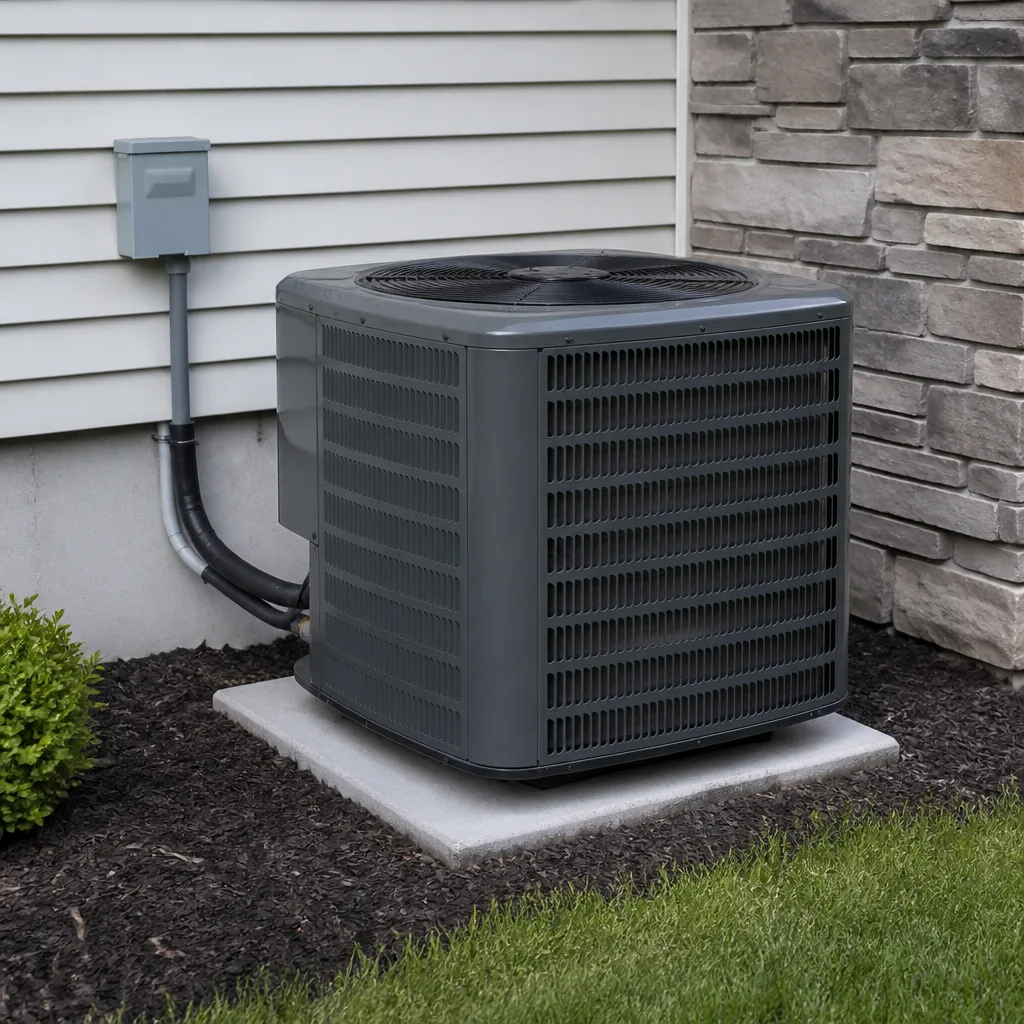 Goodman
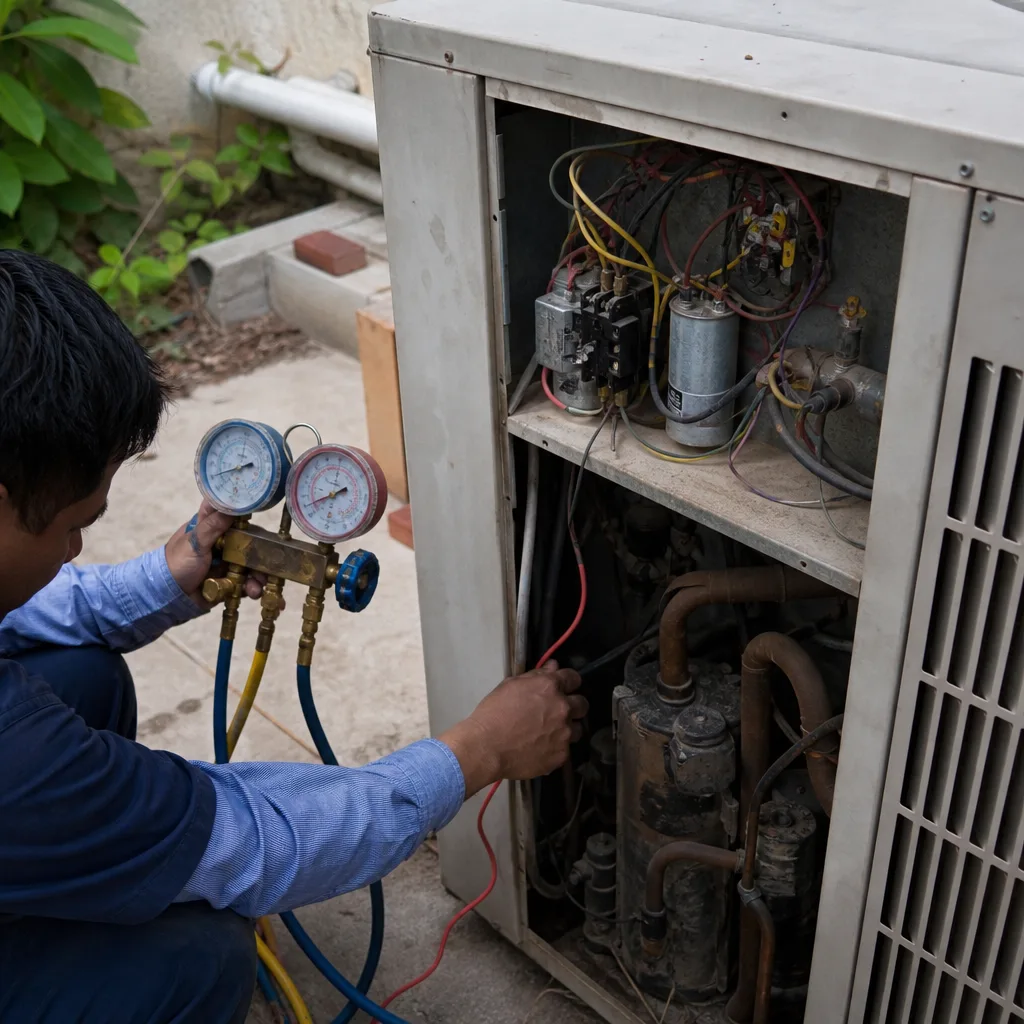
Seasonal tune-up and full diagnostic on your Carrier, Trane, or Goodman system - readings shown to you before any repair is proposed
Diagnosis first, numbers second - you approve the repair price before a single part goes in.
Get your free estimateTrane Capacitor Replacement: The San Diego Owner’s Guide
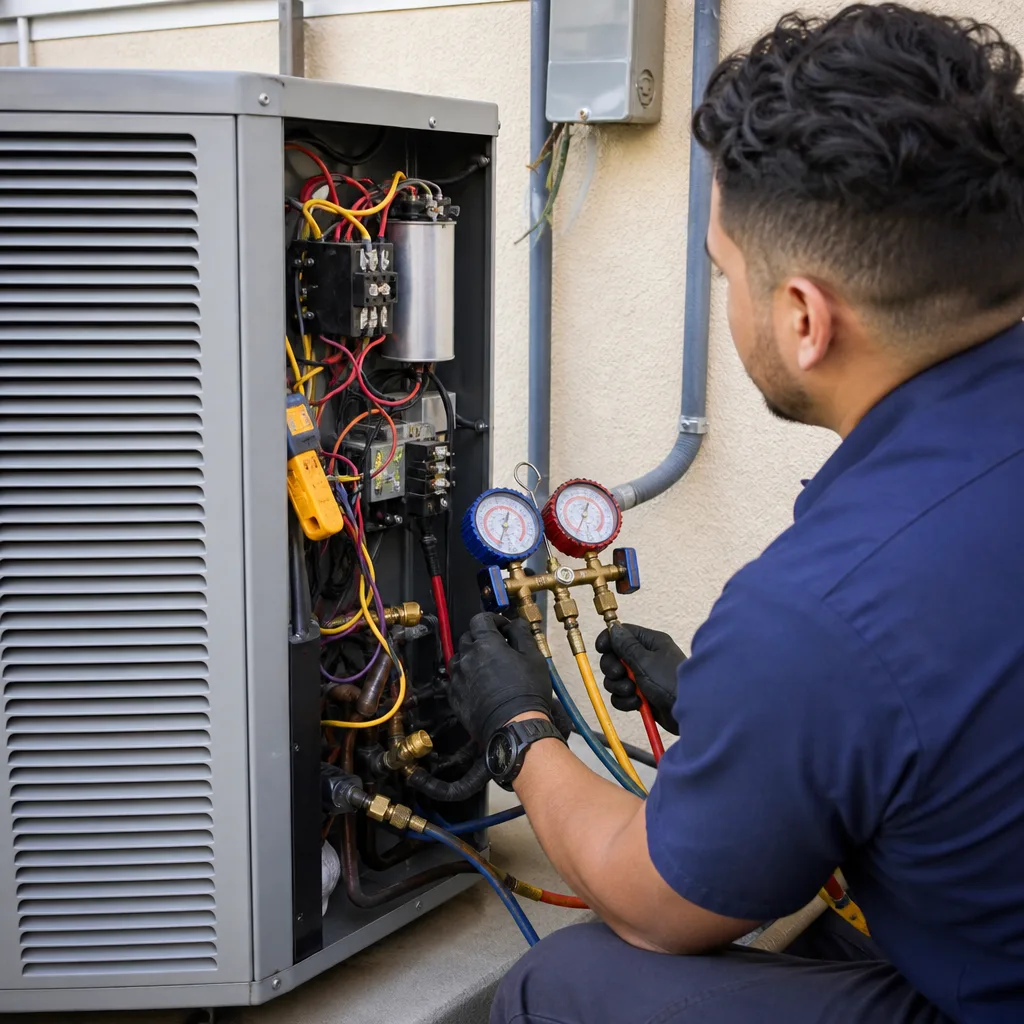
A Trane capacitor replacement in San Diego typically runs $175 – $285 installed, parts and labor included, and most swaps take under an hour once our technician is at your unit. We carry Trane-compatible dual-run and start capacitors on the truck, so in the majority of cases we can complete the repair the same day you call. The way most San Diego homeowners discover a failed capacitor is simple: the outdoor condenser hums but the fan won’t spin, or the compressor tries to start and then clicks off a few seconds later. You might also notice warm air blowing from your vents on a day when the thermostat is calling for cooling. It’s a small part, usually a silver or grey cylinder about the size of a soda can, but when it quits, the whole system goes down with it.
Key Takeaways:
- Installed replacement cost in San Diego: $175 – $285 for a typical Trane dual-run capacitor
- Same-day service available in most neighborhoods, including Clairemont Mesa, La Jolla, Chula Vista, and El Cajon
- Every capacitor replacement is covered by our 365-Day Done Right Promise, in writing
- Capacitors fail more often in coastal San Diego than inland due to salt air and humidity exposure
Which Trane Models This Applies To
This guide covers capacitor replacement for the Trane residential lineup most common in San Diego homes: the XR series (XR13, XR14, XR15, XR16), the XL series (XL14i, XL15i, XL16i, XL18i, XL20i), and the newer RunTru and Ameristar lines that Trane produces for the value market. If you have a Trane packaged unit on a rooftop in Normal Heights or a split system in Scripps Ranch, the capacitor is doing the same job either way: storing and releasing the electrical jolt needed to start the compressor and fan motor. The Trane-specific detail that matters is the microfarad (µF) rating, which is printed right on the side of the old capacitor. Trane dual-run capacitors commonly range from 35/5 µF up to 80/10 µF depending on tonnage and compressor type. A 3-ton XR14 condenser, for example, typically uses a 45/5 µF dual-run capacitor, while a 5-ton XL16i might call for a 70/10 µF. Never swap in a capacitor with a different µF rating just because it physically fits. The wrong rating can overheat the compressor windings and turn a $225 repair into a $4,000 compressor replacement. For Trane specifically, we recommend OEM or OEM-equivalent capacitors from brands like AmRad, Packard, and Titan HD. These hold their rated capacitance longer in San Diego’s coastal humidity than bargain-bin generics. One compatibility gotcha we see regularly: Trane’s newer variable-speed and two-stage condensers sometimes use a start capacitor plus a run capacitor as separate components, not a single dual-run can. If your Trane has a start-assist kit, a standard dual-run swap won’t fix the no-start condition. Our technicians verify the capacitor type and rating at the unit before quoting anything.
Cold Harbour Heating and Air San Diego is an independent service provider. We’re not affiliated with Trane, but we have worked on Trane equipment across San Diego County for years and stock the capacitor ratings those units actually use.
Styles & brands we work with
Signs Your Trane Capacitor Replacement Is Failing
- The condenser hums but the fan won’t turn. This is the most common failure mode in San Diego. The capacitor has lost enough of its stored charge to start the fan motor, so the motor just sits there and vibrates, often with a low electrical hum. If you hear that hum, shut the system off at the breaker and call us. Running a stalled motor for even a few minutes can cook the windings.
- The compressor short-cycles on and off every 30 to 60 seconds. A weak capacitor can’t hold the electrical phase shift needed to keep the compressor running, so the compressor starts, trips its thermal overload, cools down, and tries again. Short-cycling is hard on a compressor and shortens its life.
- You need to give the fan a push with a stick to get it spinning. On older Trane condensers with a weak cap, the fan sometimes starts once manually spun. This is a clear sign the capacitor is failing, and it’s also a safety risk. Don’t do this. The fan blades can catch a hand or a tool the moment the motor torques up.
- The top of the capacitor itself looks swollen or domed. Trane capacitors are sealed cylinders. Heat and age break down the internal dielectric fluid, which creates pressure. When the top of the can looks puffed out or the sides bulge, the cap is done. If it bursts, you’ll smell a sharp, chemical odor near the condenser.
- You see oily residue around the capacitor’s terminal end or a burn mark near the wires. A slow electrical failure can leak electrolyte or arc at the terminals. Spade connectors that look scorched or melted mean the capacitor has been running hot and arcing. This is another reason to let a trained technician handle the swap. The stored charge in even a failing capacitor can give you a serious shock.
See the difference
 Before
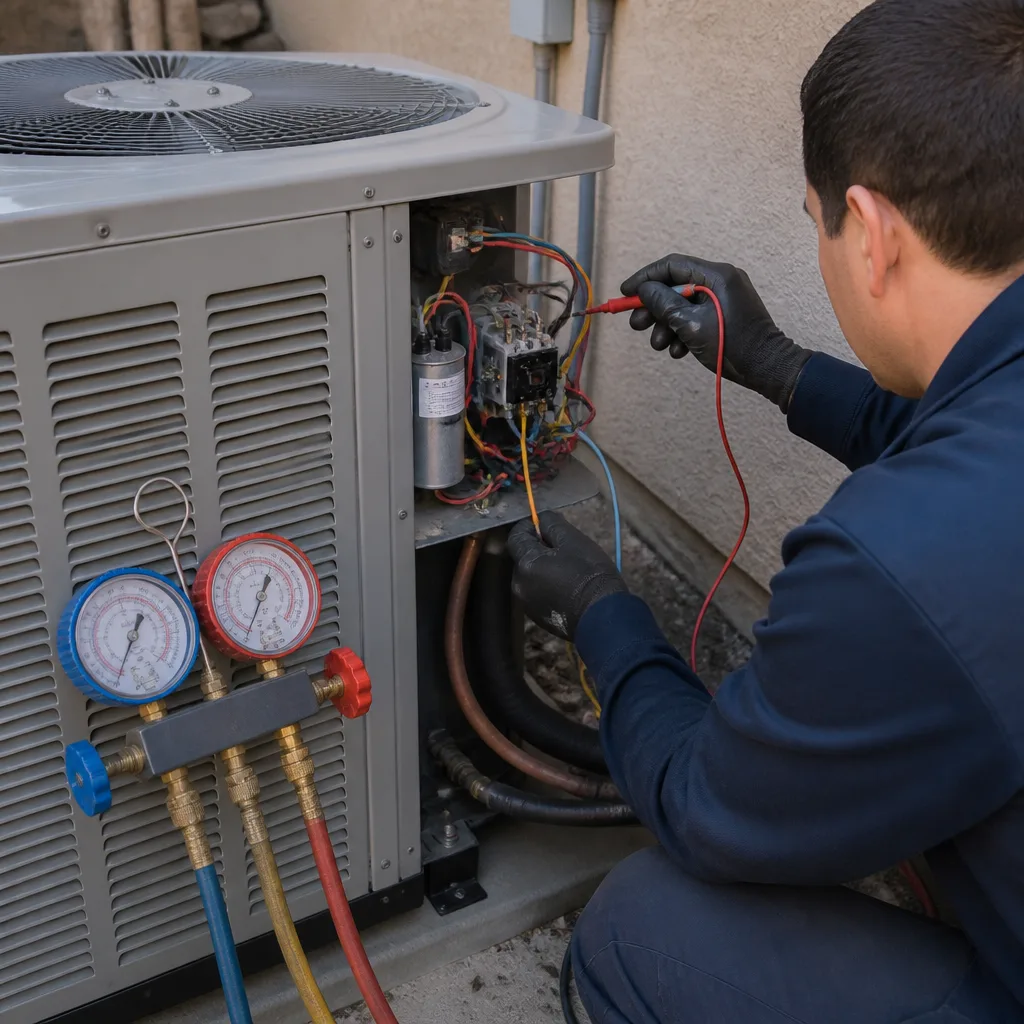 After
After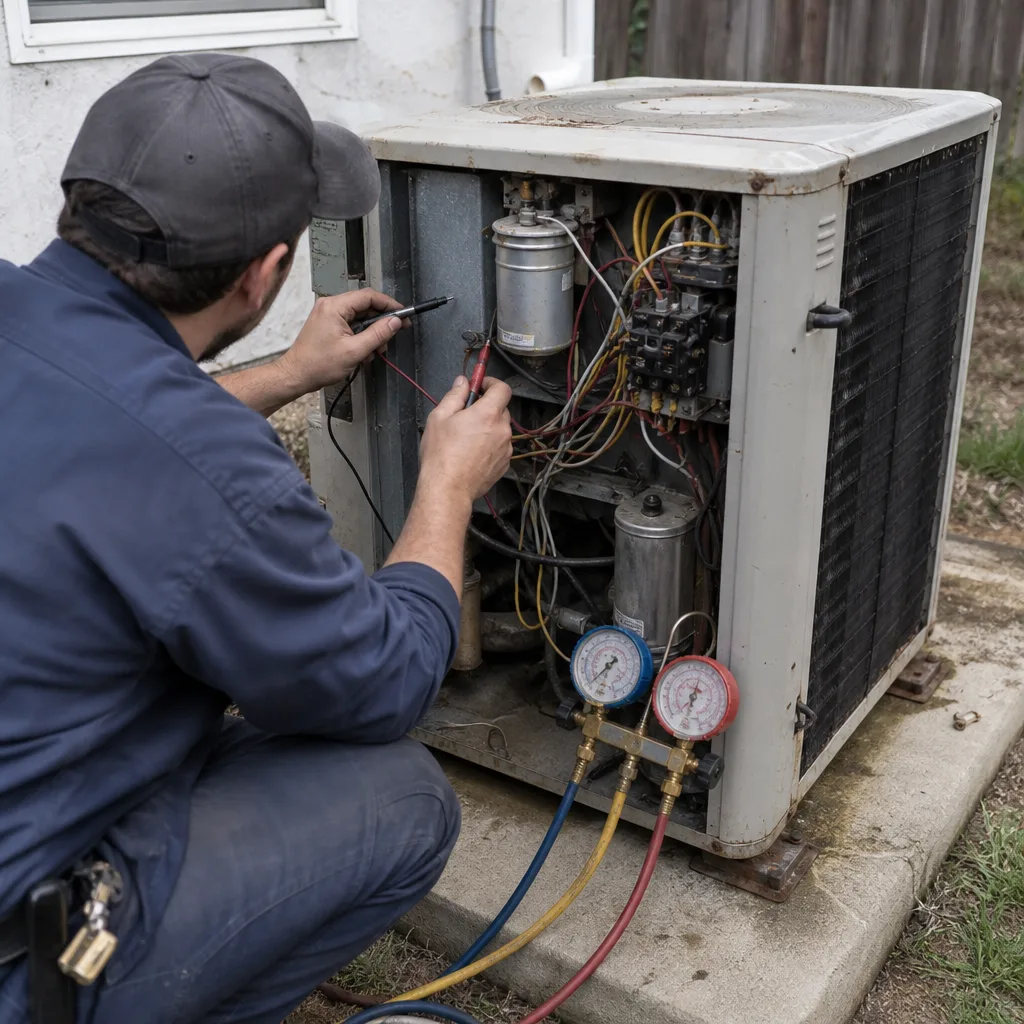 Before
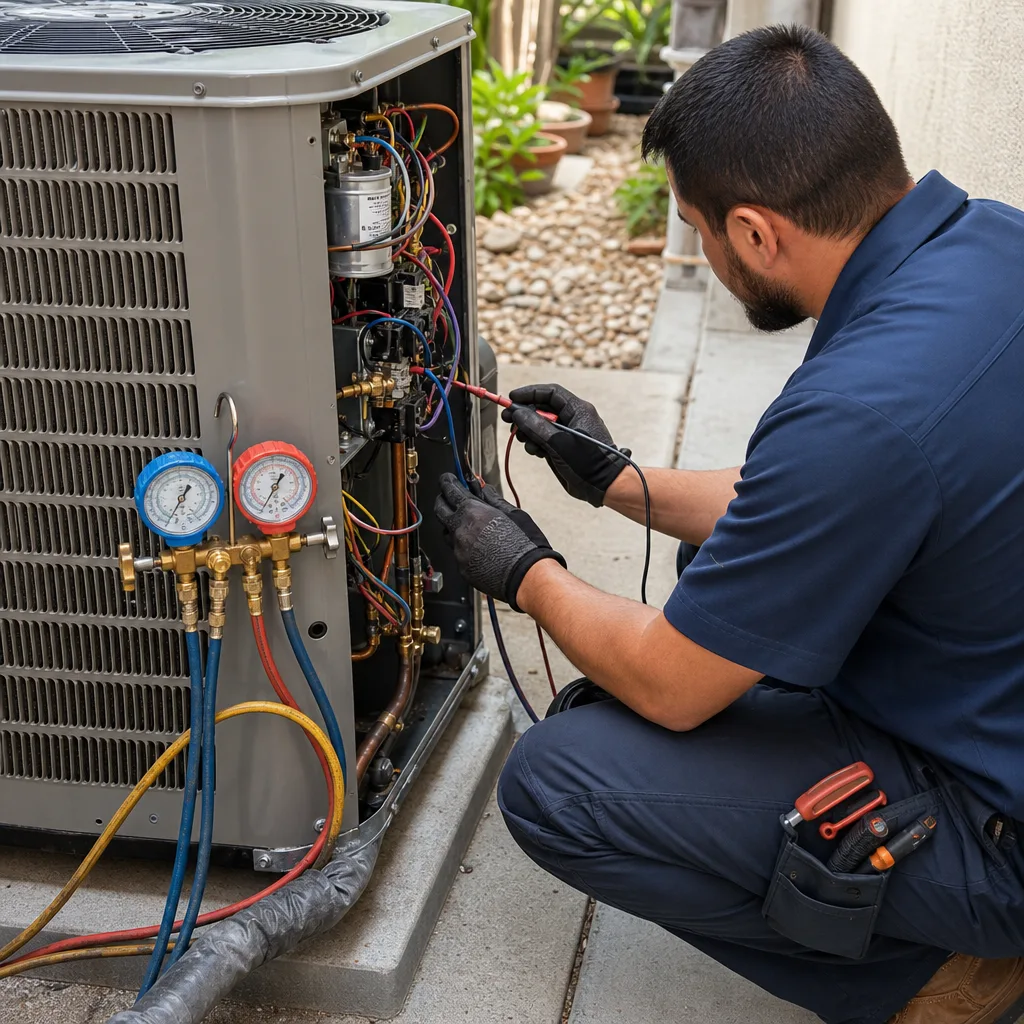 After
After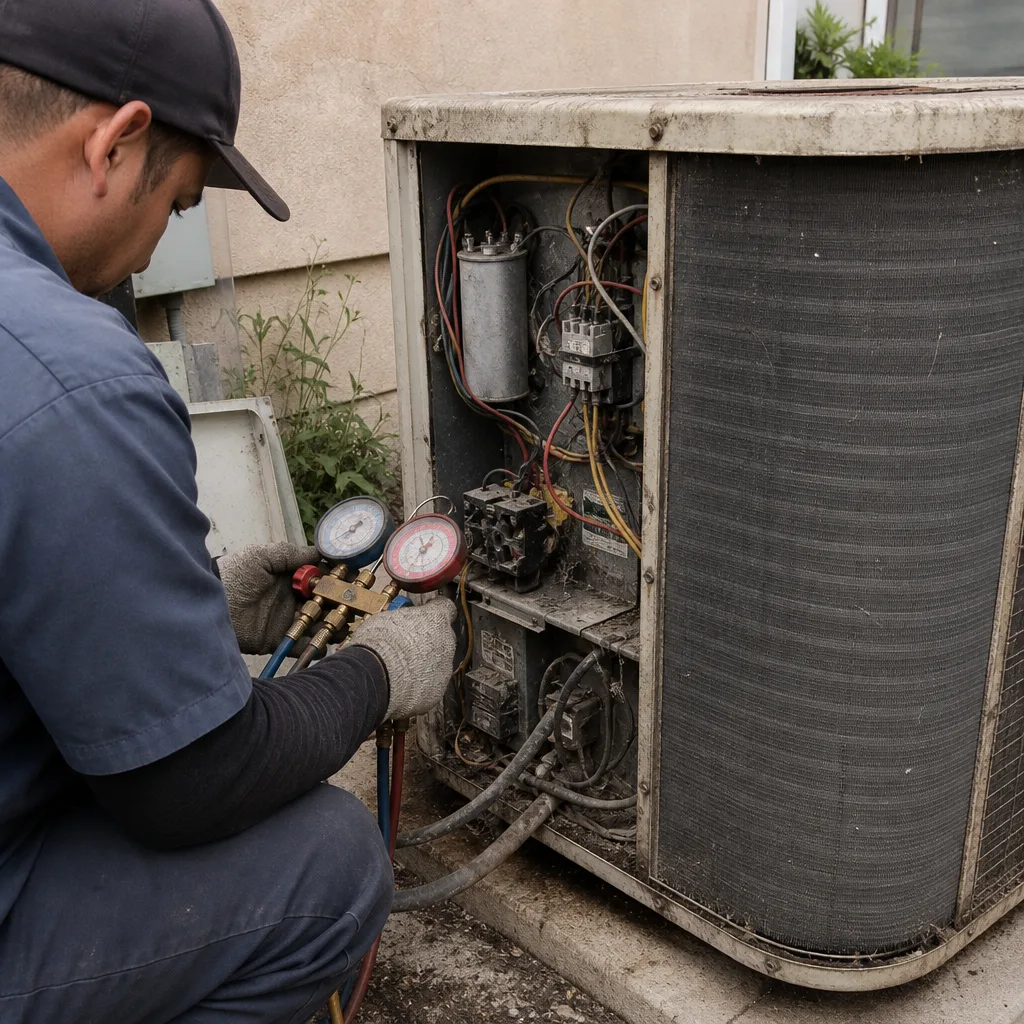 Before
 After
AfterReplacement Cost & What’s Included
A Trane capacitor replacement in San Diego runs between $175 and $285 for most residential systems. The part itself is usually $25 to $70 depending on the µF rating, whether it’s a single-run or dual-run, and whether it’s a standard or heavy-duty capacitor. The rest of the price is labor, which includes the diagnosis, the actual swap, a full start-up test, and a check of the contactor and wiring while we’re in there. Several things move the price in San Diego: a rooftop unit in a walk-up building in Mission Hills costs more to service than a ground-level condenser in Rancho Bernardo; a two-capacitor setup (separate start and run caps) costs more than a single dual-run; and a capacitor inside a difficult-to-access condenser cabinet adds labor time. You’ll always get a written price before any work begins, and that price doesn’t change at the door. Every capacitor we install is covered by our 365-Day Done Right Promise. If the replacement capacitor fails inside a year, we come back and put in another one at no charge. That guarantee is on paper, not spoken.
Our capacitor replacements also fall within the broader AC repair pricing we quote across San Diego: $175 – $765 depending on the diagnosis. A straight capacitor swap is almost always on the lower end of that range.
DIY or Call Us?
The honest split goes like this: you can safely check your thermostat setting, confirm the breaker is on, and visually inspect the condenser for the swollen-top capacitor symptom we described above. You cannot safely check or replace a capacitor yourself. A capacitor holds a lethal electrical charge even after the unit is unplugged and the breaker is off. If it discharges through you, it can stop your heart. That’s not scare phrasing. It’s the actual reason HVAC technicians use insulated discharge tools and test for stored voltage before touching the terminals. The other reason to call us instead of ordering a capacitor online: the wrong µF rating, the wrong terminal layout, or a cheap generic cap that can’t handle San Diego’s salt air and heat will fail early and may damage your compressor. A compressor replacement on a Trane unit in San Diego runs into the thousands. The capacitor swap is $175 – $285. This is the one place where the cheap fix is the right fix, as long as the right person does it. Call (619) 793-3598. We’ll tell you over the phone whether your symptoms point to a capacitor, and we’ll give you a firm arrival window before we come out.
FAQs
A Trane capacitor in San Diego typically lasts five to ten years, with coastal units in Coronado, Point Loma, and Ocean Beach often failing on the shorter end because salt humidity accelerates internal corrosion. Inland units in El Cajon or Santee lean toward the longer end unless they’re in direct afternoon sun. If your system runs hard during a San Diego heat wave, thermal stress shortens the life further. When a capacitor fails, the fix is straightforward. Call (619) 793-3598 for a quote.
No. Trane capacitors are sealed, non-serviceable components. Once the internal dielectric degrades or the can swells, there is no repair path. Replacement is the only correct fix. The good news is that a replacement capacitor is inexpensive and the labor is quick, especially compared to the compressor damage a failing cap can cause if ignored.
A straight Trane capacitor swap usually takes 30 to 60 minutes once our technician is at the unit. That includes discharging the old capacitor safely, confirming the µF rating matches the unit’s spec, installing the new part, and running the system through a start-up test. If we find additional issues during the start-up check, we’ll show you what we found and give you a written price before doing anything else.
Yes. Our San Diego service vehicles carry the most common Trane dual-run and start capacitor ratings, from 35/5 µF up to 80/10 µF, along with OEM-equivalent brands like AmRad and Titan HD. In the rare case your Trane needs a rating we don’t have on the truck, we can typically source it from a San Diego supply house the same day. We also stock capacitors for Carrier and Lennox systems for homes with mixed-brand equipment.
Written by Victor Mancini, Owner & Lead HVAC Technician, Cold Harbour Heating and Air San Diego at Cold Harbour Heating and Air San Diego, serving San Diego and nearby areas.