
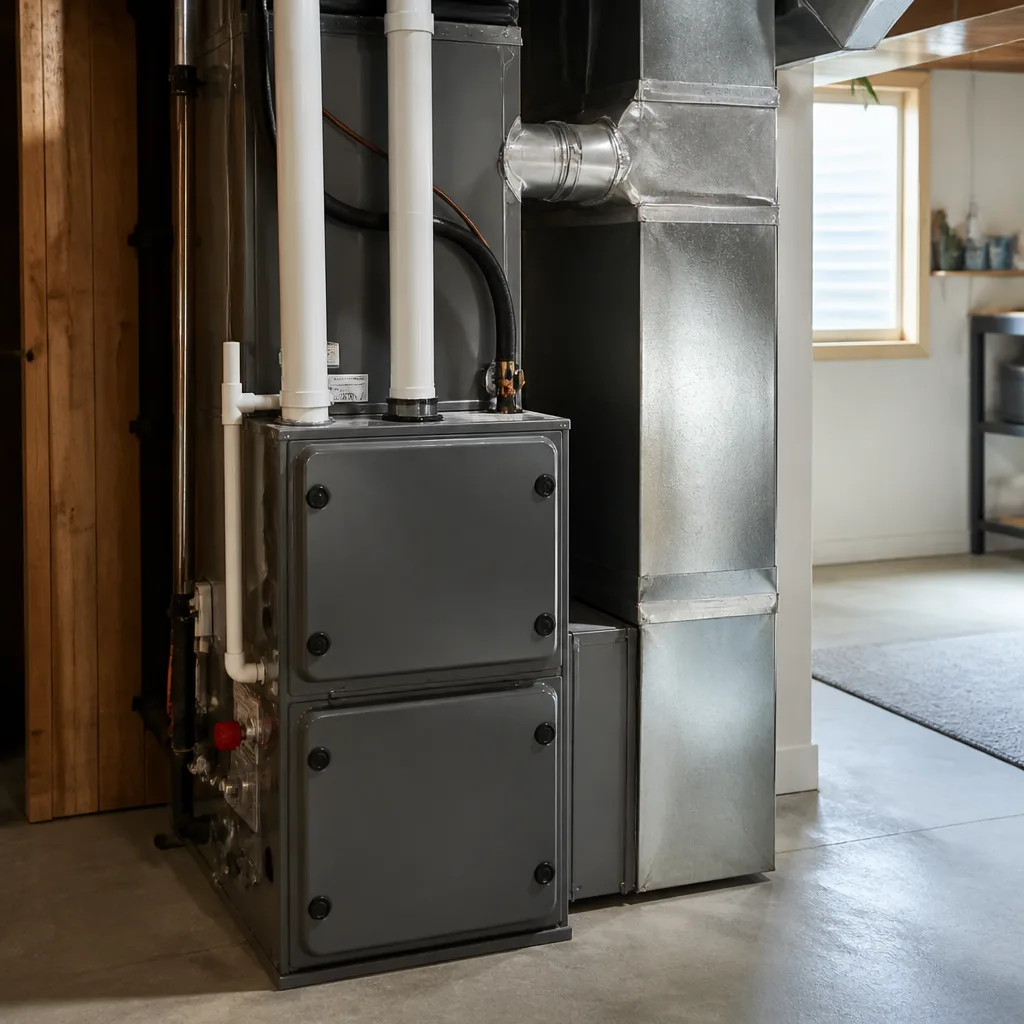
 Furnace & heating
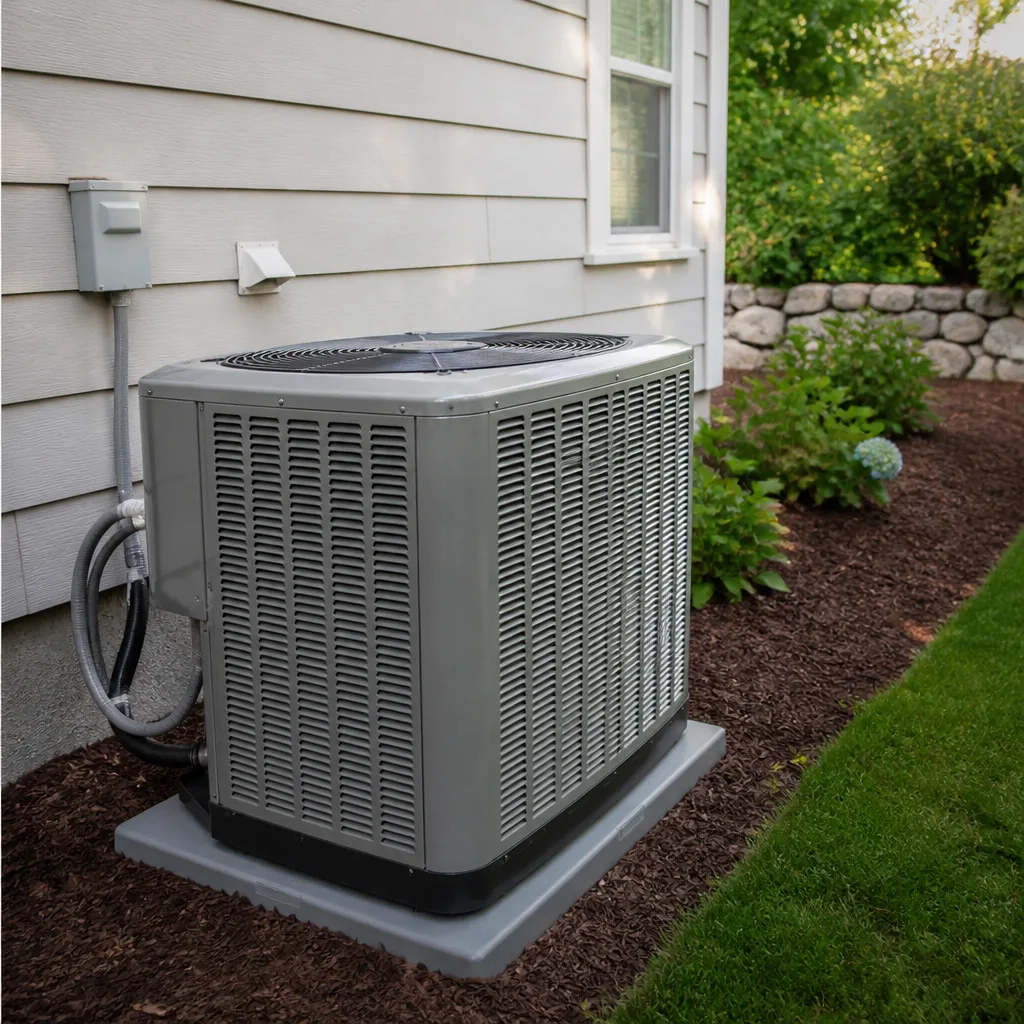 AC repair
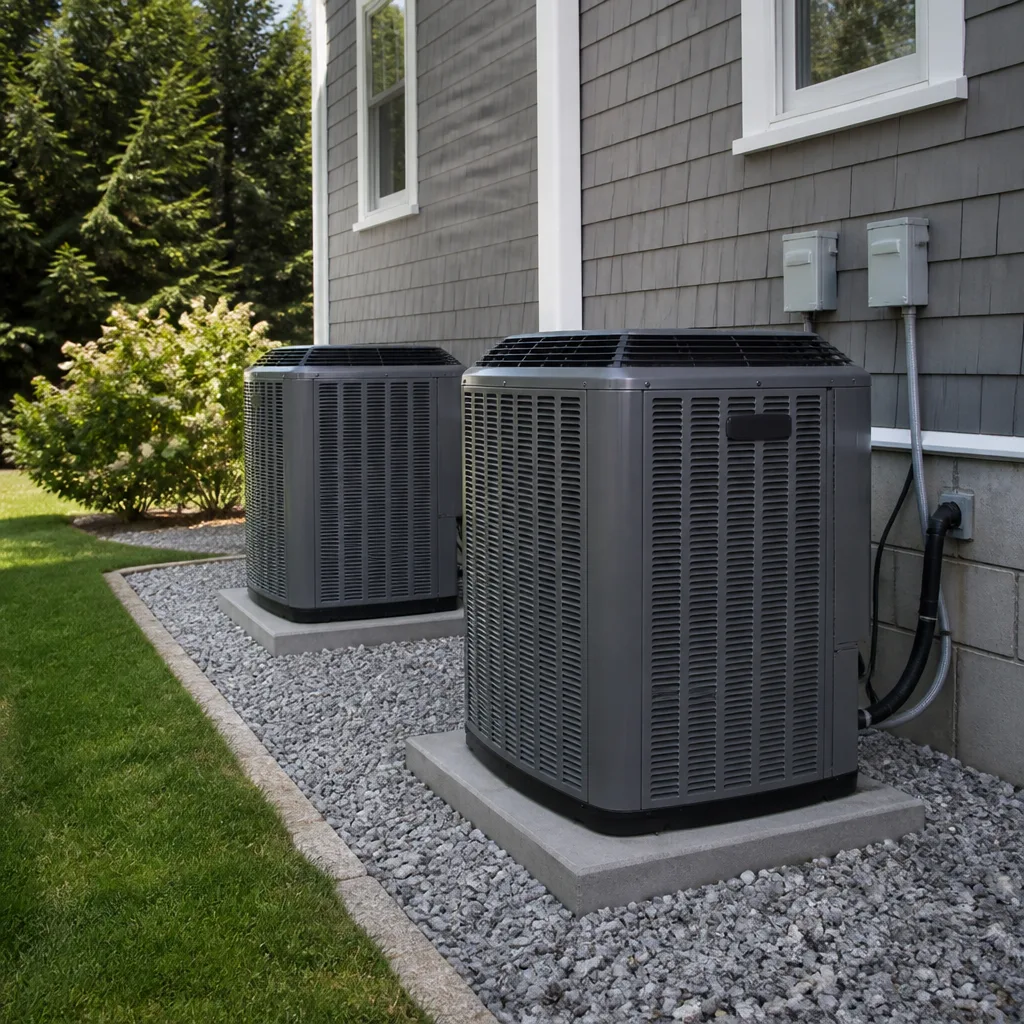 Heat pumps
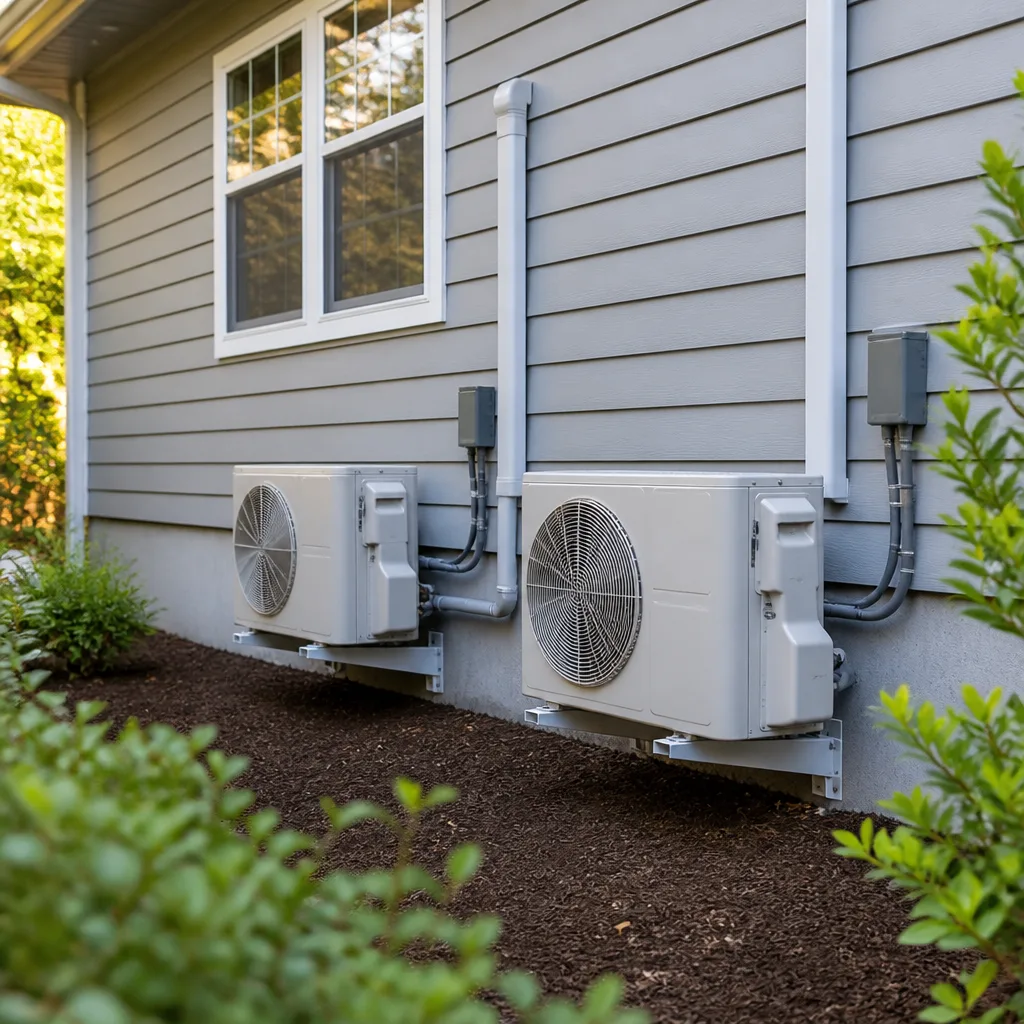 Ductless mini splits
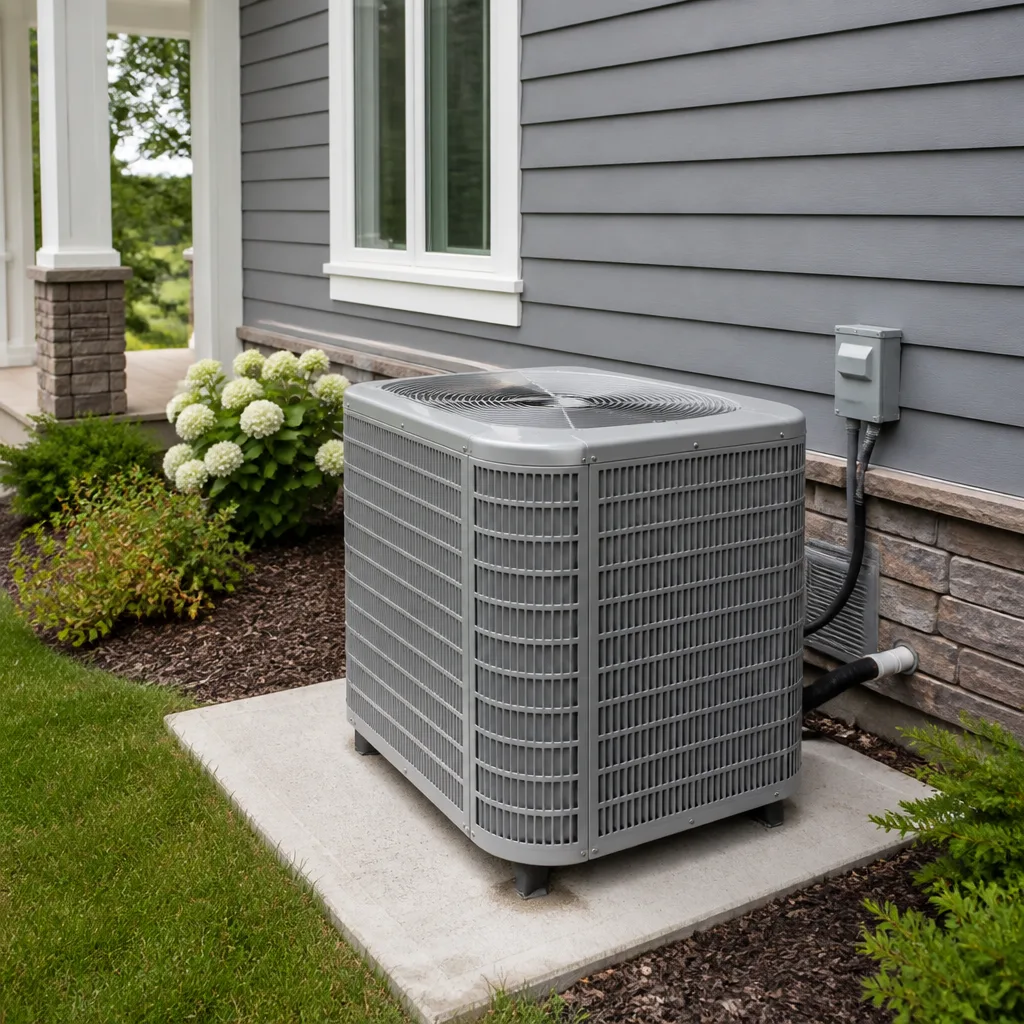 Carrier
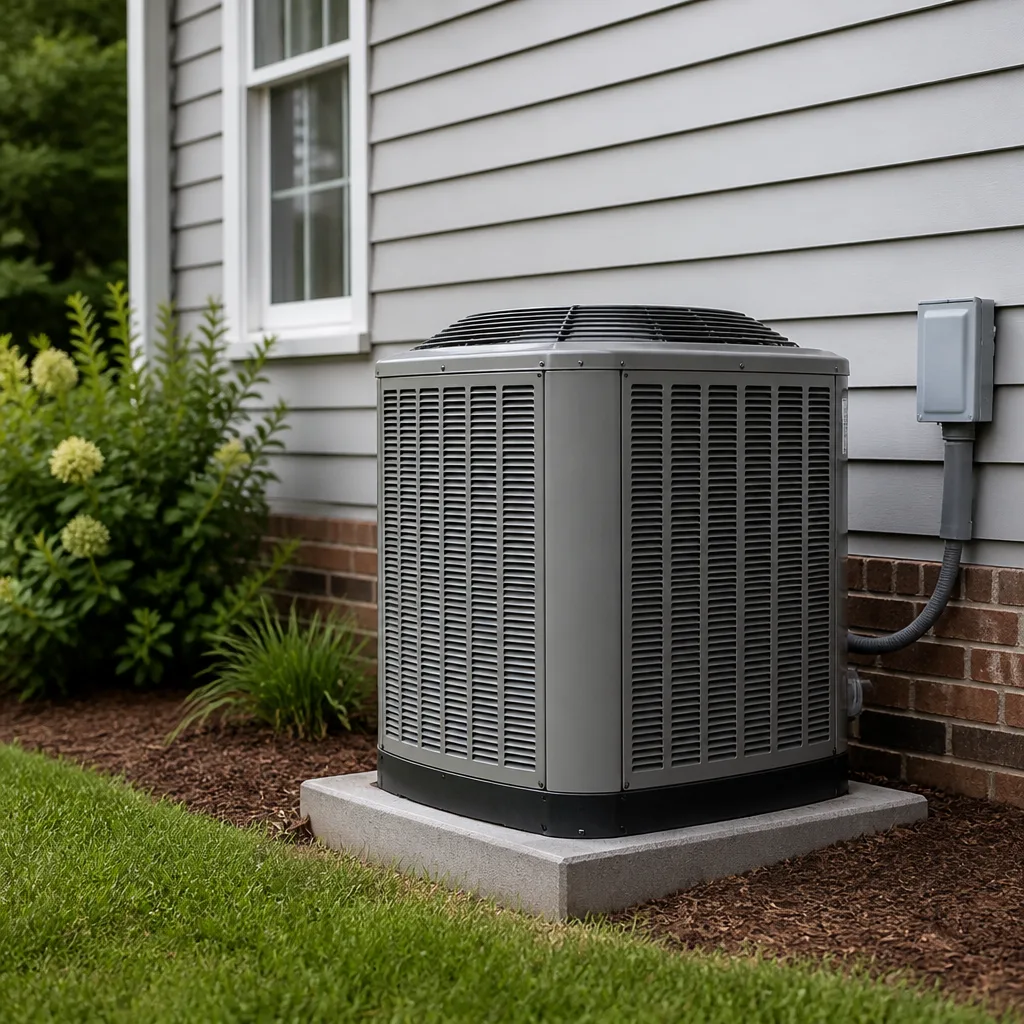 Trane
Trane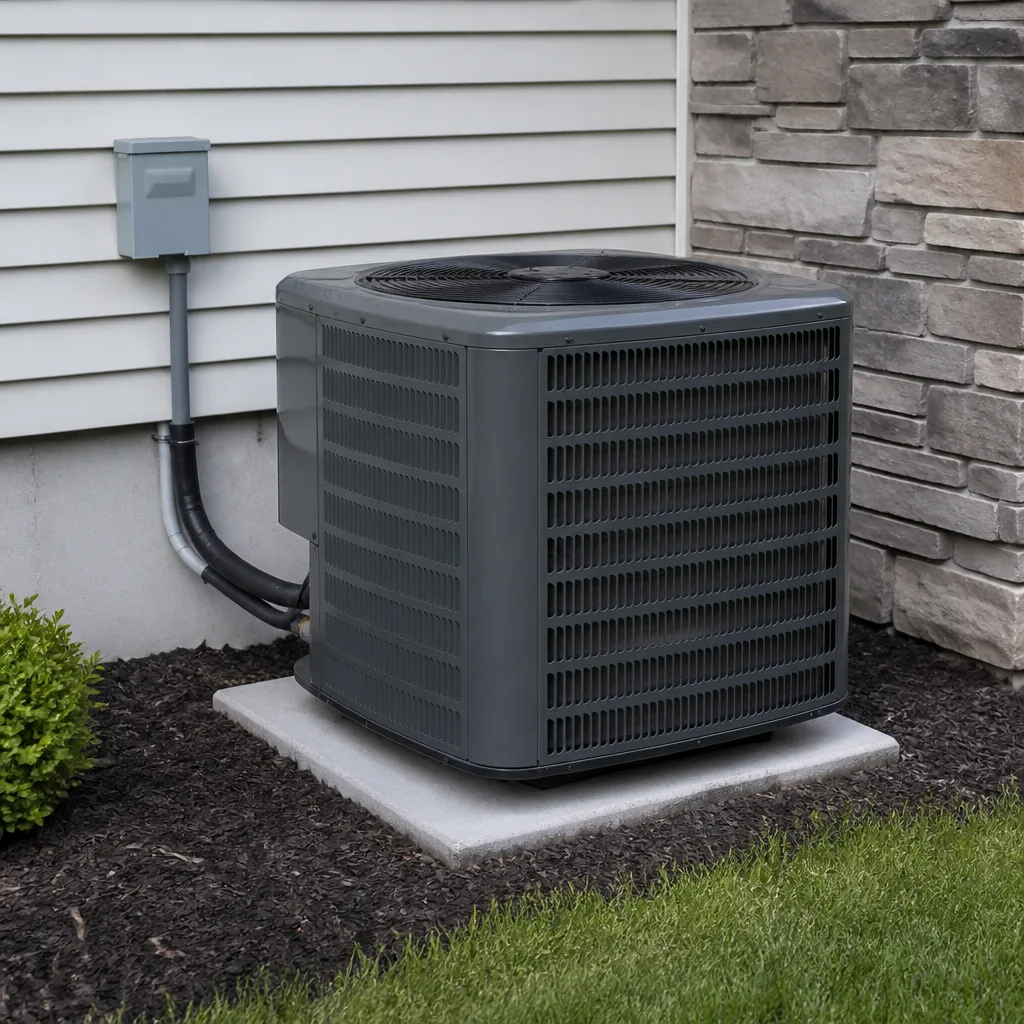 Goodman
Seasonal tune-up and full diagnostic on your Carrier, Trane, or Goodman system - readings shown to you before any repair is proposed
Diagnosis first, numbers second - you approve the repair price before a single part goes in.
Get your free estimateDaikin Capacitor Replacement: The San Diego Owner’s Guide
We stock and install Daikin-compatible capacitors across San Diego, with most replacements running $250 – $410 parts and labor included, and same-day service is available in most of the county. A capacitor is the small cylinder inside your Daikin condenser or air handler that stores and releases the electrical jolt needed to start the compressor and fan motors; when it fails, the unit usually hums without starting, trips a breaker, or runs the fan but not the compressor. Most homeowners find out their capacitor is failing on the hottest afternoon of the year, when the Daikin unit outside is humming and the air coming through the vents is warm or barely moving.
The good news is this specific repair is one of the most straightforward jobs we do on Daikin systems in San Diego. The bad news, if you are looking at DIY videos, is that capacitors store enough voltage to hurt you even with the power off at the breaker. More on that below.
Key Takeaways
- Typical Daikin capacitor replacement in San Diego: $250 – $410 installed, with the written price handed to you before work begins.
- We carry Daikin OEM capacitors and quality aftermarket equivalents on the truck for most common residential models.
- The 365-Day Done Right Promise covers every capacitor replacement in writing: if it fails within a year, we return and correct it at no charge.
- Same-day service is real for this repair in most San Diego zip codes. Call (619) 793-3598 and a live person answers, any hour.
- Do not test or handle a suspect capacitor yourself; even a disconnected capacitor can hold a dangerous charge.
Styles & brands we work with
Which Daikin Models This Applies To
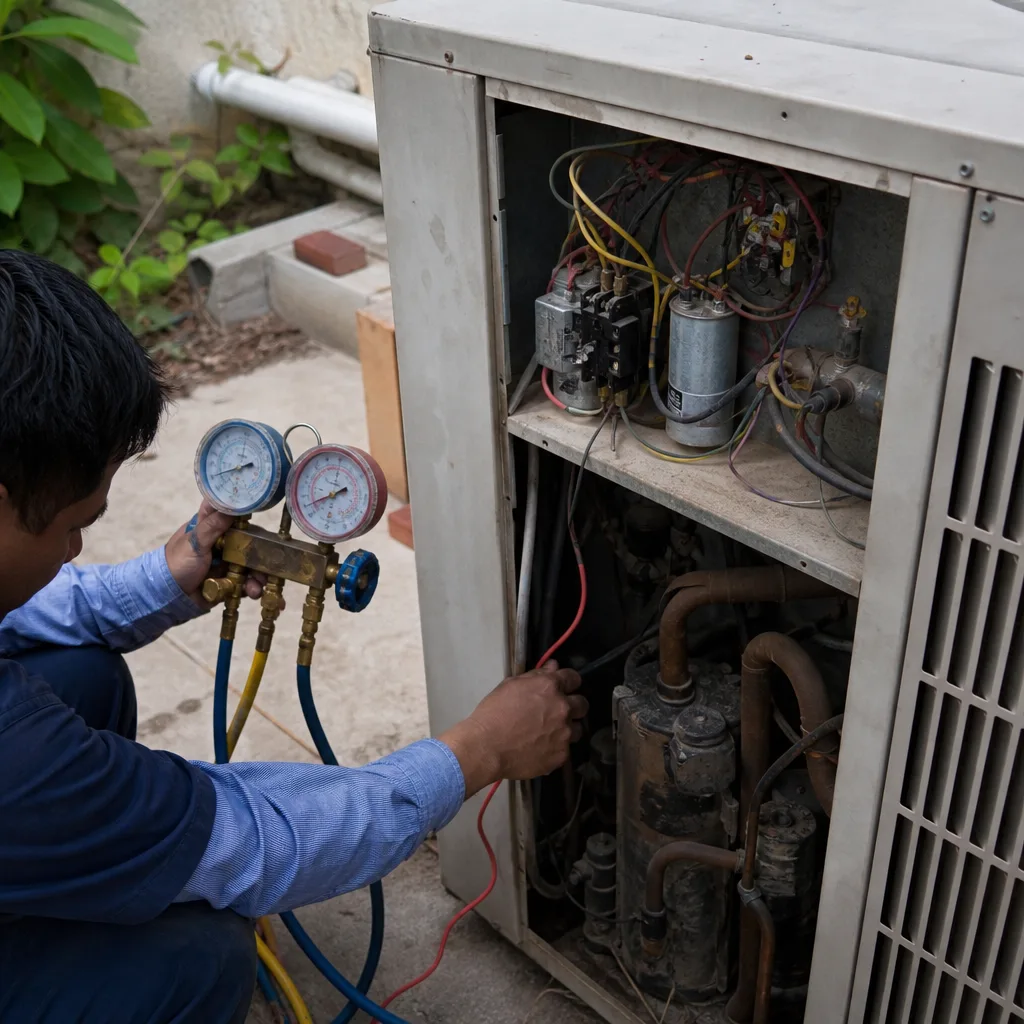
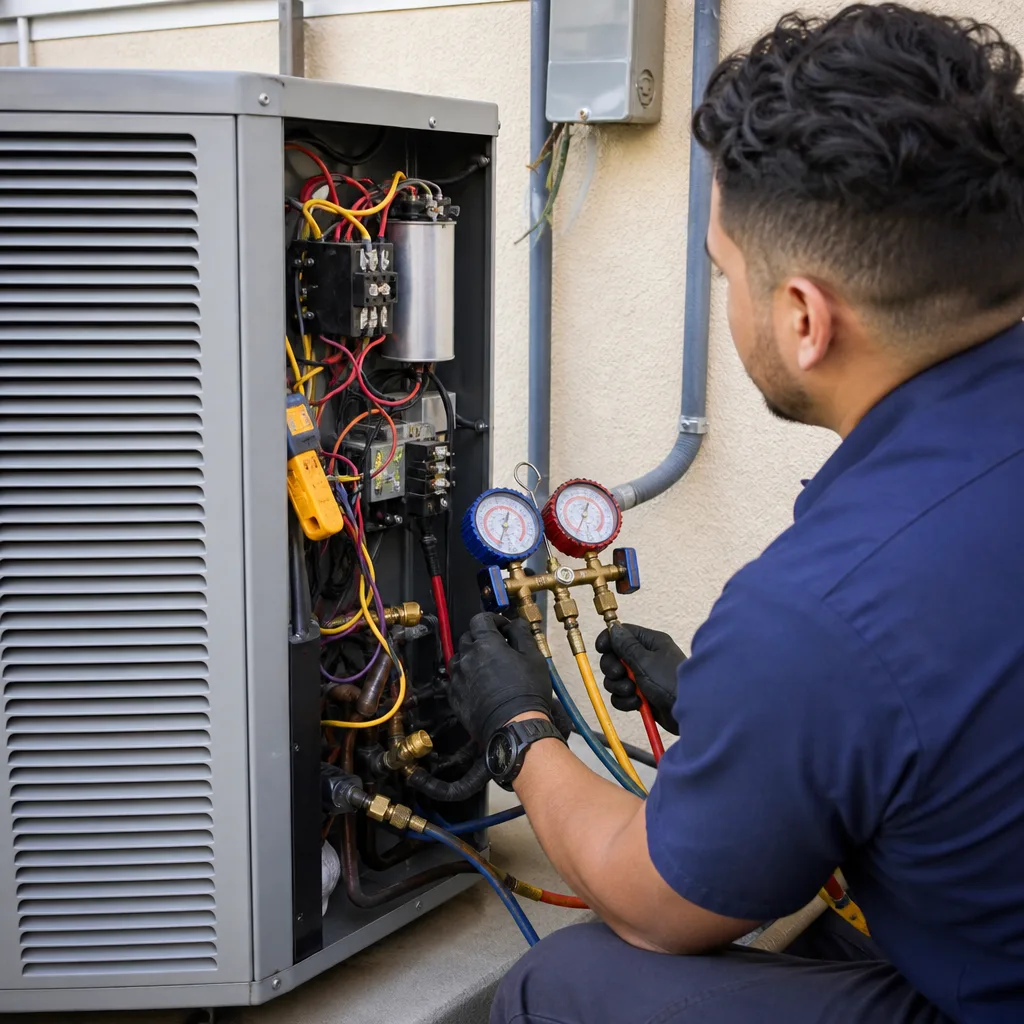
We replace capacitors on the full residential Daikin line we see across San Diego homes: the Daikin FIT (DZ17VSA and the newer DZ6VSA side-discharge units), the entry-level Goodman-built Daikin Comfort series (R-410A condensers and air handlers), and the older Daikin/Goodman split systems installed around the county from the mid-2000s onward. The capacitor is usually inside the outdoor condenser cabinet, though some Daikin air handlers use a separate smaller capacitor for the blower motor, and dual-run capacitor setups are common on the FIT line.
The identifying label on the old capacitor is what matters most. It reads in microfarads (µF), typically a range like 35/5 µF, 45/5 µF, or 40/5 µF, and it will be marked as either 370V or 440V. A 440V-rated capacitor can replace a 370V unit safely; going the other direction is a failure waiting to happen. The one compatibility gotcha we see with Daikin specifically is on the FIT side-discharge models, where a capacitor that looks identical to a standard Goodman unit may have a different microfarad rating printed on a faded label. That is why we pull the old part and read it, not guess from the model number alone.
For the part itself: Daikin OEM capacitors are solid and usually what we install when the unit is still under the manufacturer’s parts warranty. For out-of-warranty systems, we carry quality aftermarket equivalents (AmRad, Titan HD, and Mars) that consistently outlast the factory part. We are an independent San Diego service provider, not a Daikin dealership, which means we stock what actually holds up in this climate rather than whatever the factory catalog defaults to.
One thing worth knowing: the coastal air, especially anywhere west of the 5 in Ocean Beach, Point Loma, and Pacific Beach, pushes capacitors hard. Salt-laden air accelerates corrosion on the terminals and the top vent of the condenser, and we routinely see four- or five-year-old capacitors with rusted terminals in those neighborhoods. Inland, around Clairemont Mesa or Tierrasanta, the failure pattern is more often heat-related, with capacitors swelling and leaking after several brutal summer runs.
Signs Your Daikin Capacitor Replacement Is Failing
- Outdoor unit hums but the fan doesn’t spin. The classic capacitor symptom. The compressor is trying to start but can’t get the jolt it needs. You are hearing the unit’s contactor pull in and then a low, steady hum. Give it a few minutes and it may trip the breaker instead.
- Fan spins, but the compressor won’t start. A dual-run capacitor shares one housing for both the fan and the compressor. One side can fail while the other keeps working. The fan running masks the problem because the unit looks and sounds alive from the outside. The air coming from the vents will warm up within an hour.
- AC trips the breaker or blows a fuse on start. A failing capacitor forces the compressor to draw more current on startup than the circuit was designed for. If the breaker for the condenser trips more than once on a warm San Diego afternoon, the capacitor is the first thing we check.
- The top of the capacitor is swollen, domed, or leaking a yellowish fluid. This is the visual giveaway. Heat and age cause gas to build up inside the metal can, bulging the top or pushing oily fluid out of the terminals. If you see this outside the unit, don’t touch it; a bulging capacitor is still a capacitor that can hold a charge.
- The unit starts when you spin the fan manually with a stick. If the fan kicks on only after you shove the blade into motion, the capacitor is too weak to provide the starting torque on its own. This is the fastest way to confirm the capacitor is the culprit, but it is also the point where smart homeowners stop poking at the unit and call us.
See the difference
 Before
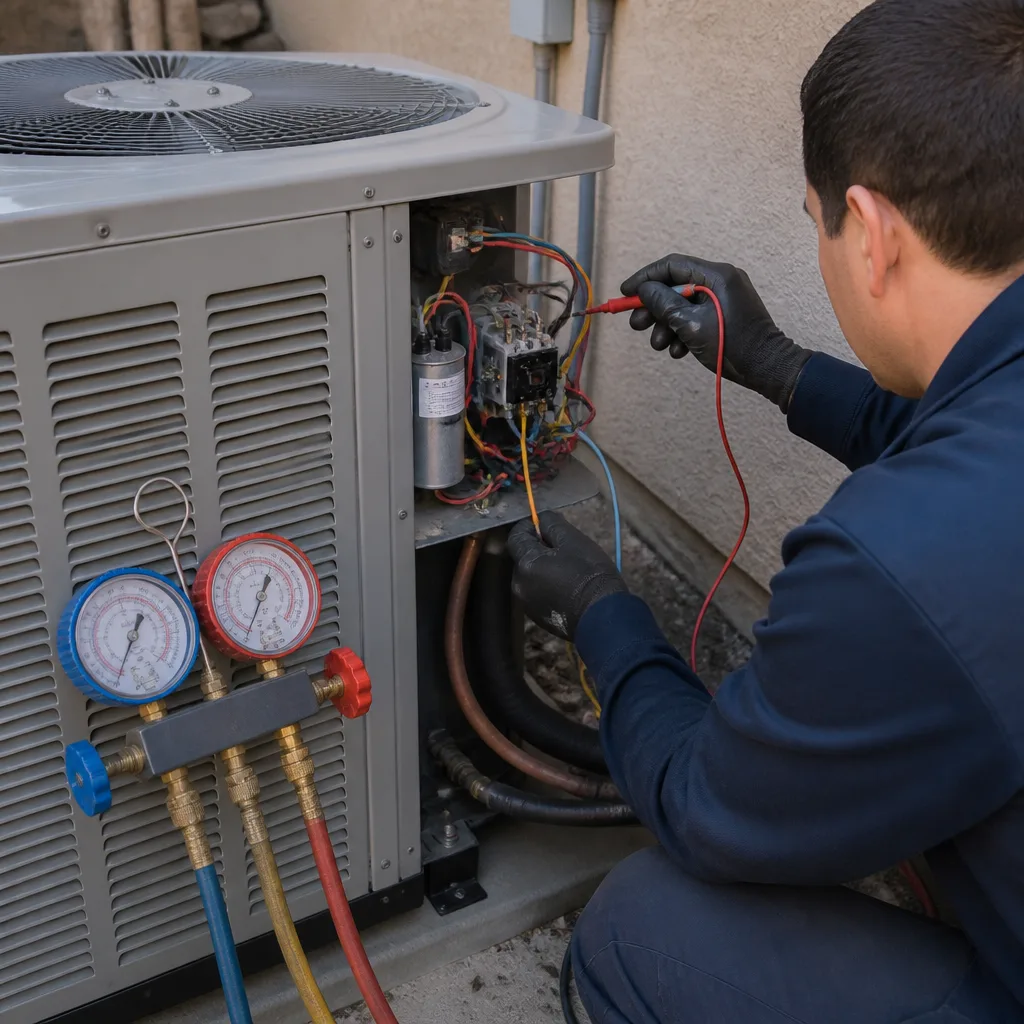 After
After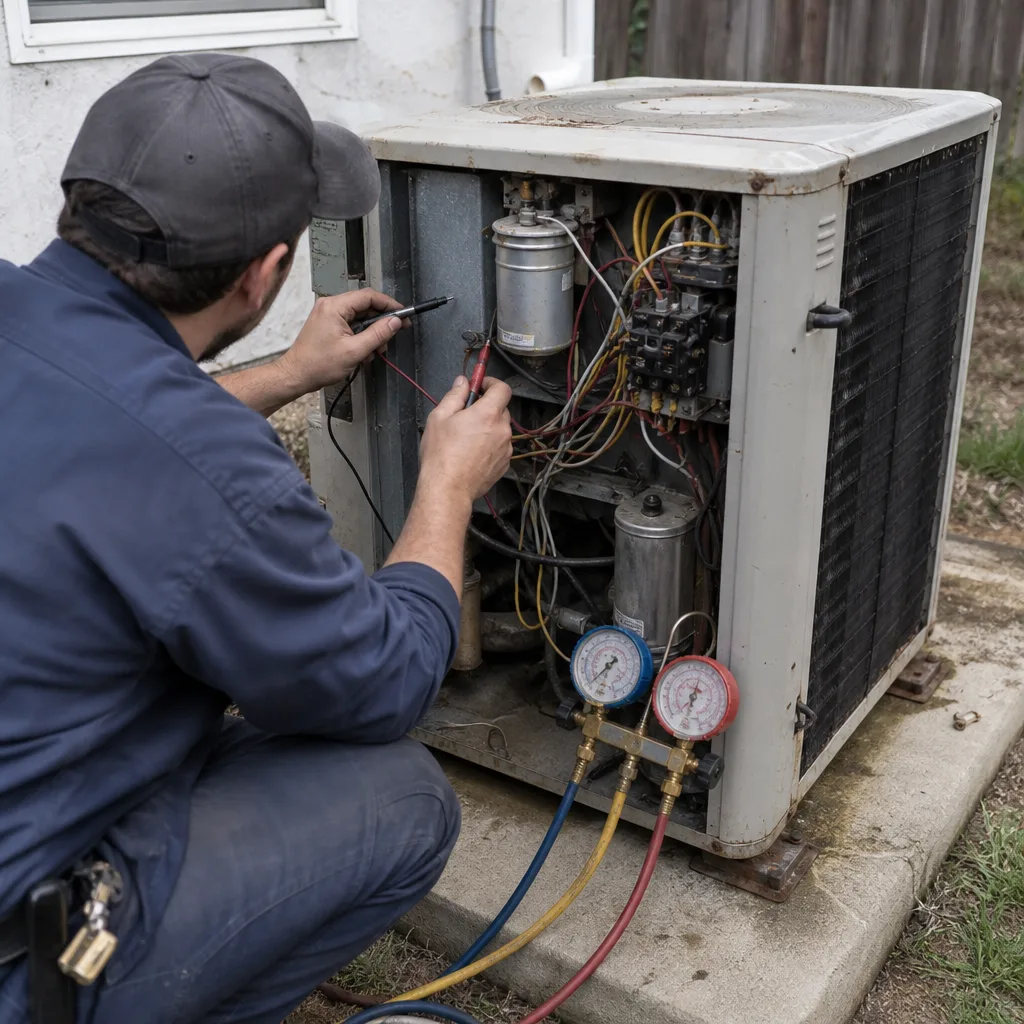 Before
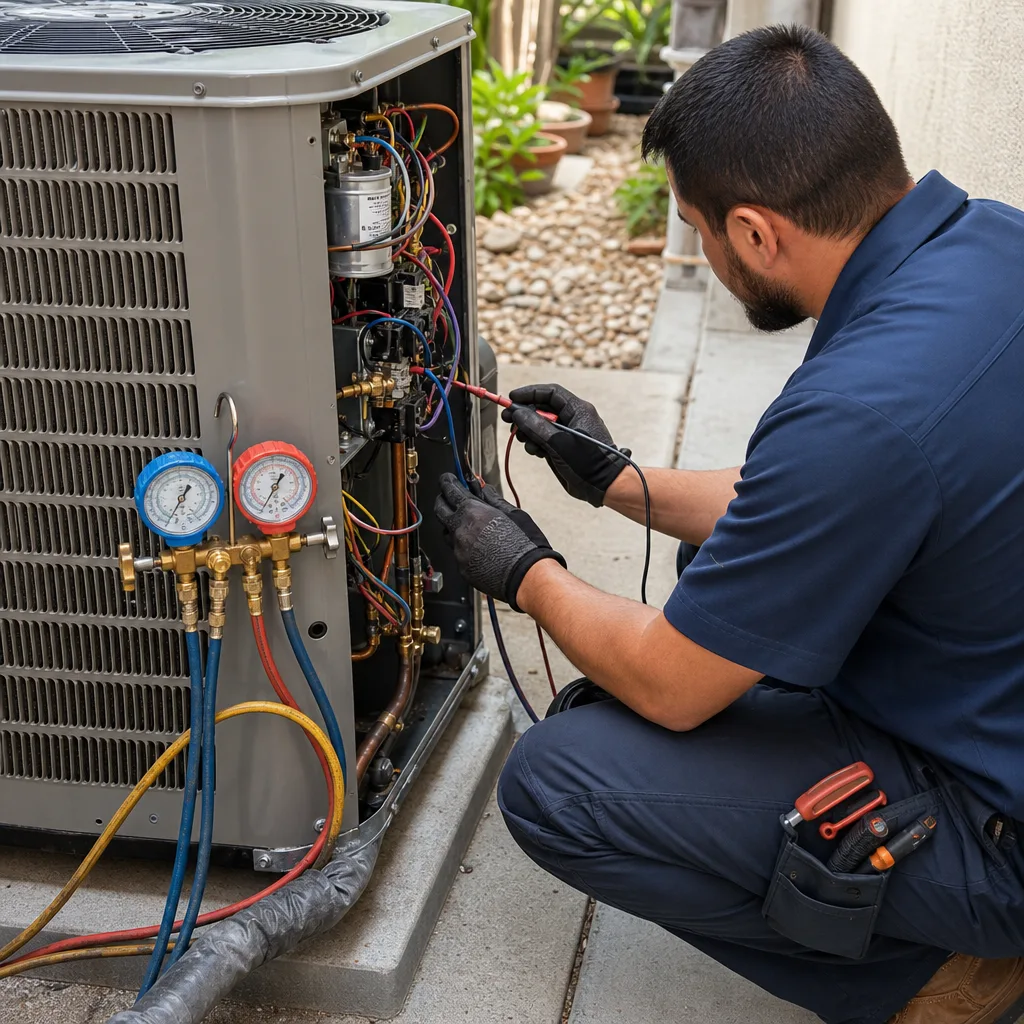 After
After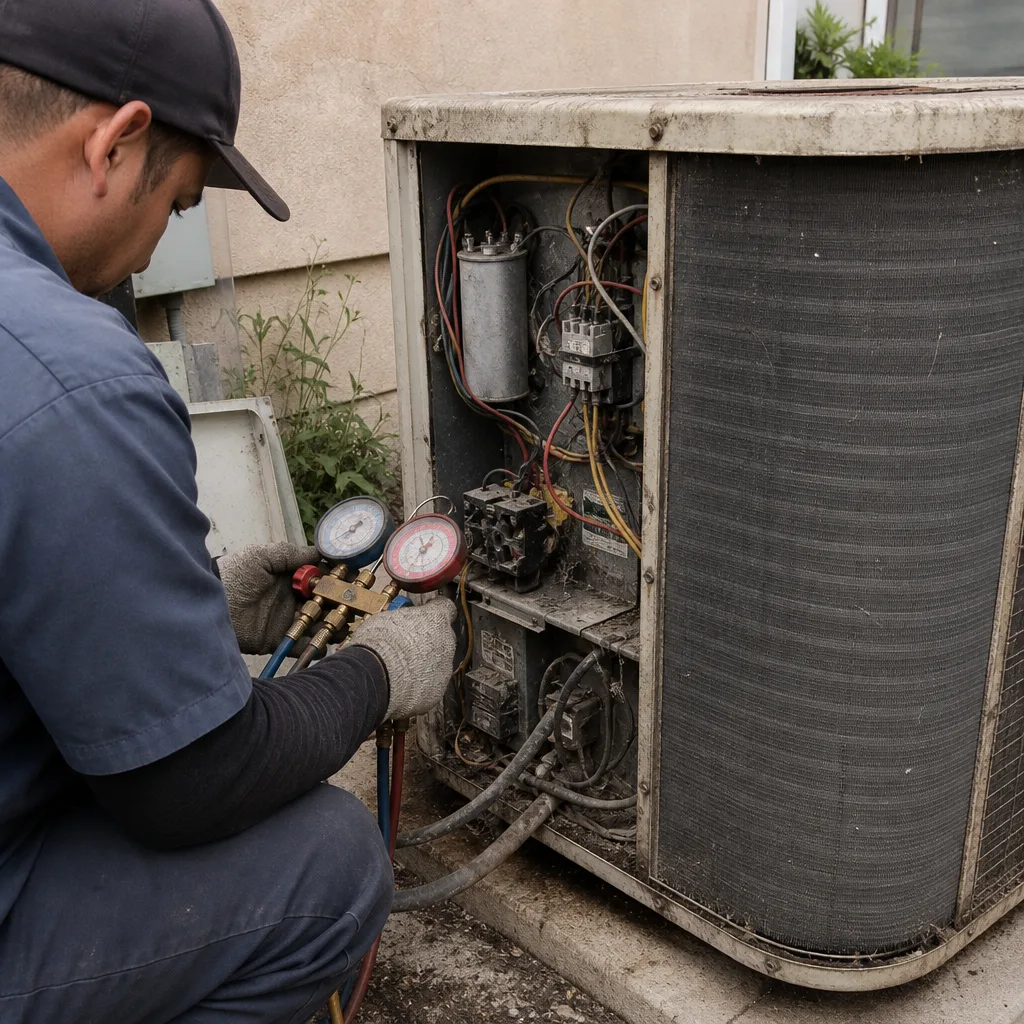 Before
 After
AfterReplacement Cost & What’s Included
For a Daikin capacitor replacement in San Diego, expect to pay $250 – $410 installed. That figure includes the new capacitor, the service call, labor, and the written paperwork. The spread comes from the part itself: a simple single-run 35/5 µF aftermarket capacitor on an older Daikin Comfort series unit lands near the low end, while a dual-run 45/5 µF OEM part on a newer FIT condenser with a full diagnostic pass before and after the swap runs higher. The capacitor itself is a relatively inexpensive component; most of what you are paying for is knowing the correct microfarad rating, having the right part on the truck, and doing the swap without frying a control board by guessing wrong.
What is included, always:
- Written price before work starts. Per The Kingswell Way: say the price before the work, show up in the window given, leave the place cleaner than found, put the guarantee in writing, come back if it fails. The price on paper does not change at the door.
- A diagnostic confirmation. We test the old capacitor to verify it failed and confirm no other component caused the failure before we install the new part.
- Cleanup and a clean site. We leave the area around the condenser the way we found it, minus any old capacitor bits and packaging.
- The 365-Day Done Right Promise. Your replacement is covered in writing for a full year. If the capacitor fails within that window, we come back and make it right at no additional charge. Written, not verbal, every time.
DIY or Call Us?
Here is the honest split. What you can safely do: check the breaker, look at the capacitor top (without touching it) for bulging or fluid, and confirm whether the fan spins freely. What you should not do is remove the capacitor, test it, or attempt to swap it yourself. A capacitor stores a charge that can remain after the power is off at the breaker, and that stored voltage can deliver a serious shock. A Daikin condenser has multiple high-voltage components, and one wrong wire between capacitor terminals can take out the control board, turning a $350 job into a $1,200 job.
The other reason to call us rather than do it yourself: matching the wrong microfarad rating will either fail to start the compressor (too low) or overheat the windings and shorten the compressor’s life (too high). We carry the right range of capacitors on the truck for Daikin units in San Diego, read the old part’s label directly, and have the swap done in under an hour in most cases. Call (619) 793-3598 and a real person answers, even at midnight.
FAQs
A Daikin capacitor typically lasts 7 – 12 years in San Diego, but coastal locations shorten that to 4 – 7 years because of salt corrosion on the terminals, and heat-heavy inland summers near El Cajon or Santee push closer to 5 – 8 years. Call us at (619) 793-3598 if your Daikin is more than five years old and showing startup symptoms, and we will quote a replacement over the phone.
No. A failed capacitor cannot be repaired; the internal dielectric material has broken down and the part is sealed. The replacement is the repair, and since the part is relatively inexpensive, it is the highest-value fix on a Daikin system. Call (619) 793-3598 and we will confirm the exact price for your model before any work begins.
A capacitor swap on a Daikin unit usually takes 45 minutes to an hour, including verifying the old part actually failed, installing the new capacitor, and testing the compressor and fan after power is restored. We carry the common microfarad ratings on the truck, so there is no separate parts-run or second visit. Call (619) 793-3598 for same-day service in San Diego.
We stock the common Daikin residential capacitor ratings, including dual-run 35/5, 40/5, and 45/5 µF units in 370V and 440V, along with aftermarket equivalents from AmRad and Titan HD. If your unit uses an uncommon rating, we have it from a San Diego supplier the same day. Outside of Daikin, we also keep parts on hand for Carrier, Trane, and Lennox systems.
Written by Victor Mancini, Owner & Lead HVAC Technician, Cold Harbour Heating and Air San Diego at Cold Harbour Heating and Air San Diego, serving San Diego and nearby areas.
Victor grew up in the San Fernando Valley side of Los Angeles, where summer heat was not something you ignored, and started learning HVAC through the HVAC/R program at Los Angeles Trade-Technical College before spending the better part of two decades turning that classroom time into real-job experience. He and his crew have been servicing San Diego for years now, from quiet residential streets in Clairemont Mesa to larger commercial calls closer to Mission Valley. If you catch him on the phone, he will probably ask: “Tell me what it’s doing, and I’ll tell you what it needs – no guesswork, no upsell.”