
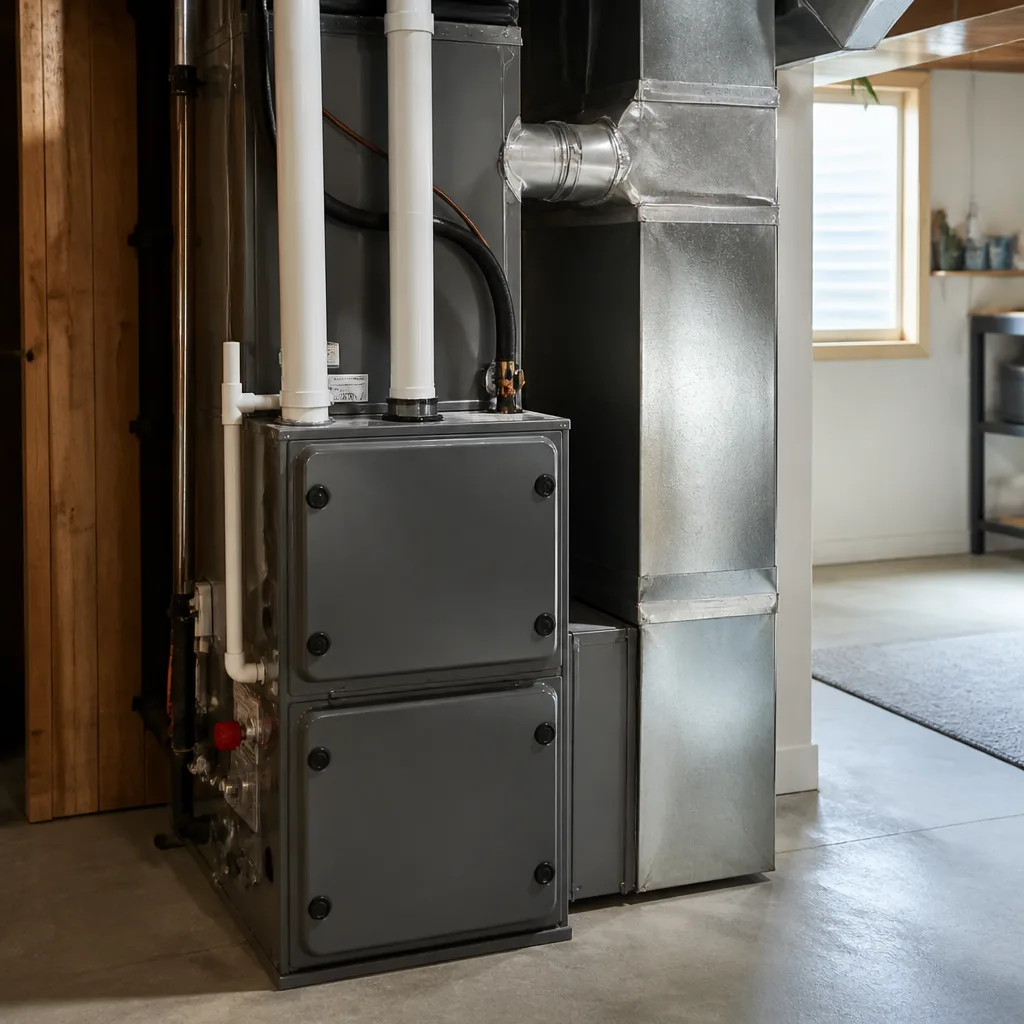
 Furnace & heating
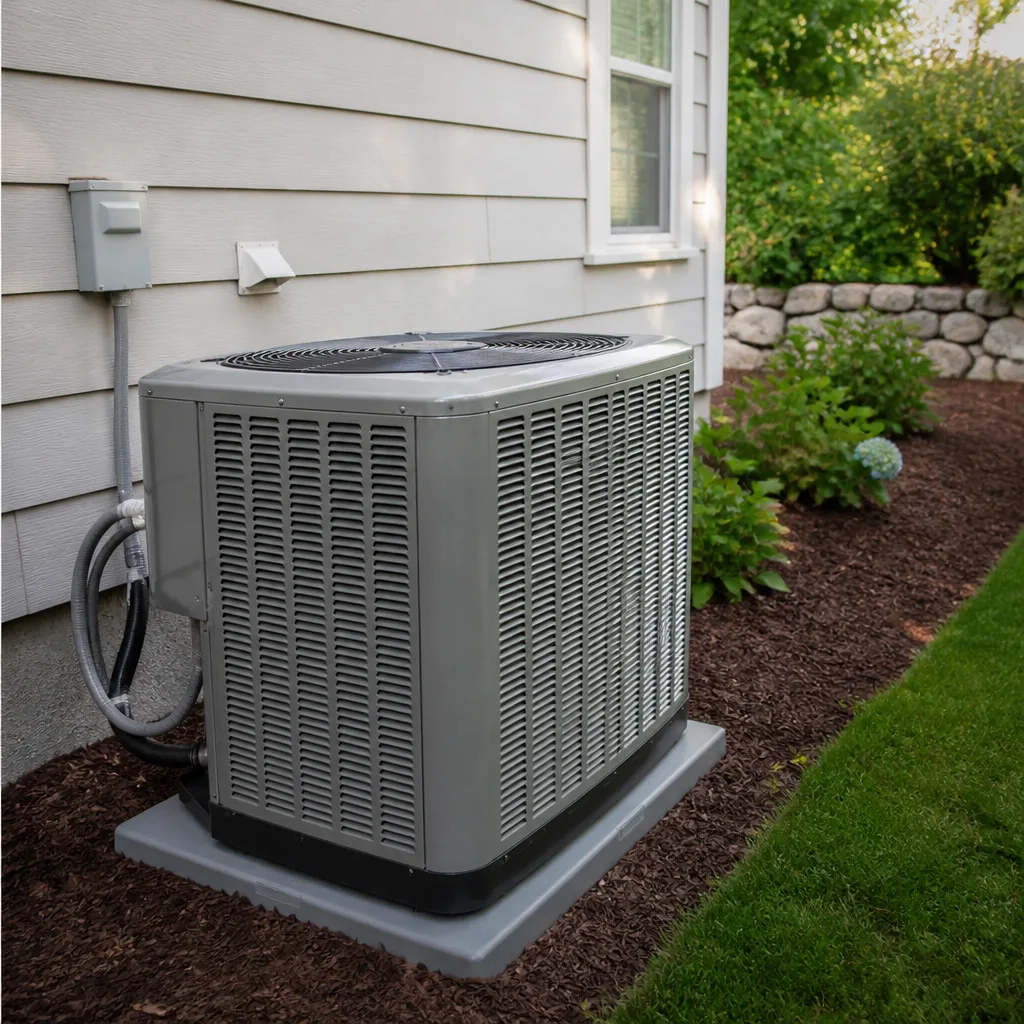 AC repair
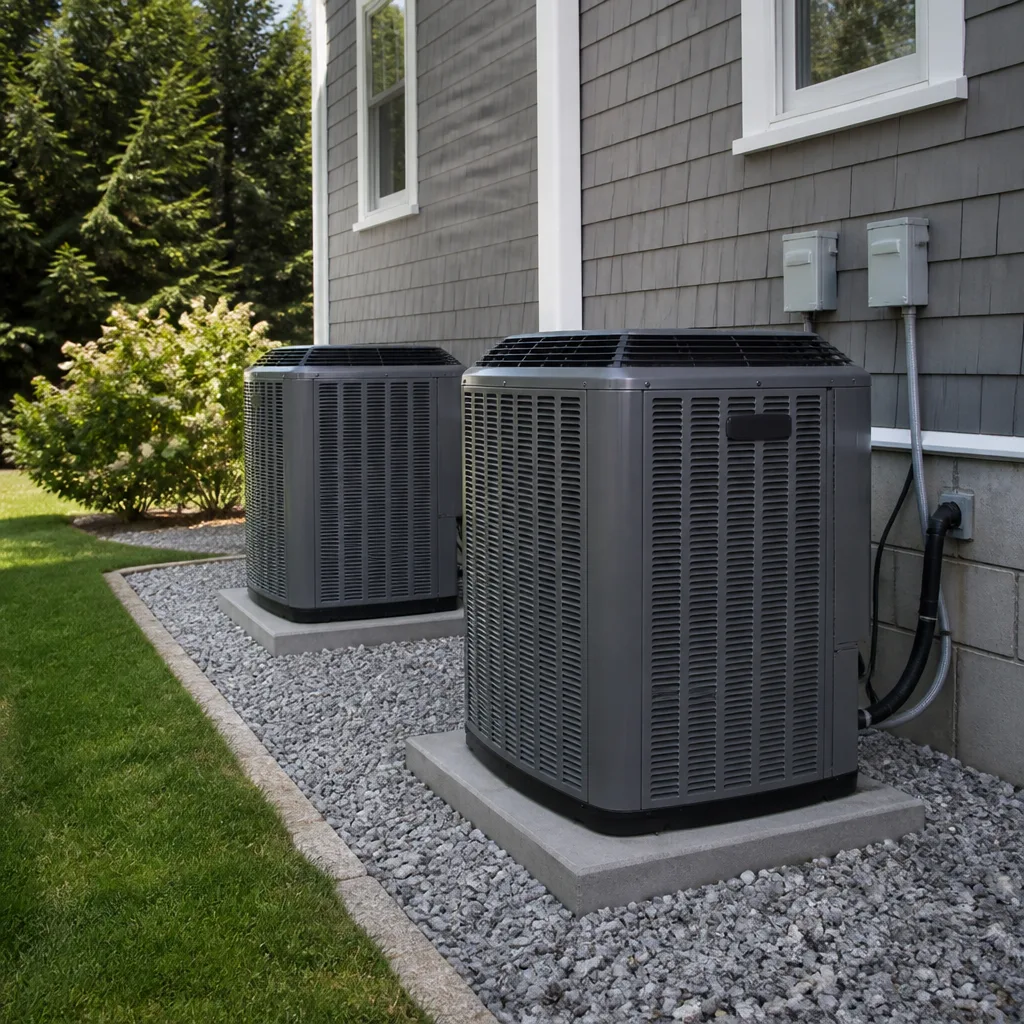 Heat pumps
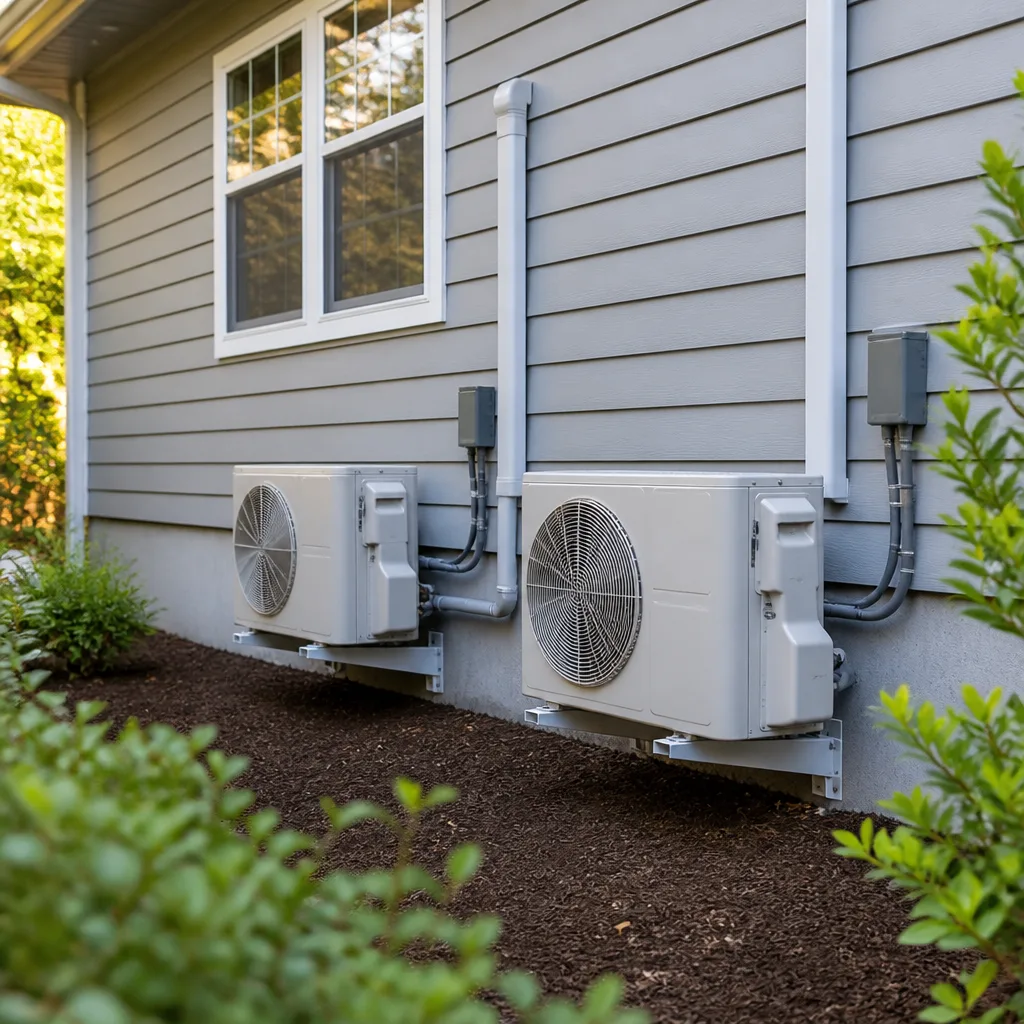 Ductless mini splits
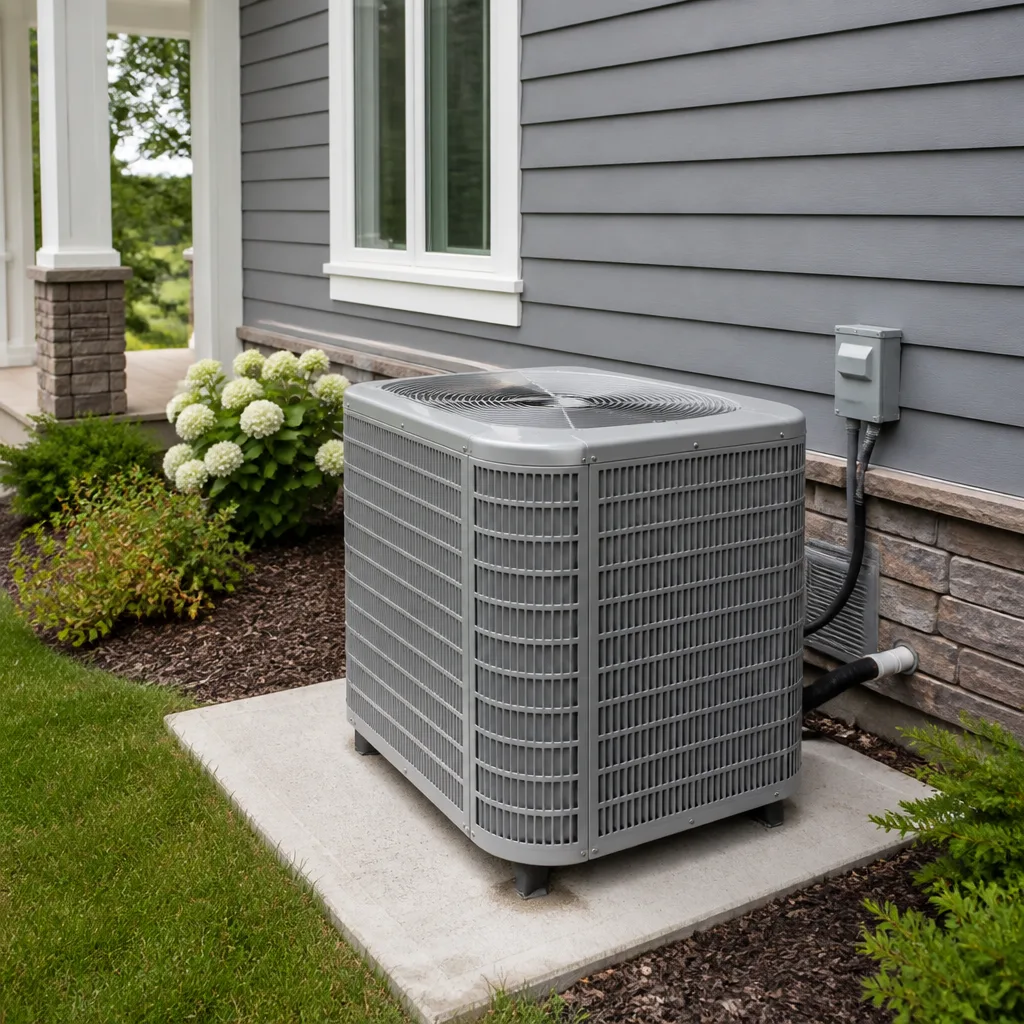 Carrier
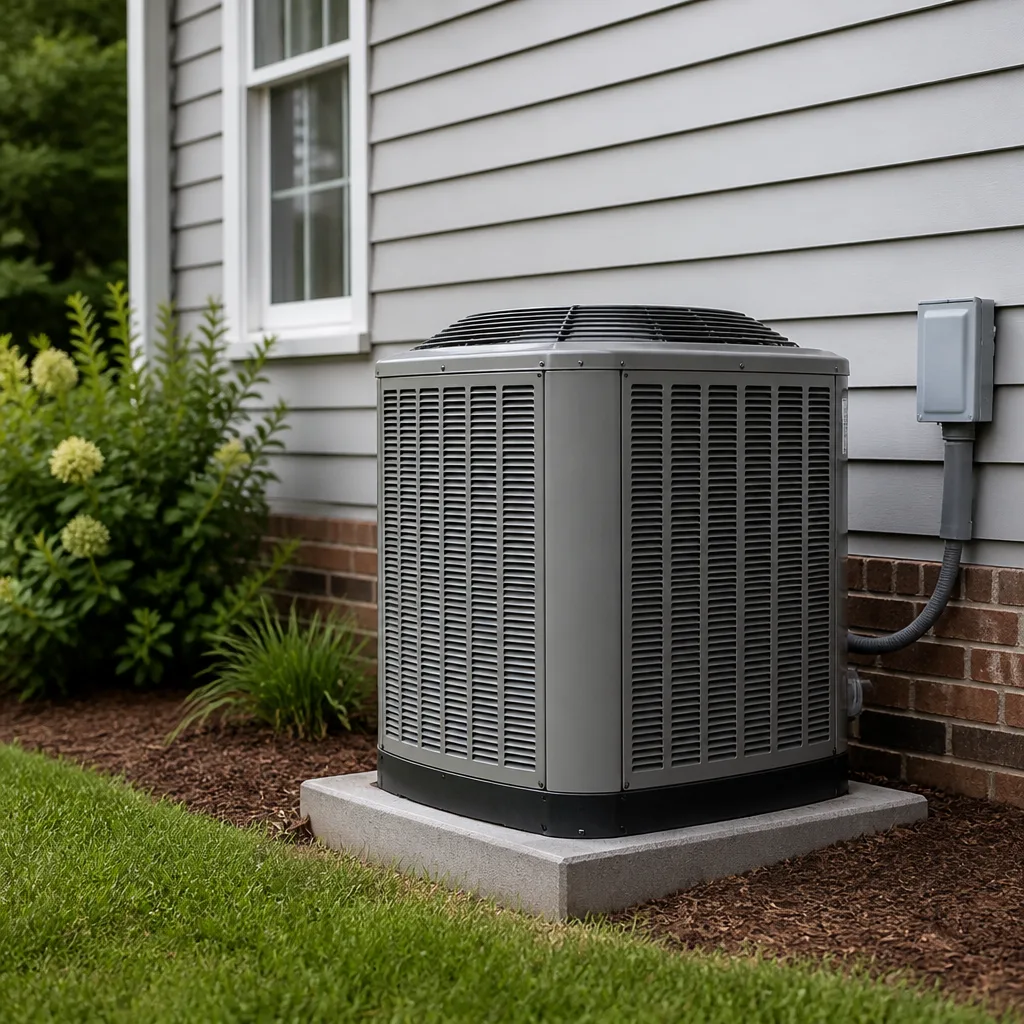 Trane
Trane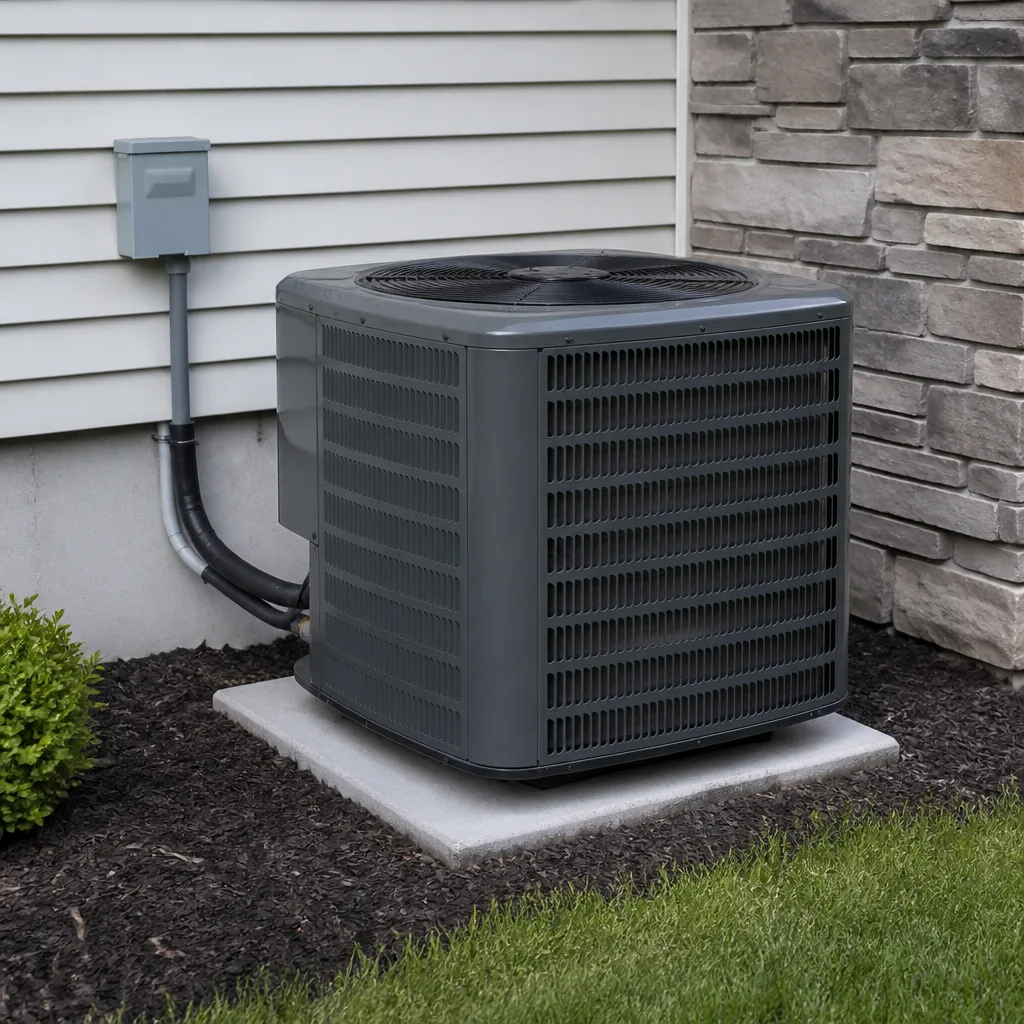 Goodman
Seasonal tune-up and full diagnostic on your Carrier, Trane, or Goodman system - readings shown to you before any repair is proposed
Diagnosis first, numbers second - you approve the repair price before a single part goes in.
Get your free estimateAmerican Standard Capacitor Replacement: The San Diego Owner’s Guide
If the capacitor on your American Standard AC or heat pump has failed, we stock compatible replacements on our trucks and can typically have your system running the same day in most San Diego neighborhoods. Installed capacitor replacement for American Standard equipment generally runs $175 – $345 including the part and labor, depending on the capacitor’s rating and accessibility. The way most San Diego homeowners discover the problem is the same: the outdoor unit hums but the fan won’t spin, or the compressor clicks and gives up. That’s the capacitor telling you it’s done.
Cold Harbour Heating and Air San Diego is an independent service provider, not affiliated with American Standard. We work on their equipment every week, which is why our trucks carry the common capacitor sizes and we can match the rest fast.
Which American Standard Models This Applies To
American Standard uses capacitors across its residential lines, including the Silver, Gold, and Platinum series condensers and heat pumps built over the last 15 to 20 years. The part you need is either a dual-run capacitor (one unit serving both the compressor and the condenser fan motor) or a start capacitor (a separate component that gives the compressor its initial kick). Most American Standard residential systems use a dual-run design, commonly rated between 35/5 and 80/10 microfarads (µF). That rating is printed directly on the capacitor’s metal can, along with a voltage rating of 370 or 440 VAC.
Here’s the compatibility gotcha we see often in San Diego: an American Standard unit may accept a capacitor with a higher voltage rating than the original, but never a lower one, and the microfarad rating must match within ±5%. A 440 VAC capacitor is a safe upgrade over a 370 VAC original. Guessing at this from an online photo, without reading the label on the failed part or checking the unit’s data plate, is how homeowners end up with the wrong part installed. We read the label off the existing capacitor and match it exactly.
OEM American Standard capacitors are made by suppliers American Standard contracts with, and they’re solid parts. Quality aftermarket equivalents from AmeriStar, Titan HD, or Global come off the same factory lines in many cases and cost less. For a part that fails every 8 to 12 years anyway, the aftermarket option often makes more sense. We stock both and tell you the difference in plain English before we install anything.
Styles & brands we work with
Signs Your American Standard Capacitor Is Failing
- The outdoor unit hums but the fan won’t turn. The capacitor no longer stores enough charge to start the fan motor. A hard-start kit can mask this briefly, but it won’t fix the capacitor.
- The compressor short-cycles. It starts, runs a few seconds, and shuts off. That’s the classic sign of a capacitor that has drifted far below its rated microfarad value and can no longer keep the compressor running.
- The fan spins slowly or only with a manual push. San Diego’s salt air near the coast accelerates terminal corrosion, and a weak capacitor can’t get the fan to full speed on its own.
- The capacitor’s case looks swollen or has a bulge on top. Internal pressure from heat and age pushes the metal can outward. Once it’s domed, it’s done, and it can leak dielectric fluid.
- Your energy bill climbed without a change in usage. A failing capacitor makes the compressor work harder at startup, drawing more current every cycle. Over a San Diego cooling season, that adds up.
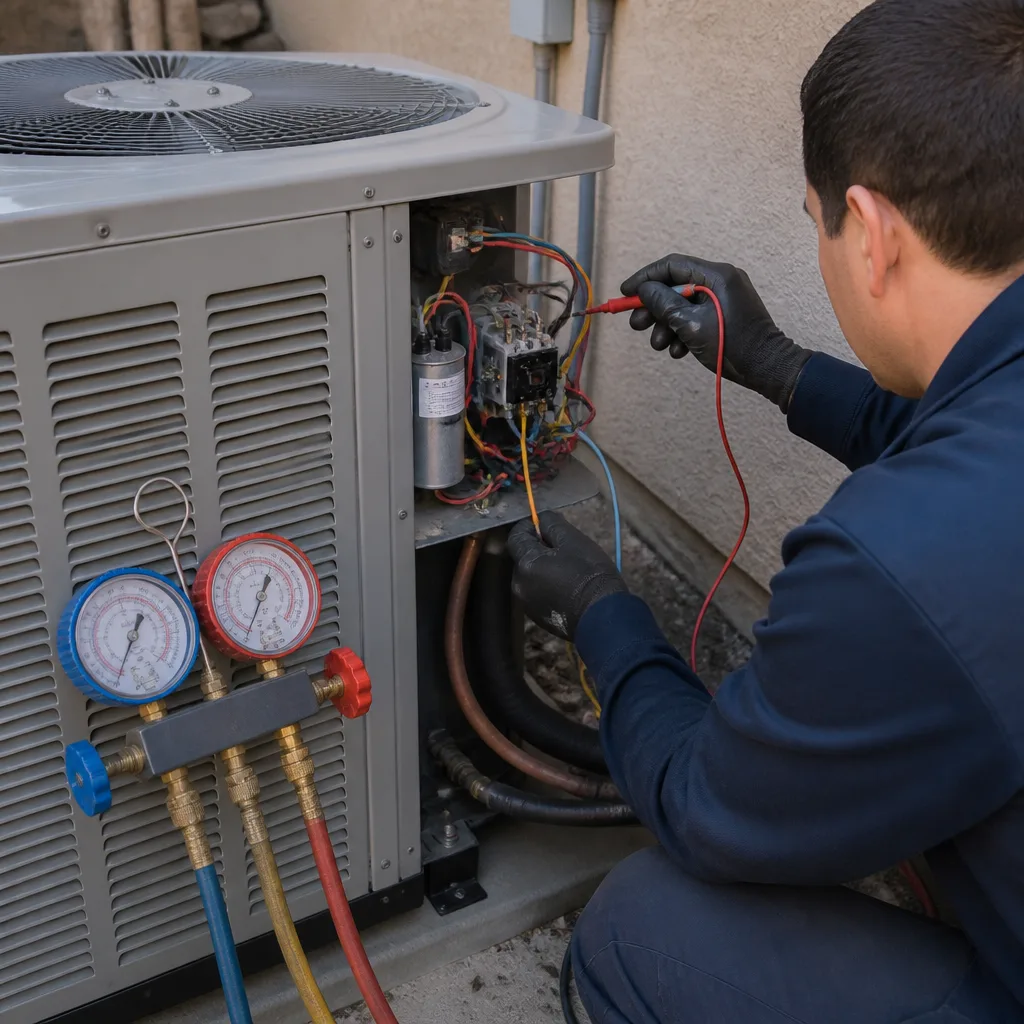
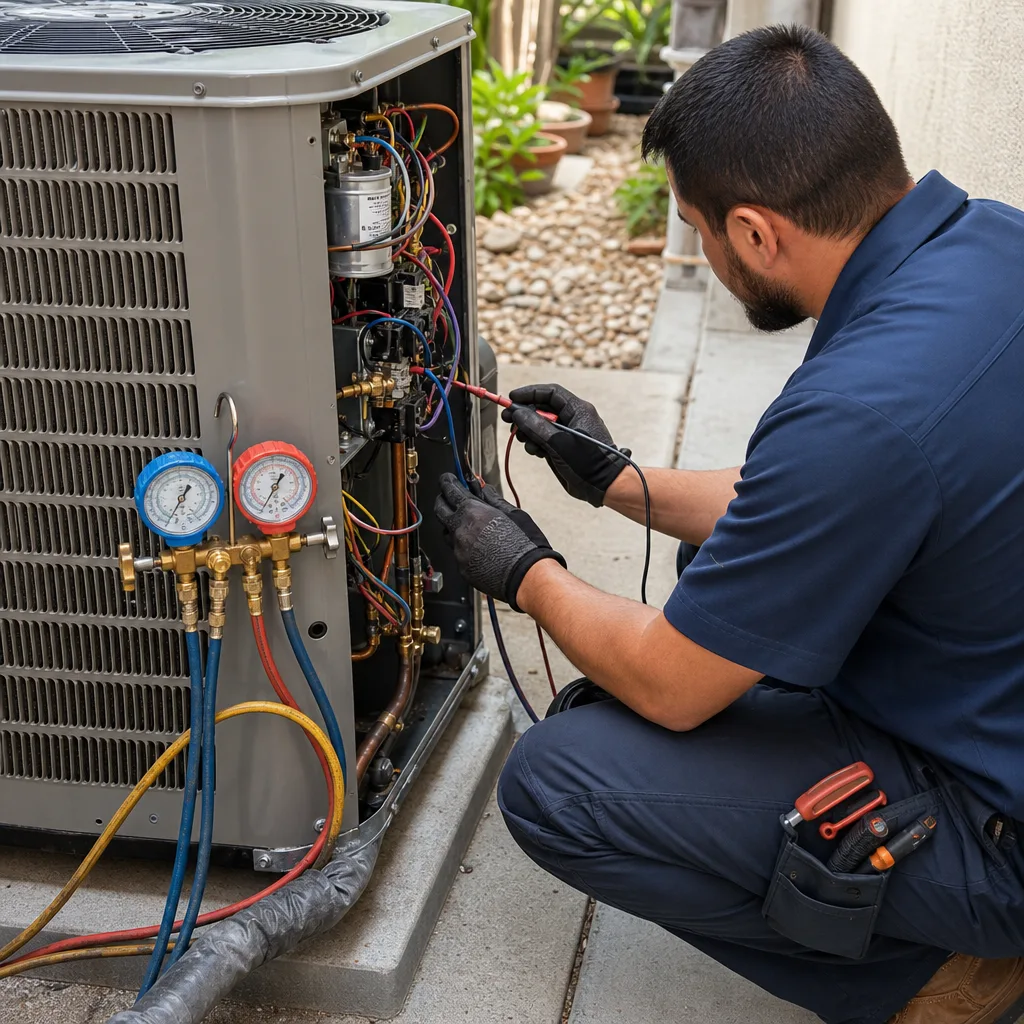
See the difference
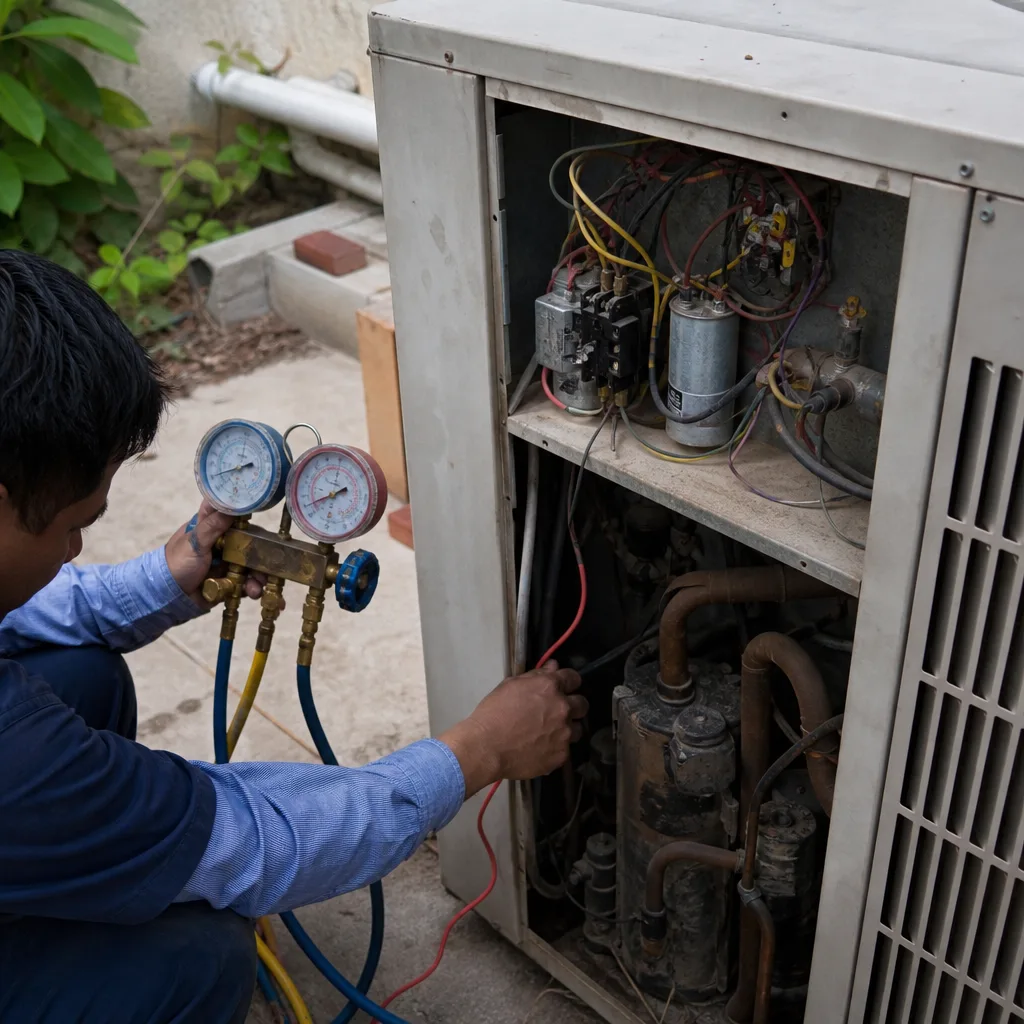 Before
 After
After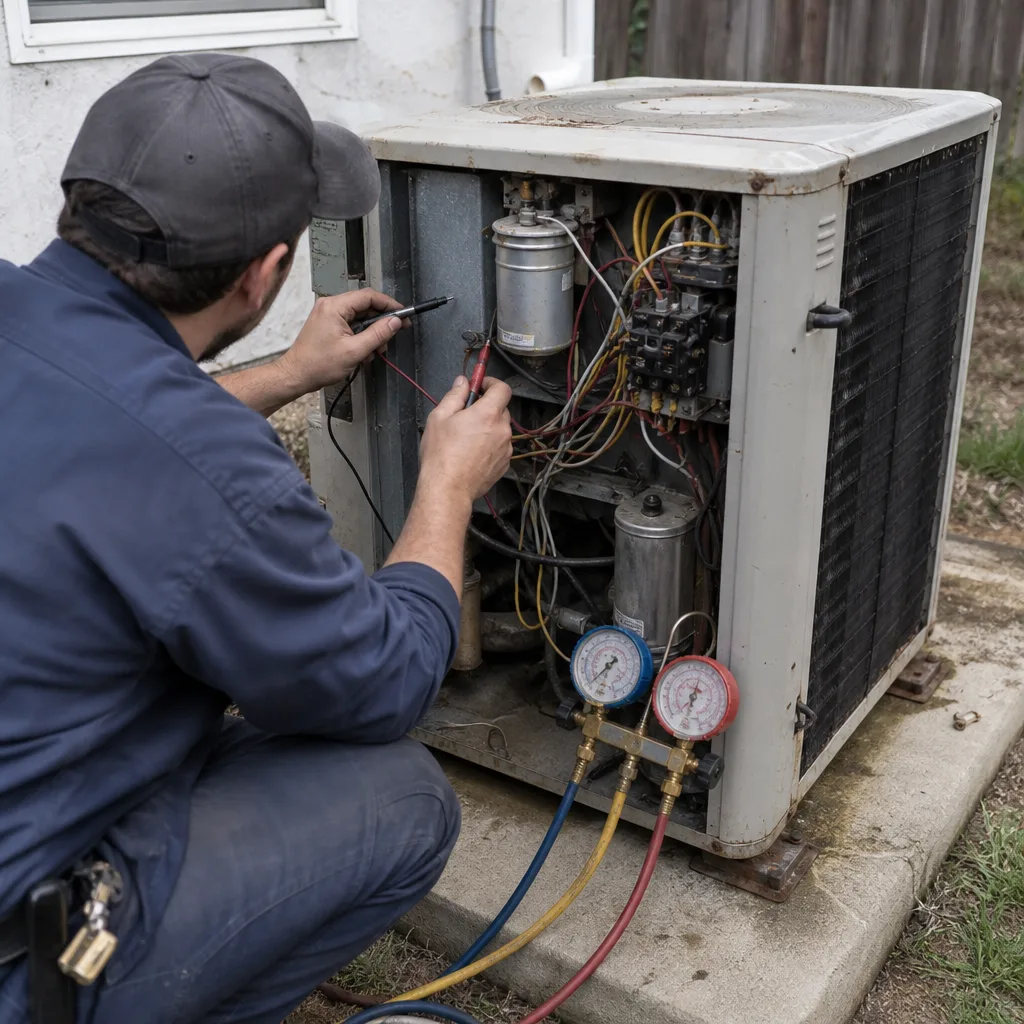 Before
 After
After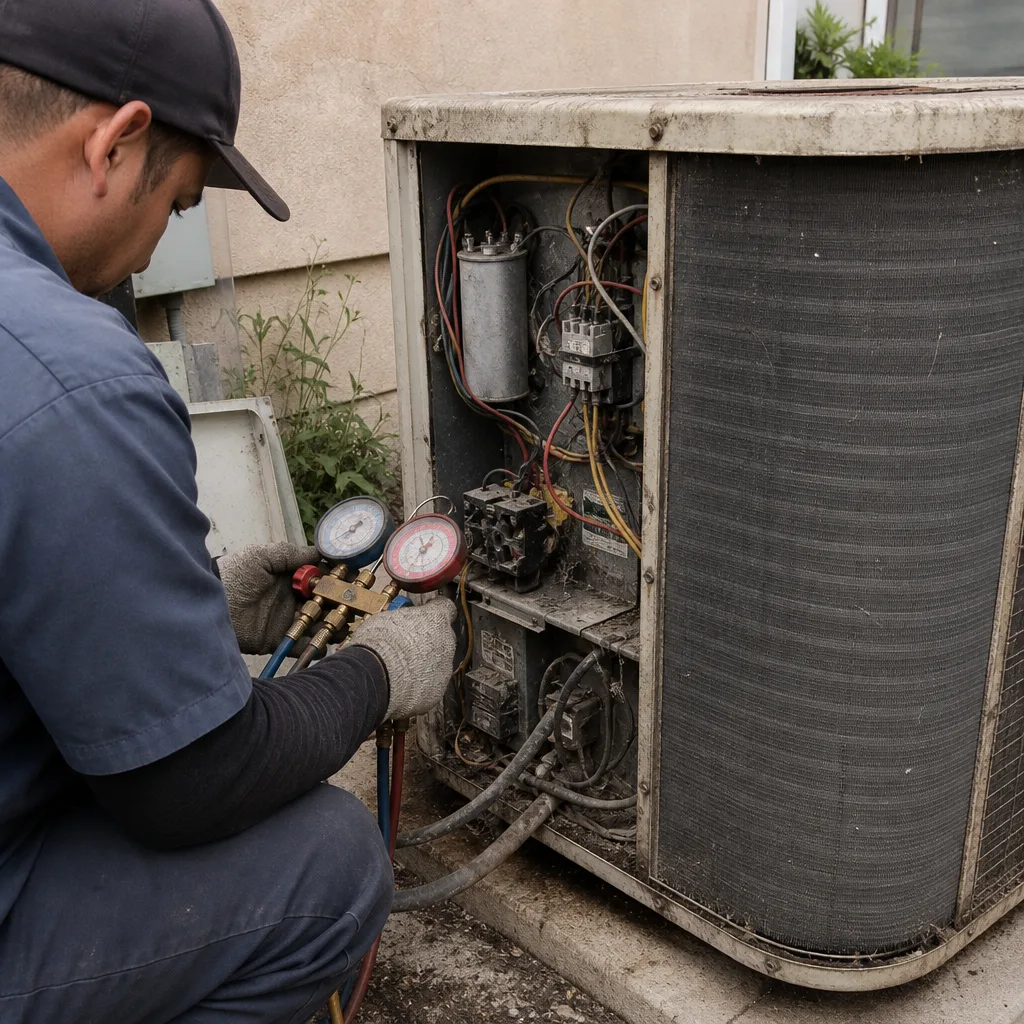 Before
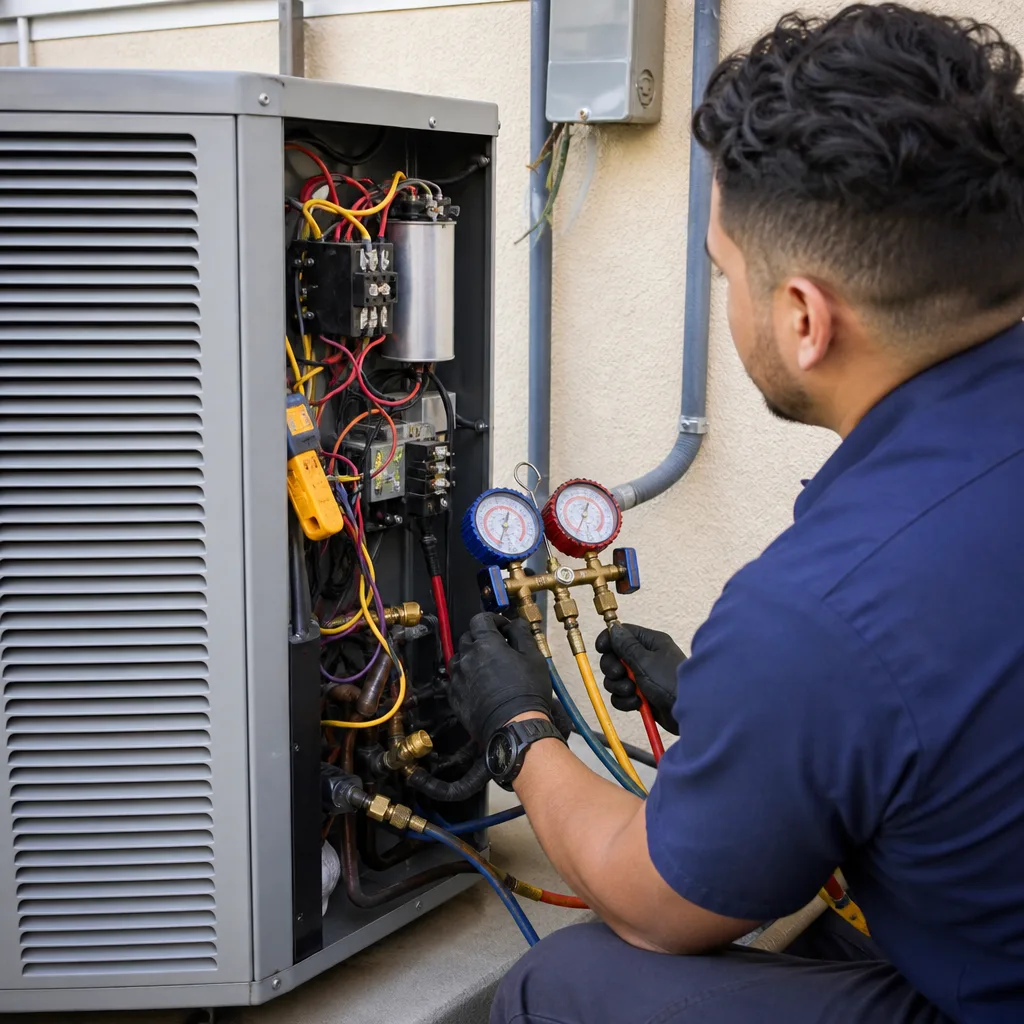 After
AfterReplacement Cost & What’s Included
In San Diego, American Standard capacitor replacement typically runs $175 – $345 installed. The part itself is $25 – $80 depending on whether it’s a single, dual, or start capacitor and whether you go OEM or quality aftermarket. The rest is labor, diagnostic time, and our written guarantee. Systems with the capacitor buried behind a panel inside the condenser cabinet take longer than units with an external capacitor mount, which is why the range exists.
Here’s what you get with our price, and it’s the same on every capacitor job. The written price comes before we touch a tool. The technician replaces the capacitor, checks the contactor and the wiring connections while he’s in there, tests the new part under load, and confirms the fan and compressor start cleanly. Then you get the 365-Day Done Right Promise in writing: if that capacitor or the installation fails within a year, we come back and make it right at no charge. No fine print, no prorating.
Most capacitor replacements take 45 to 90 minutes from arrival to a running system.
DIY or Call Us?
A capacitor stores enough electrical charge to stop your heart, even with the power off at the disconnect. That’s not a scare line, it’s the reason every HVAC tech you meet treats capacitors with respect. If you’re comfortable with a multimeter, you can safely inspect: disconnect power at the breaker and the outdoor disconnect, remove the access panel, and look for a bulged or leaking capacitor. But do not touch the terminals, even with the power off, until the capacitor is properly discharged. If any of that sentence made you hesitate, call us.
What we see go wrong in San Diego DIY capacitor replacements: the wrong microfarad rating installed because the old label was rusted unreadable, a 370 VAC cap put into a circuit that needed 440 VAC, and loose spade connectors that arc and burn out a brand-new part within a month. Then the homeowner pays twice. Call (619) 793-3598 and one of our background-checked technicians will show up in the window we give you.
FAQs
In San Diego’s climate, expect 8 to 12 years from an American Standard capacitor. Coastal homes in La Jolla or Point Loma often see shorter life due to salt corrosion on the terminals, while inland units in El Cajon or Santee deal with more heat stress instead. A capacitor that fails before year 5 usually points to another electrical issue we should look at.
No. A capacitor is a sealed component, and once it’s bulged, leaked, or drifted off its microfarad rating, the only fix is replacement. Attempting to patch or reuse a failing capacitor risks compressor damage, and that’s a $2,000+ problem instead of a $300 one. Call (619) 793-3598 and we’ll match the right replacement.
From arrival to a running system, 45 to 90 minutes in most San Diego homes. That includes diagnosing the failure, matching the correct American Standard-compatible part, installing it, testing under load, and writing up your 365-day guarantee. If the job runs longer, you’ll know why before we start.
Yes. We stock the common dual-run ratings American Standard uses (35/5, 40/5, 45/5, 50/5, 60/5, 70/5, and 80/10 at 370 and 440 VAC) plus start capacitors. For unusual sizes we source same-day from local San Diego supply houses. We also carry compatible parts for Carrier, Trane, and Lennox systems, so if a household has mixed brands we can handle it.
Victor Mancini grew up in the San Fernando Valley, where summer heat was not something you ignored, and learned HVAC through the Los Angeles Trade-Technical College program before spending two decades turning that training into real job experience. His crew has serviced San Diego homes for years now, from Clairemont Mesa residential calls to larger commercial work near Mission Valley. As Victor puts it: “Tell me what it’s doing, and I’ll tell you what it needs, no guesswork, no upsell.”
If your American Standard capacitor is failing or you just want a straight answer about what you’re looking at, call (619) 793-3598. A live person answers 24 hours a day, every day, and the estimate is free.
Written by Victor Mancini, Owner & Lead HVAC Technician, Cold Harbour Heating and Air San Diego at Cold Harbour Heating and Air San Diego, serving San Diego and nearby areas.