
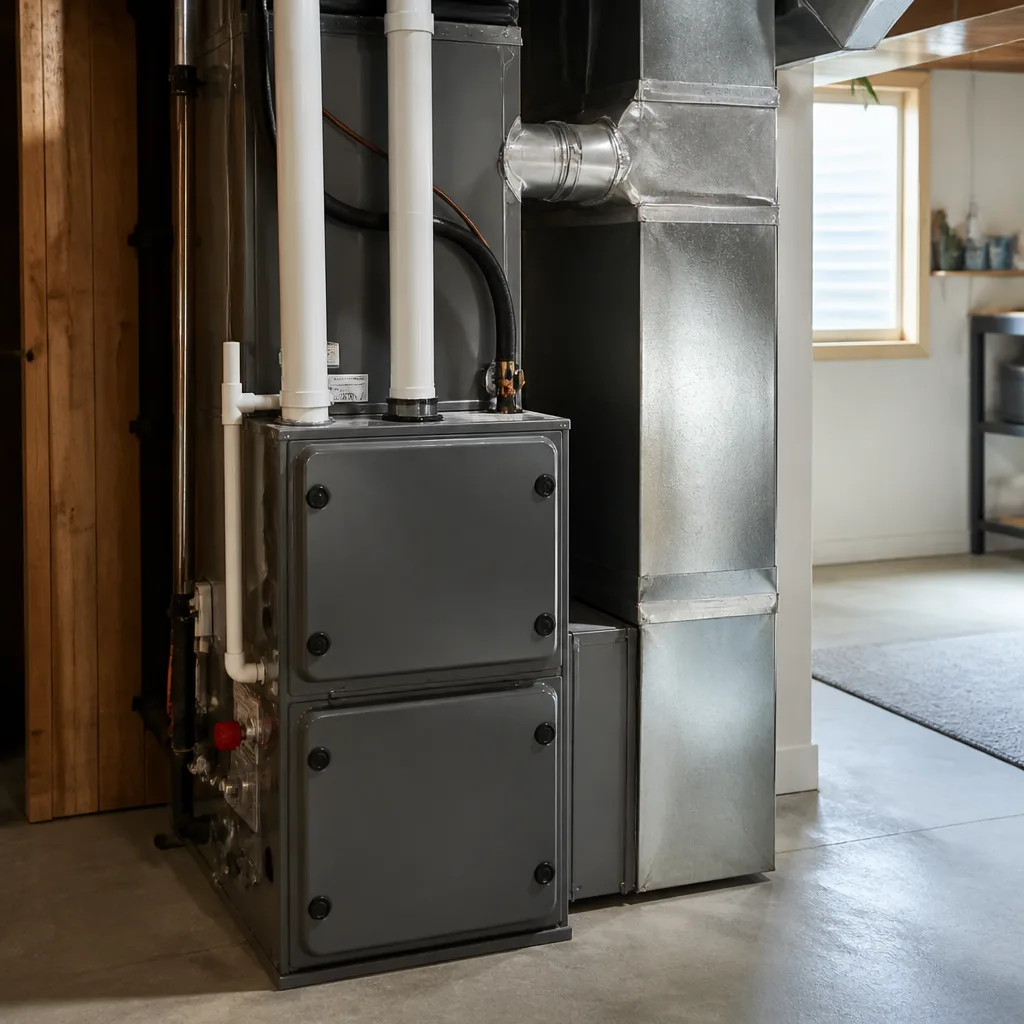
 Furnace & heating
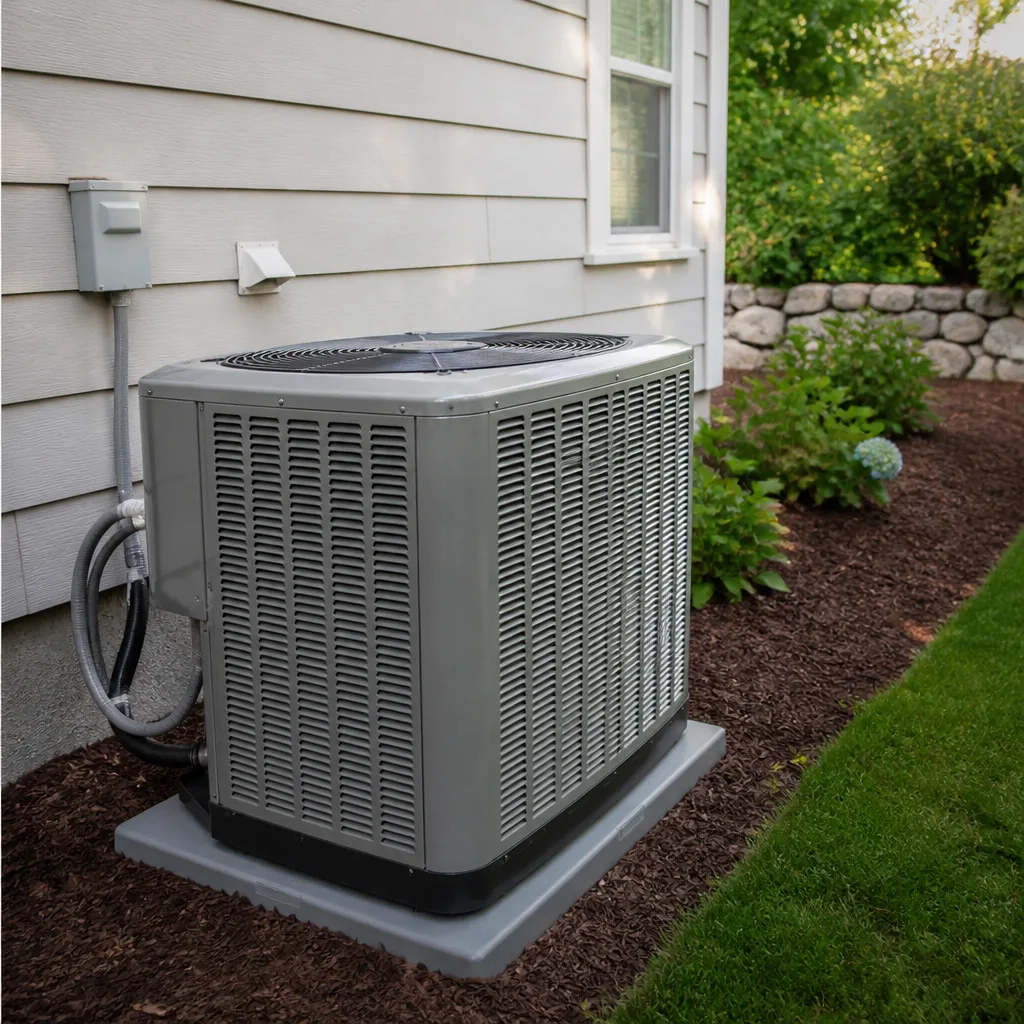 AC repair
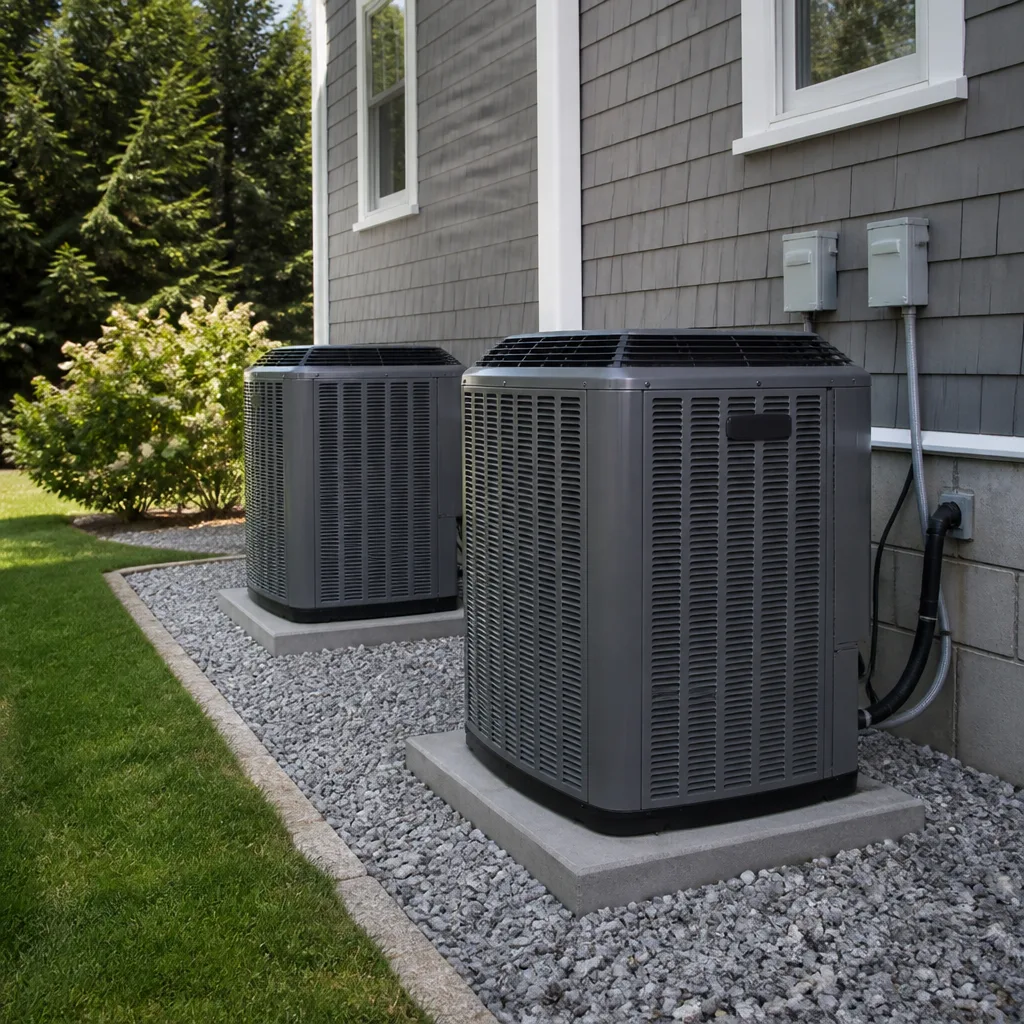 Heat pumps
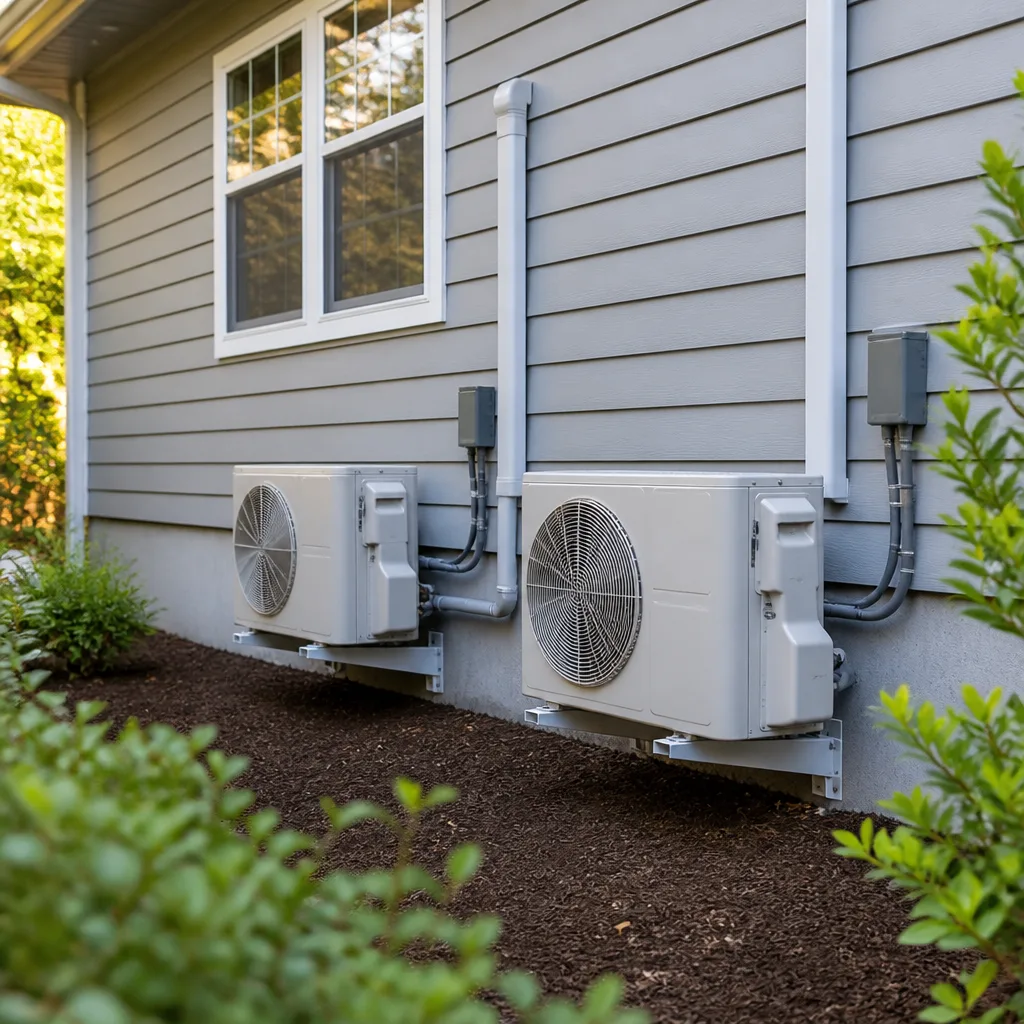 Ductless mini splits
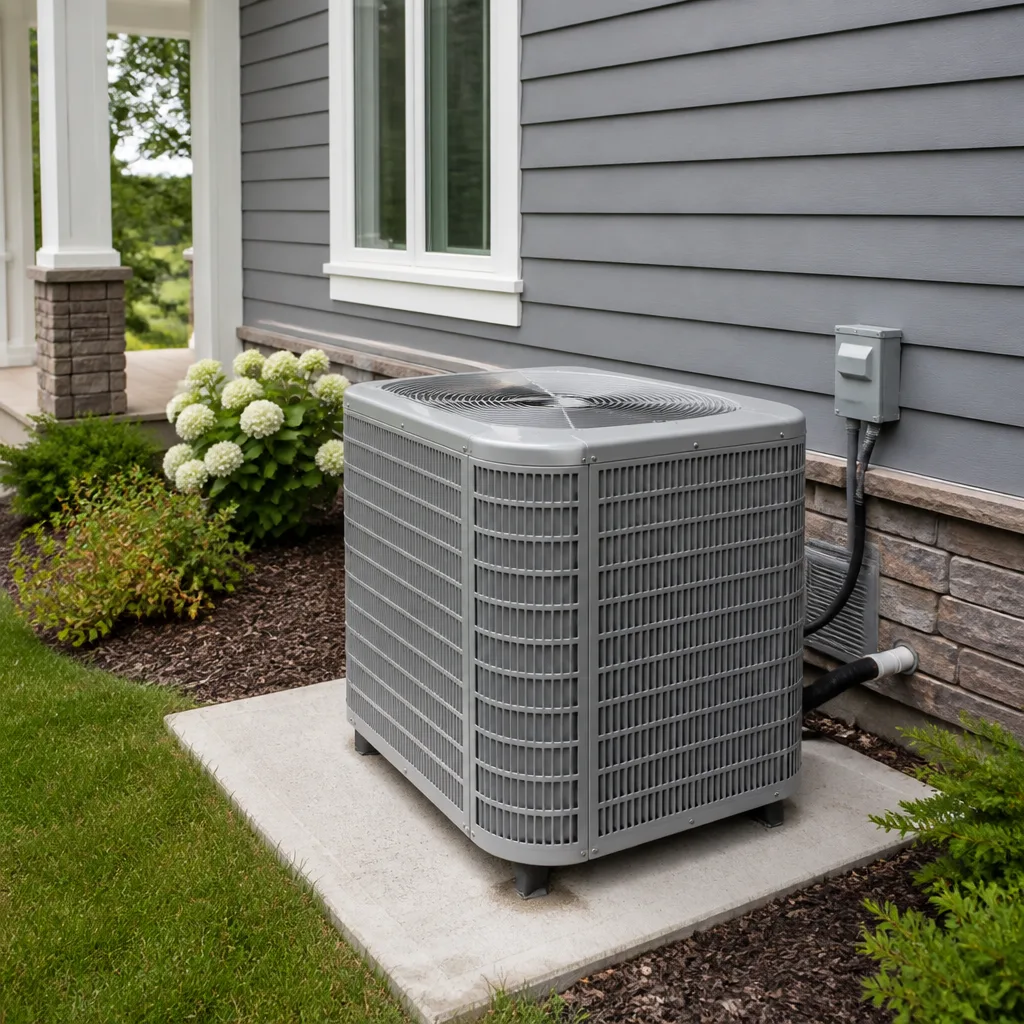 Carrier
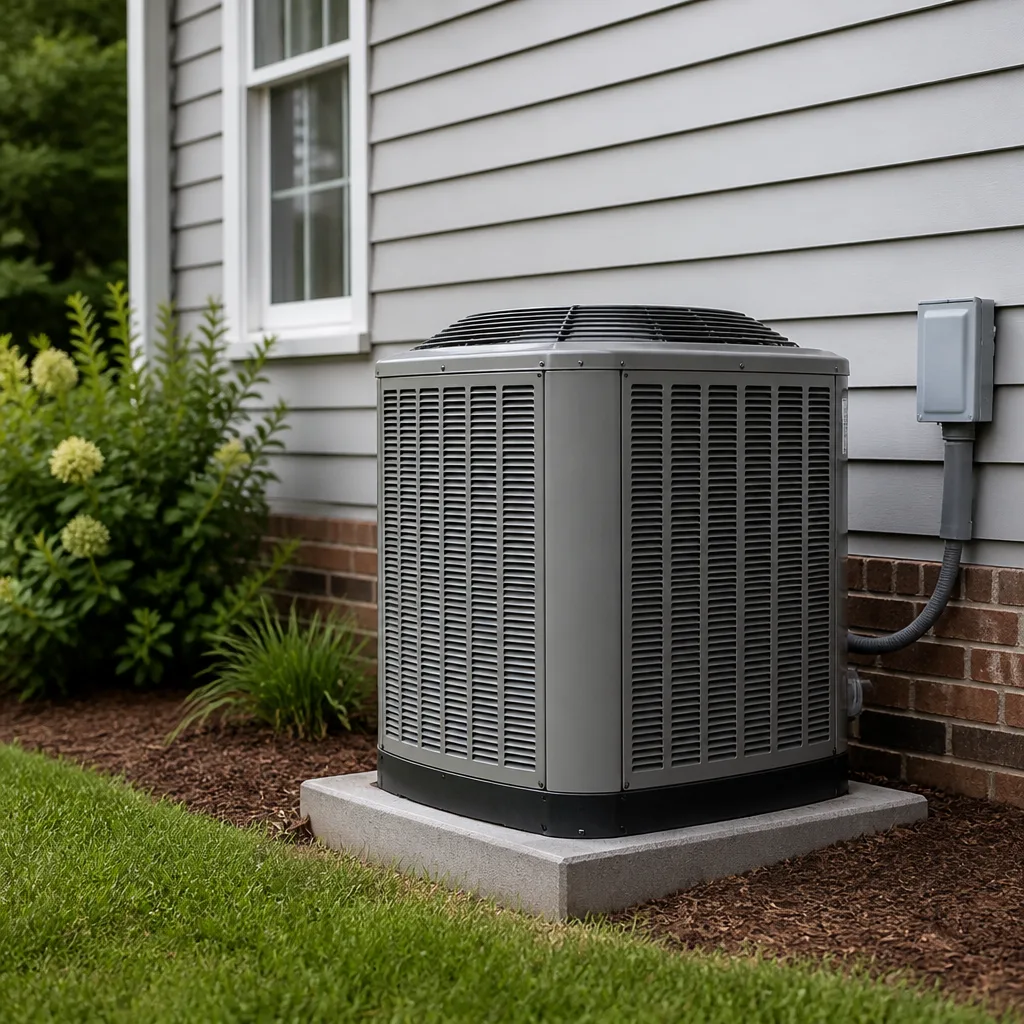 Trane
Trane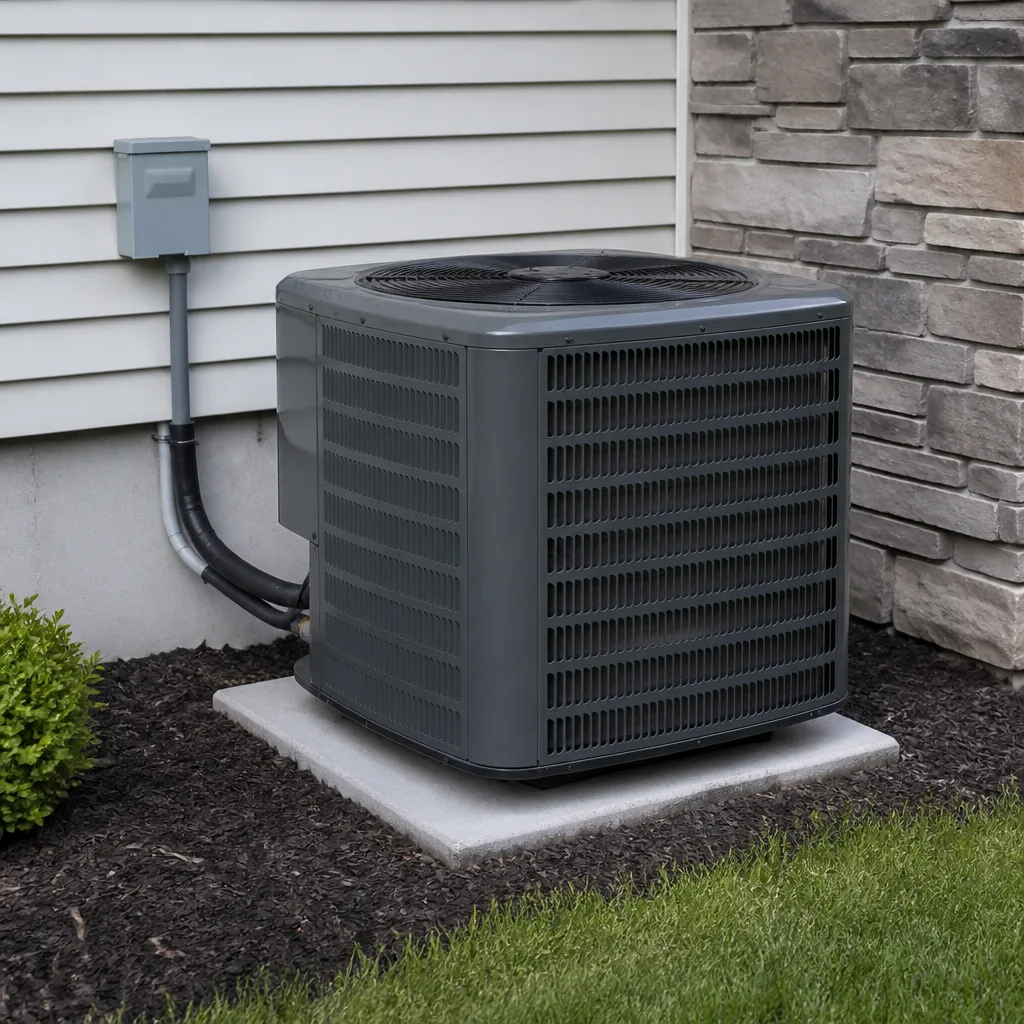 Goodman
Seasonal tune-up and full diagnostic on your Carrier, Trane, or Goodman system - readings shown to you before any repair is proposed
Diagnosis first, numbers second - you approve the repair price before a single part goes in.
Get your free estimateCarrier Capacitor Replacement: The San Diego Owner’s Guide
A Carrier capacitor replacement in San Diego typically runs $175 – $395 installed, depending on whether you need a single-run or dual-run capacitor and which Carrier model you have. We stock Carrier-compatible capacitors on our trucks and can usually complete the swap same-day. Most homeowners discover the problem when their outside unit hums but the fan won’t spin, or the compressor struggles to start on a warm afternoon.
In San Diego, capacitors fail for a predictable reason: heat. Not the dramatic kind, but the slow, cumulative kind. Capacitors sit inside the condenser cabinet where ambient temperatures regularly climb past 120°F on a sunny Clairemont Mesa afternoon, and the dielectric material inside degrades a little more each season. A capacitor that might last 15 years in a mild climate often gives up after 8 – 10 here. We see it constantly.
Which Carrier Models This Applies To
Carrier uses capacitors across nearly every residential line: the Infinity series, Performance series, Comfort series, and the older builder-grade Base models. If your Carrier condenser or air handler was manufactured in the last 20 years, it almost certainly has at least one run capacitor, and most have two functions combined into a dual-run capacitor.
The critical thing to know: Carrier does not make their own capacitors. The capacitor on your Carrier unit is sourced from the same Tier-1 suppliers (Aerovox, Genteq, Titan Pro) that supply Trane, Lennox, and everyone else. So an “OEM Carrier capacitor” is really a re-labeled part you’ll pay a premium for. The better question is whether you’re getting the right spec – the microfarad (μF) rating and voltage. A dual-run capacitor on a 3-ton Carrier typically reads 45/5 μF at 370 or 440 volts. Install a 35/5 where a 45/5 belongs and the compressor runs hot and dies early. We match the exact spec printed on your existing capacitor’s label every time.
The compatibility gotcha most homeowners hit: Carrier’s Infinity series uses ECM blower motors in the air handler that don’t use traditional run capacitors at all. If your Infinity system won’t start, don’t assume it’s a capacitor – it may be a motor module fault that looks identical. We figure that out with a meter in about ten minutes.
Styles & brands we work with
Signs Your Carrier Capacitor Replacement Is Failing
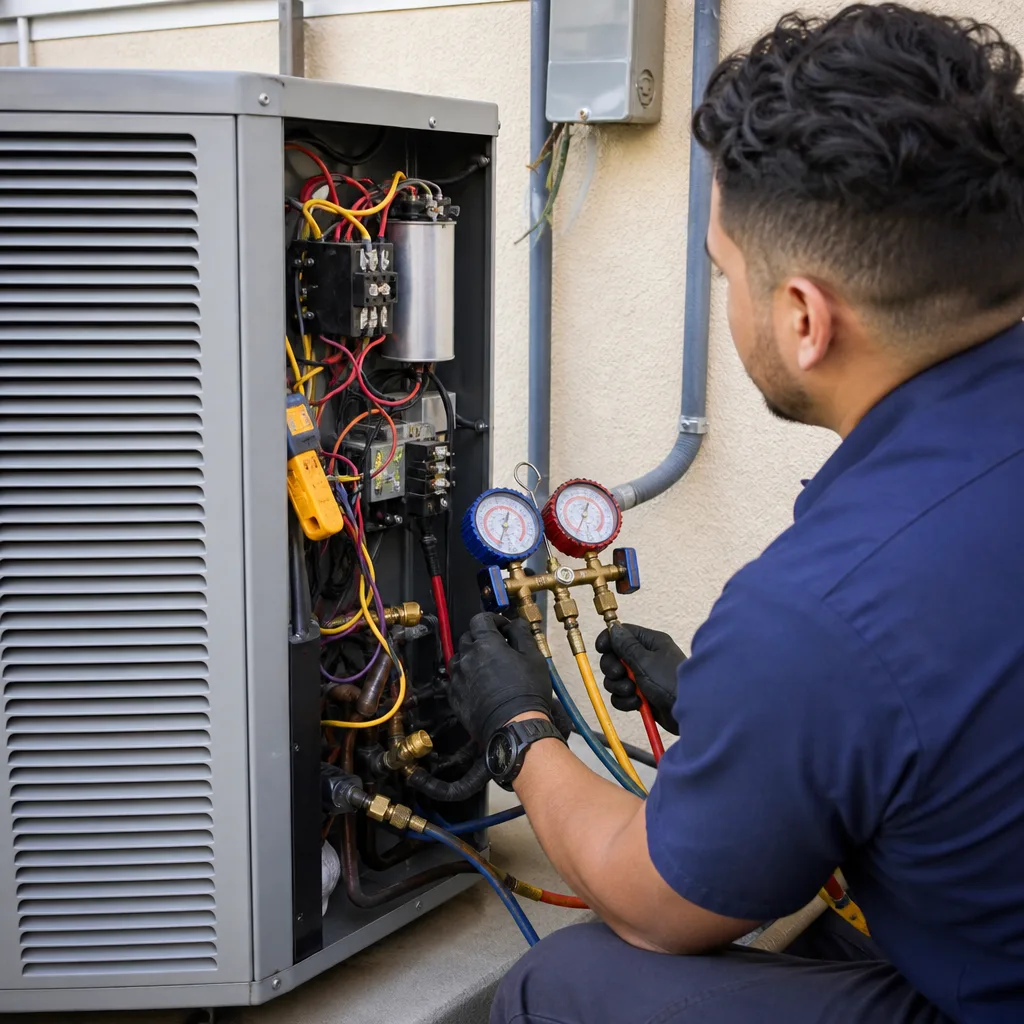
- The outside unit hums but the fan won’t turn. This is the classic dead-capacitor signature. The compressor or fan motor is getting power but lacks the starting boost, so it sits there buzzing. If you hear this, shut the system off at the breaker to avoid motor damage.
- The compressor short-cycles. The unit starts, runs a few seconds, clicks off, then tries again. A weak capacitor can’t hold the charge needed to keep the compressor running, so the system stutters on and off. This accelerates wear on the compressor itself – the single most expensive component to replace.
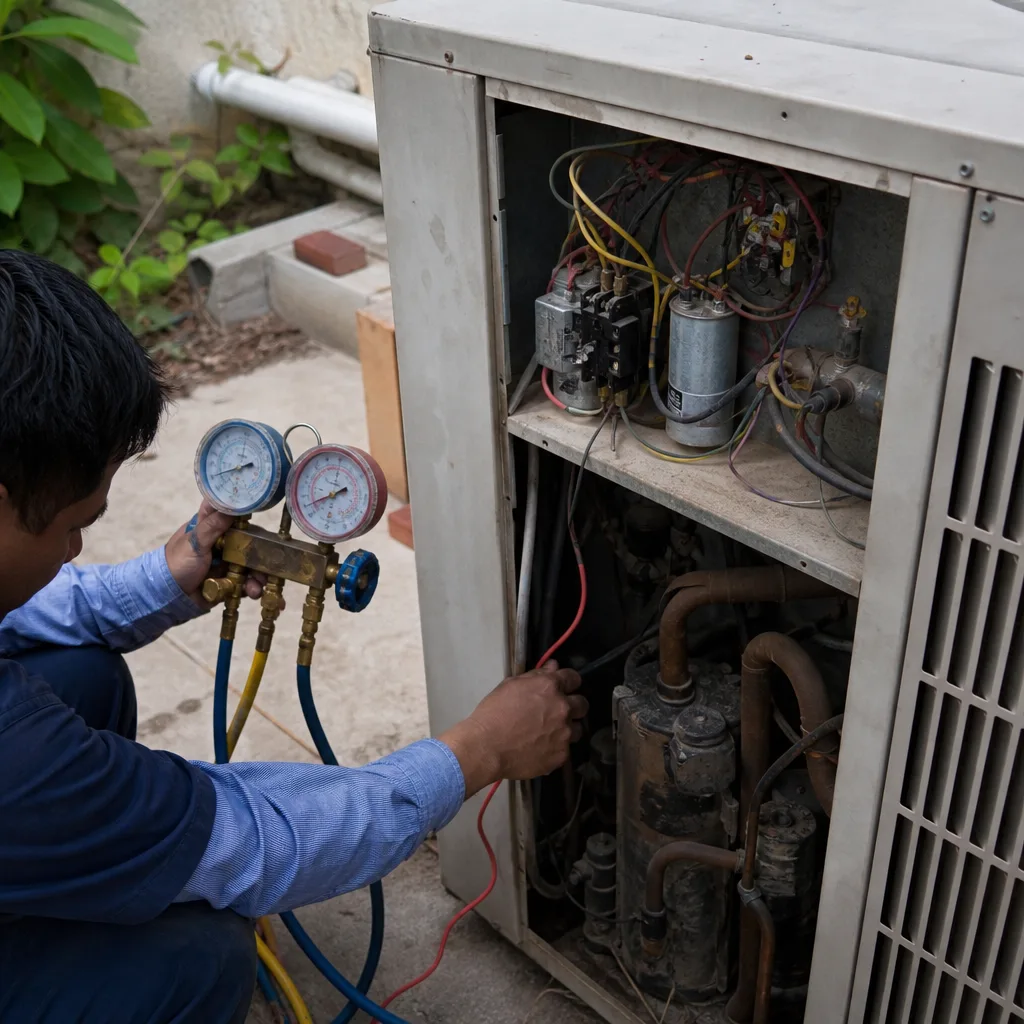
- The top of the capacitor is bulging or the sides look swollen. When a capacitor fails from heat or age, the internal pressure physically deforms the metal casing. If you open the condenser panel and see a puffed-up cylinder, that’s a textbook failure. Don’t touch it – we’ll handle that.
- Your AC blows warm air on mild days but works at night. A capacitor with reduced capacitance may still function when temperatures are lower, then fail once the cabinet heats up. San Diego’s inland areas see this constantly in August: fine at 8 p.m., dead by 1 p.m. the next day.
- The system draws higher than normal amperage. This is the one you won’t see unless you have a clamp meter, but it’s the one we look for first. A failing capacitor forces the motor to work harder to start, pulling more current than it should. Left alone, that turns a $200 capacitor job into a $1,500 motor replacement.
See the difference
 Before
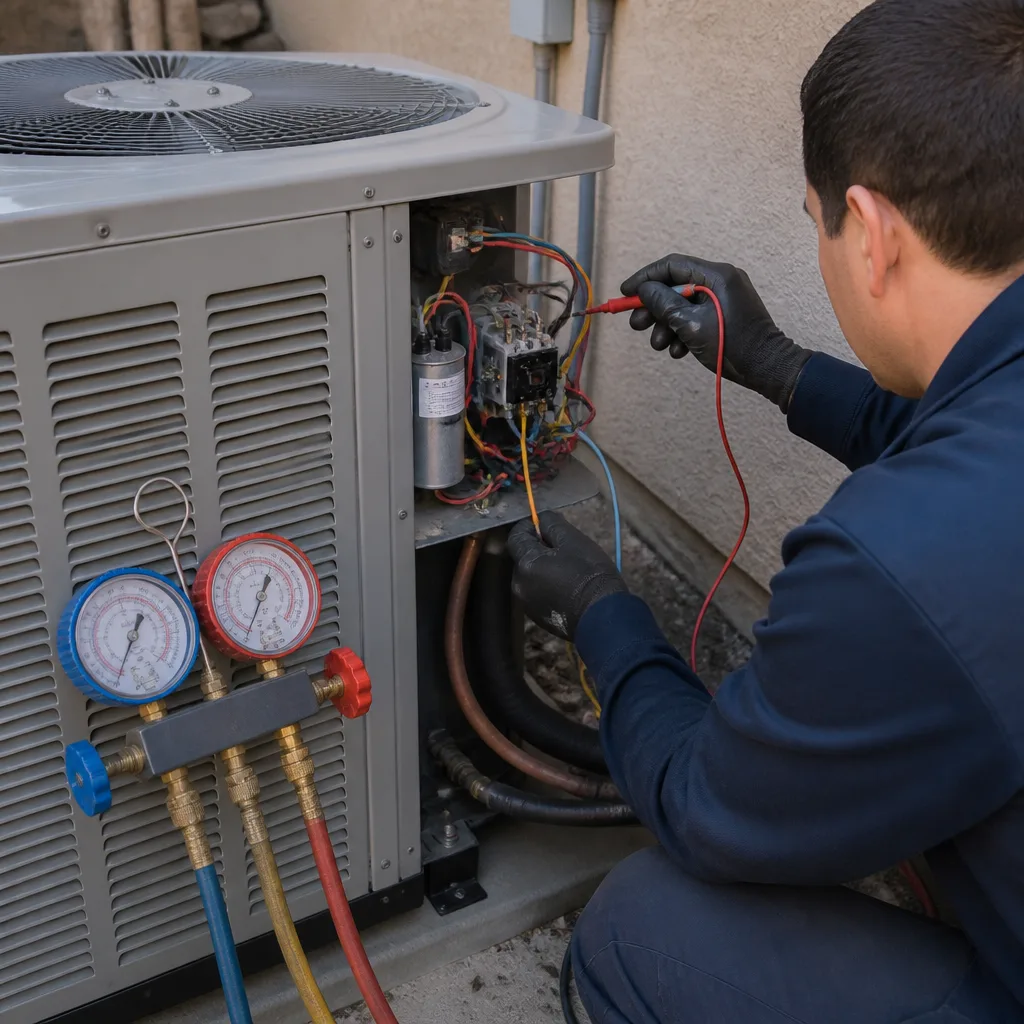 After
After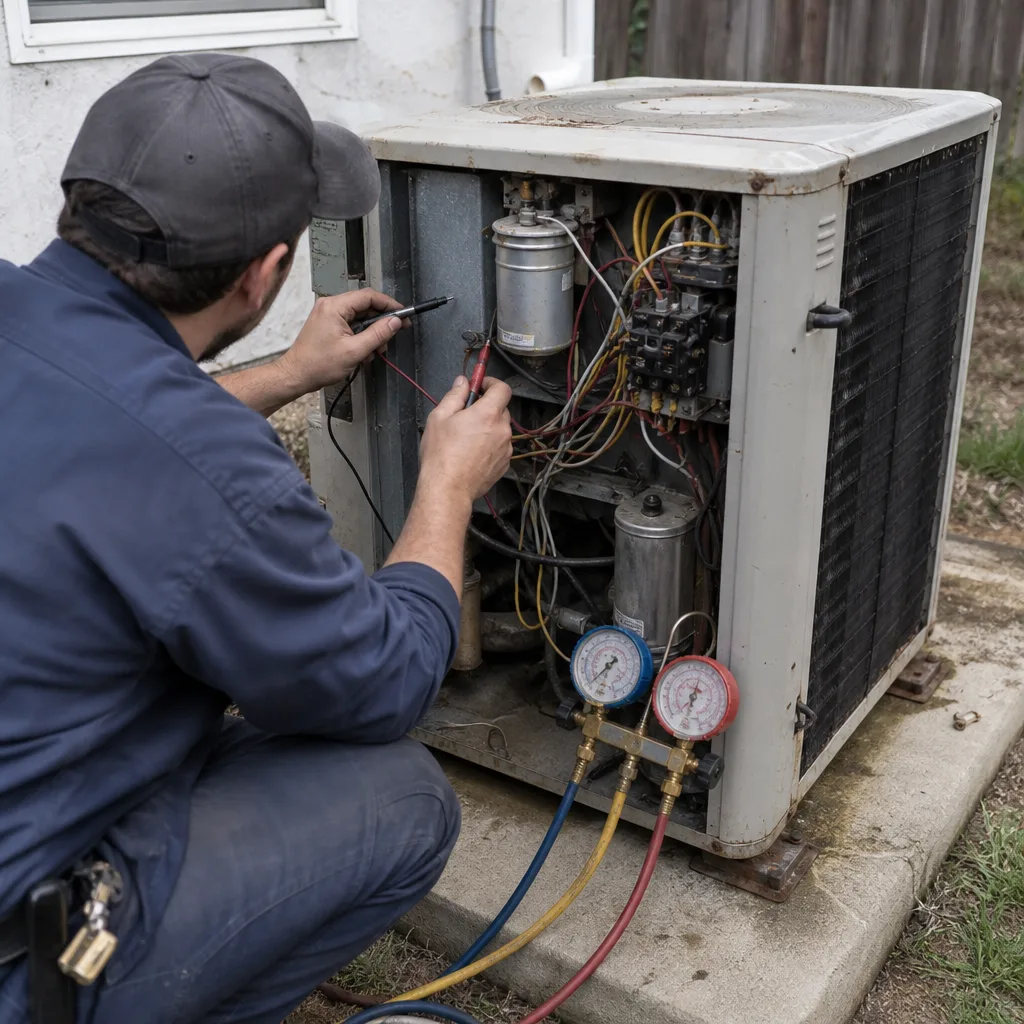 Before
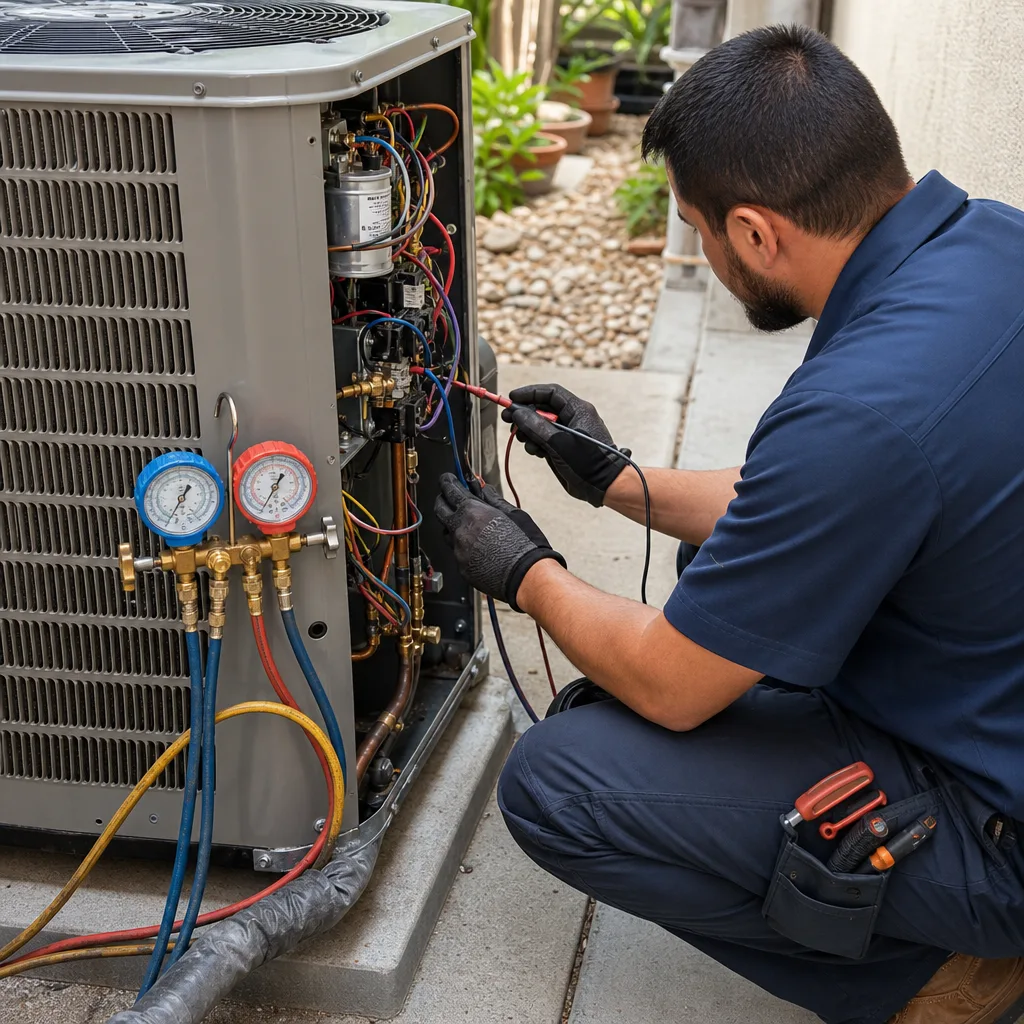 After
After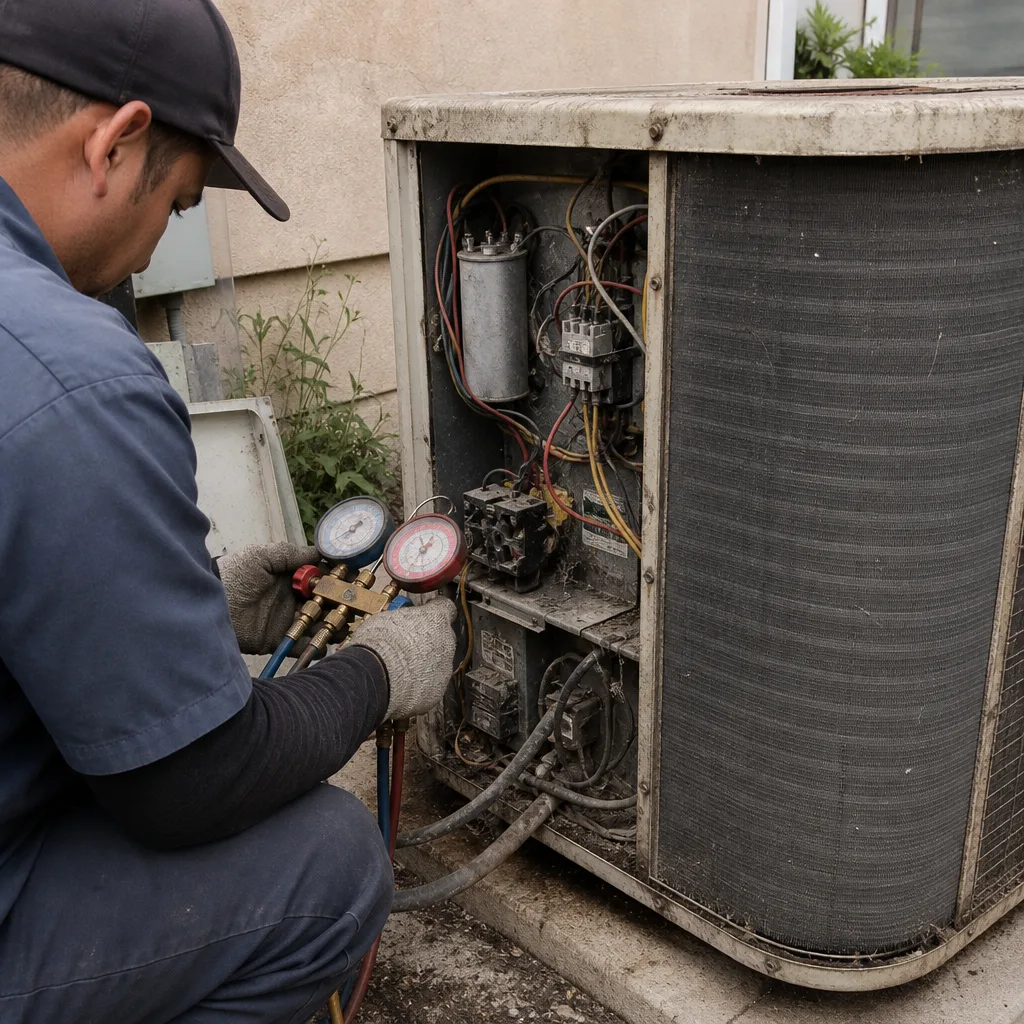 Before
 After
AfterReplacement Cost & What’s Included
Here’s the straight answer for San Diego pricing. A single-run capacitor replacement (one function, usually for the fan only) runs $175 – $235, parts and labor included. A dual-run capacitor (what most Carrier condensers use, handling both compressor and fan) runs $225 – $395 depending on the spec and whether we’re also addressing related wiring or a failing contactor we find while we’re in there.
| Job Type | Typical San Diego Price |
|---|---|
| Single-run capacitor replacement | $175 – $235 |
| Dual-run capacitor replacement | $225 – $395 |
| Dual-run capacitor + contactor replacement | $310 – $520 |
That price is written down and handed to you before we touch a single tool. It does not change at the door. The Kingswell Way means exactly that: say the price before the work, show up in the window given, leave the place cleaner than found, put the guarantee in writing, come back if it fails. Every capacitor we install is covered by our 365-Day Done Right Promise – if it fails within a full year, we come back and fix it at no charge. No fine print, no argument.
DIY or Call Us?
Here’s the honest split. You can safely check two things yourself: whether the outside unit is running at all, and whether you can see visible damage if you’re comfortable removing the condenser panel (power off, always). Beyond that, this is not a DIY part. A capacitor stores enough voltage to seriously injure you even after the power is off – it holds a charge like a battery, and it doesn’t know the breaker is down. The discharge procedure is simple if you know it, but if you don’t, it’s not the place to learn by trial.
We also see the other DIY failure mode: someone buys a $18 capacitor online, guesses at the spec, and installs the wrong microfarad rating. The compressor runs for a few weeks, then the motor winding burns out. Now it’s $1,500 instead of $250. Victor Mancini – our owner and lead technician – learned this trade through the HVAC/R program at Los Angeles Trade-Technical College before spending the better part of two decades doing it in the field, and he’ll tell you the same thing he tells us: tell me what it’s doing, and I’ll tell you what it needs. No guesswork, no upsell. Call (619) 793-3598 and we’ll have a background-checked, uniformed technician out the same day in most San Diego neighborhoods.
Frequently Asked Questions
A Carrier capacitor typically lasts 8 – 10 years in the San Diego climate, though inland areas like El Cajon and Santee see shorter lifespans due to higher condenser cabinet temperatures. Coastal homes near La Jolla and Point Loma often get 12+ years because the ambient heat load is lower.
No. A capacitor is a sealed, non-serviceable component – once the dielectric inside has degraded, there’s no rebuilding it. Replacement is the only correct fix, which is why we keep the common Carrier sizes on the truck so we can do it in one visit.
A straightforward Carrier capacitor swap takes 30 – 45 minutes from the time our technician opens the panel to the time the system is running and tested. If we find a failing contactor or corroded wiring while we’re in there, it may run 60 – 90 minutes, and we’ll tell you before we do anything beyond the original scope.
We stock the most common Carrier-compatible capacitor specs on our trucks – including 35/5, 40/5, 45/5, and 50/5 dual-run units in both 370V and 440V ratings – along with compatible parts for Trane and Lennox systems. If your Carrier needs an uncommon spec, we can usually source it same-day from local supply houses in San Diego. Call (619) 793-3598 for an exact quote – estimates are free.
If your Carrier unit is humming, short-cycling, or just won’t start when San Diego heats up, call (619) 793-3598 and we’ll give you a straight answer and a written price before any work begins. We’re Cold Harbour Heating and Air San Diego, independently owned and operated as part of the Kingswell network since 2003, and the only thing we’re affiliated with is doing the job right the first time.
Written by Victor Mancini, Owner & Lead HVAC Technician, Cold Harbour Heating and Air San Diego at Cold Harbour Heating and Air San Diego, serving San Diego and nearby areas.