
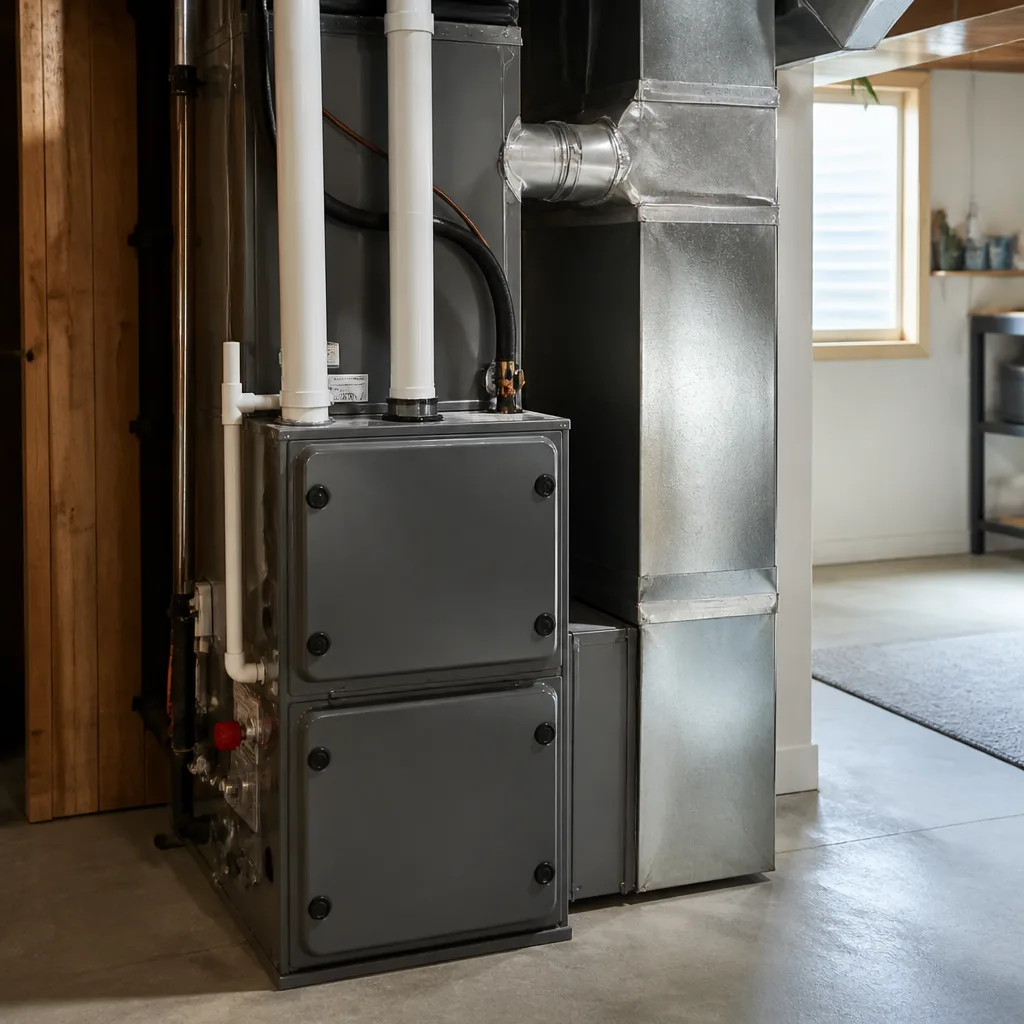
 Furnace & heating
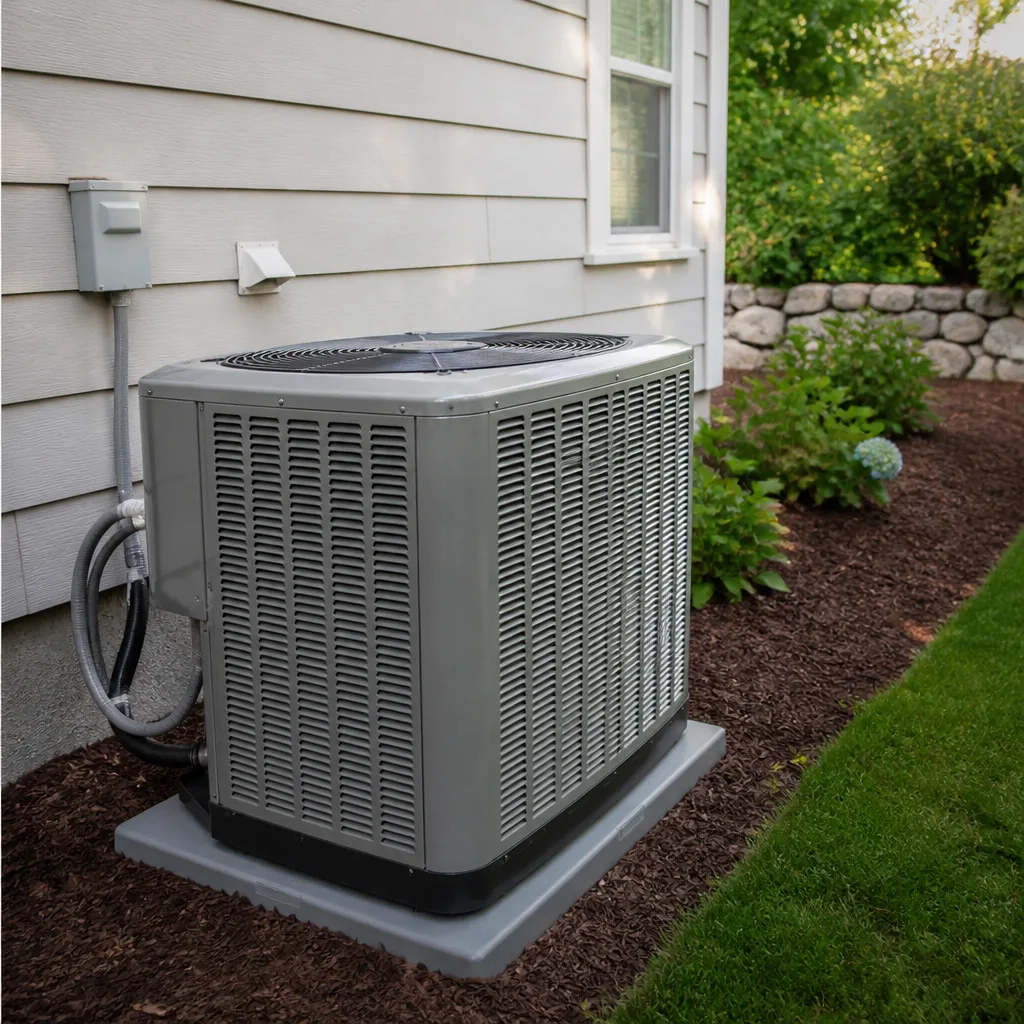 AC repair
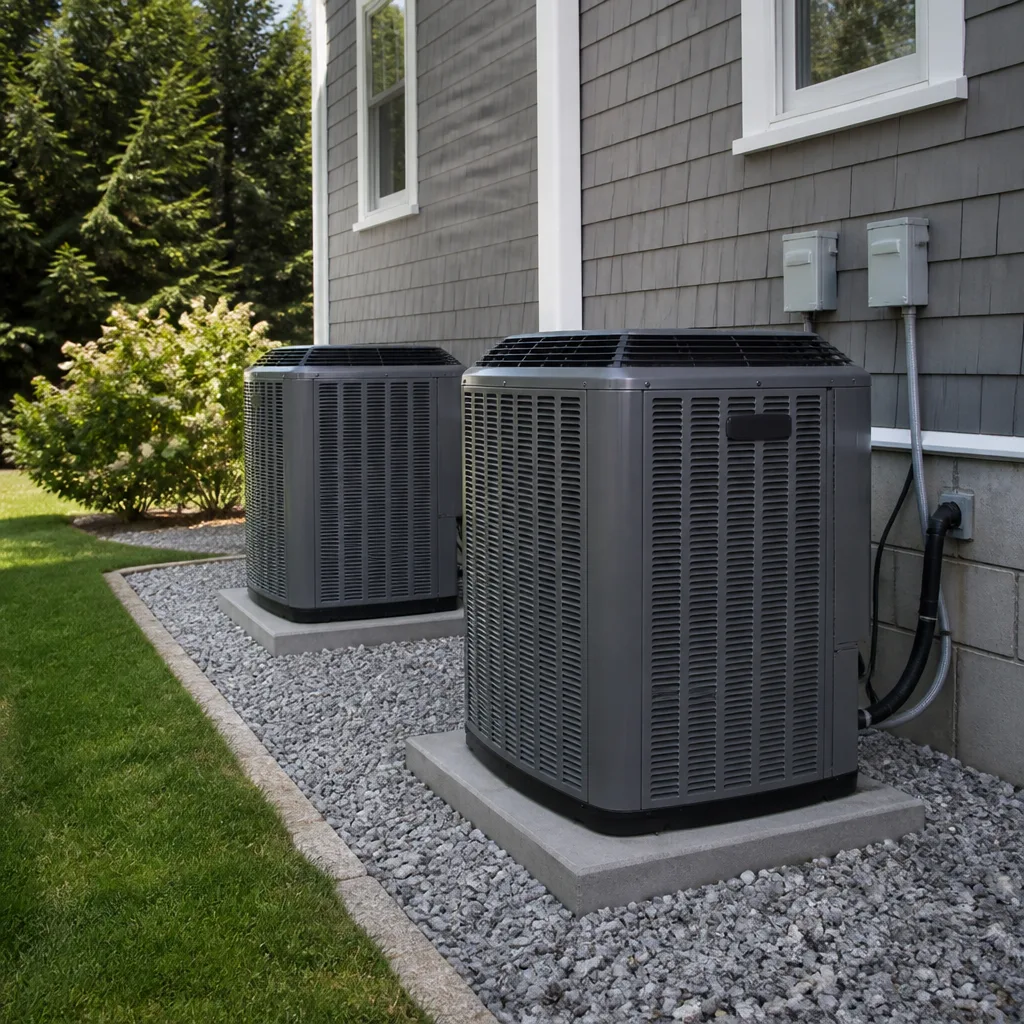 Heat pumps
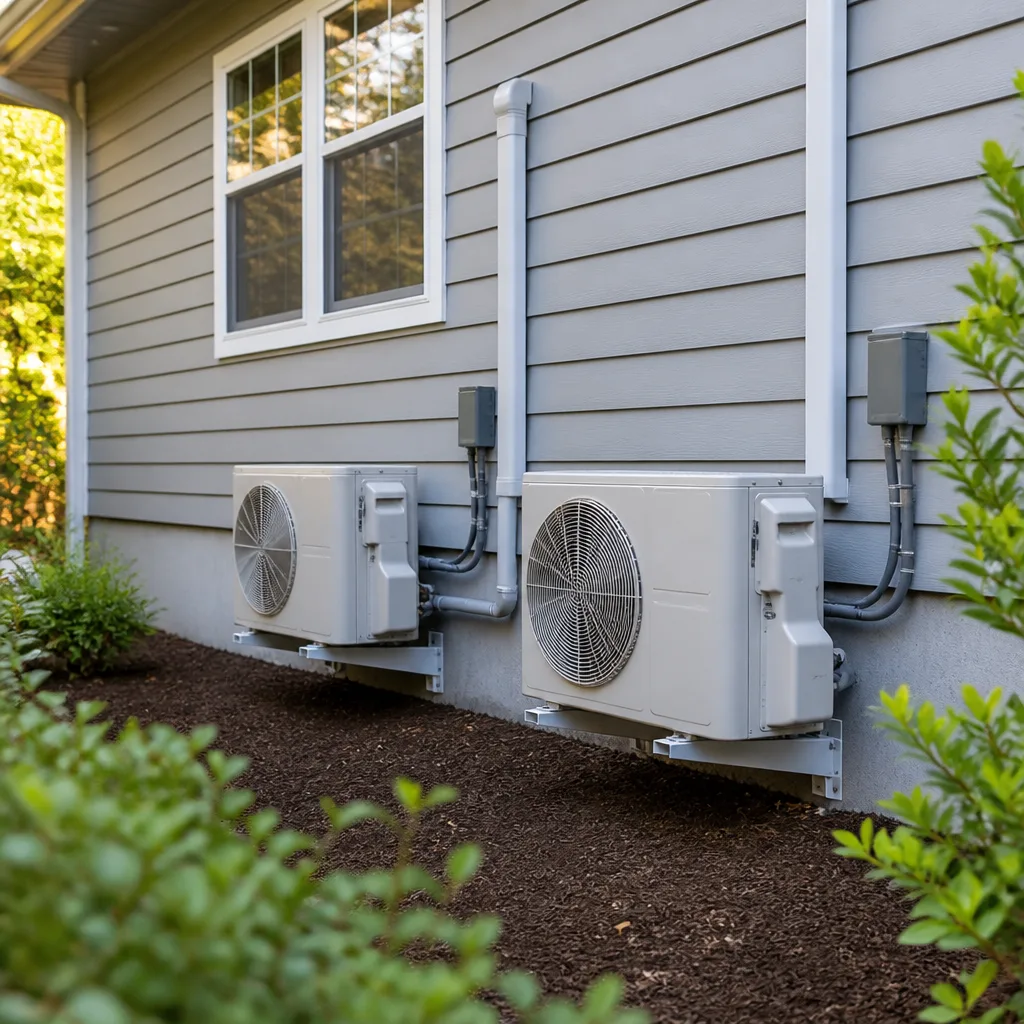 Ductless mini splits
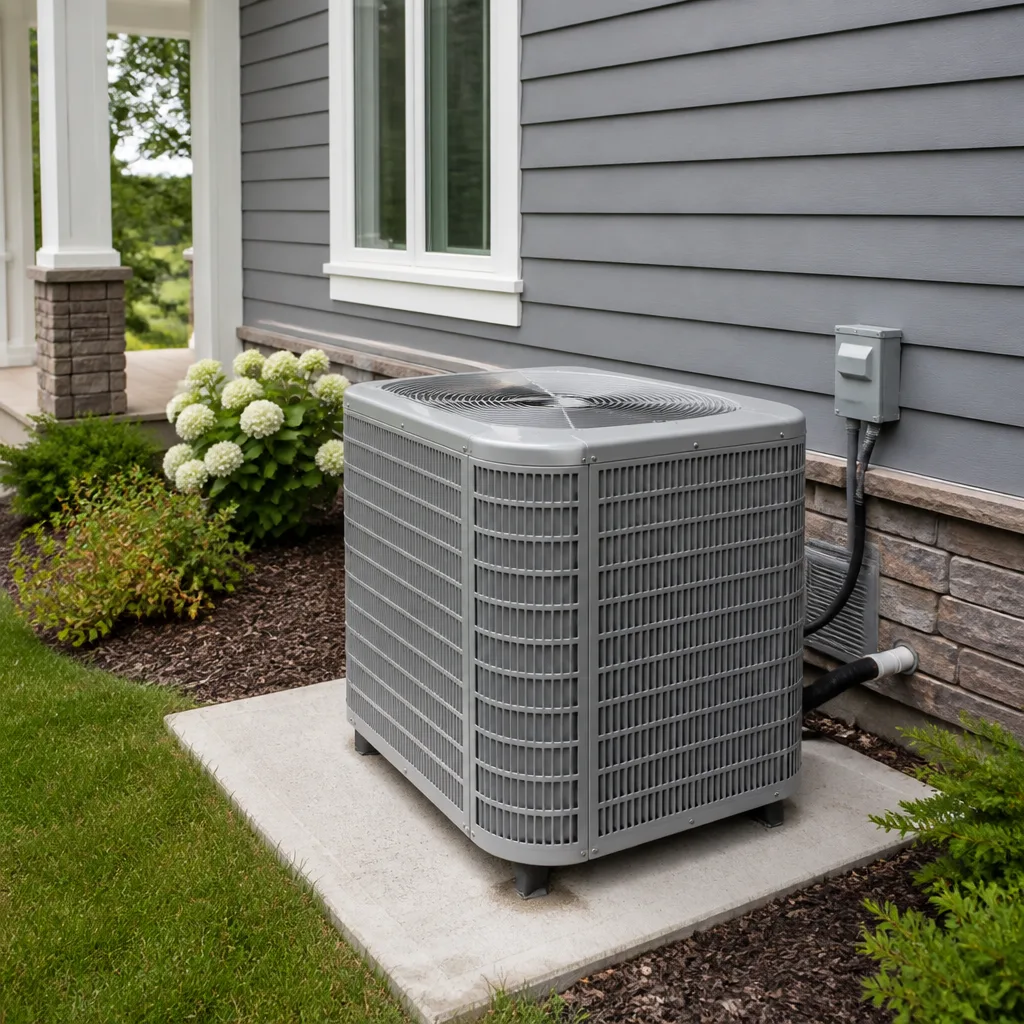 Carrier
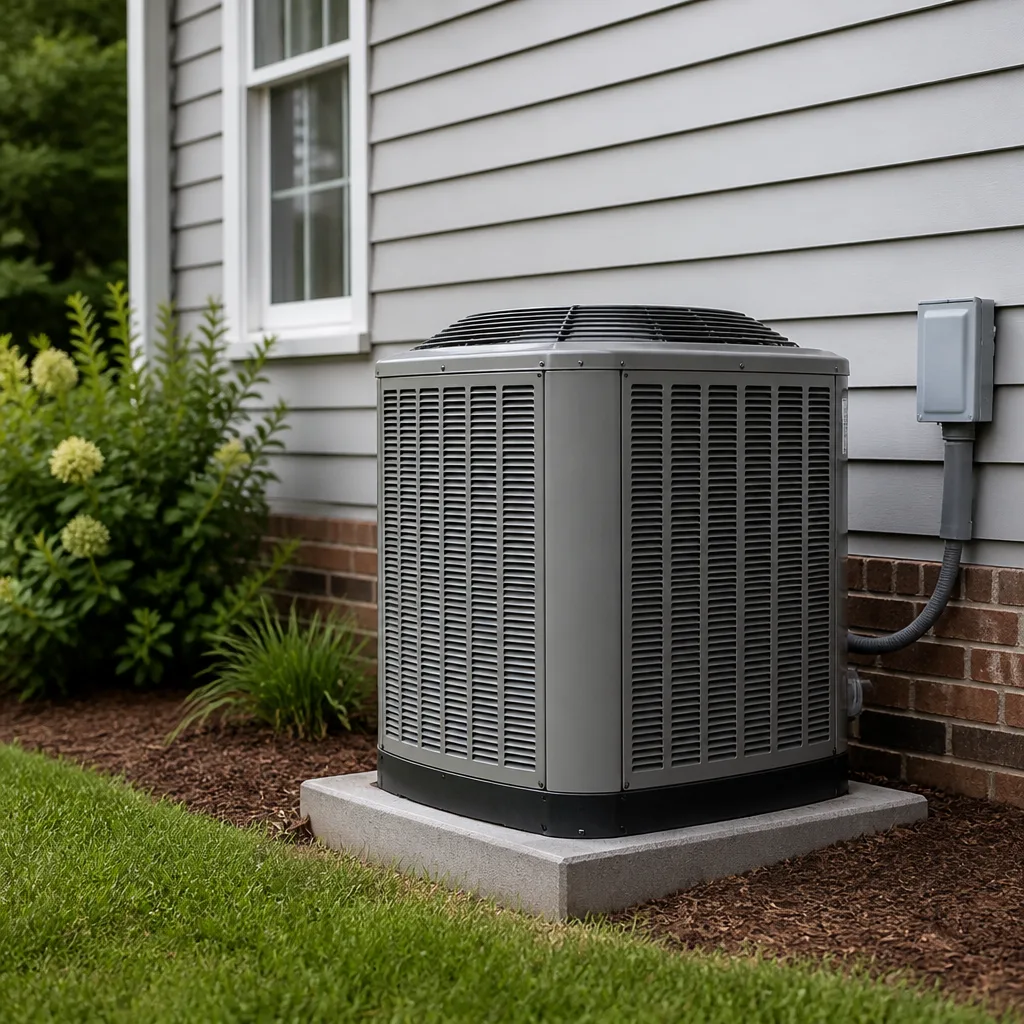 Trane
Trane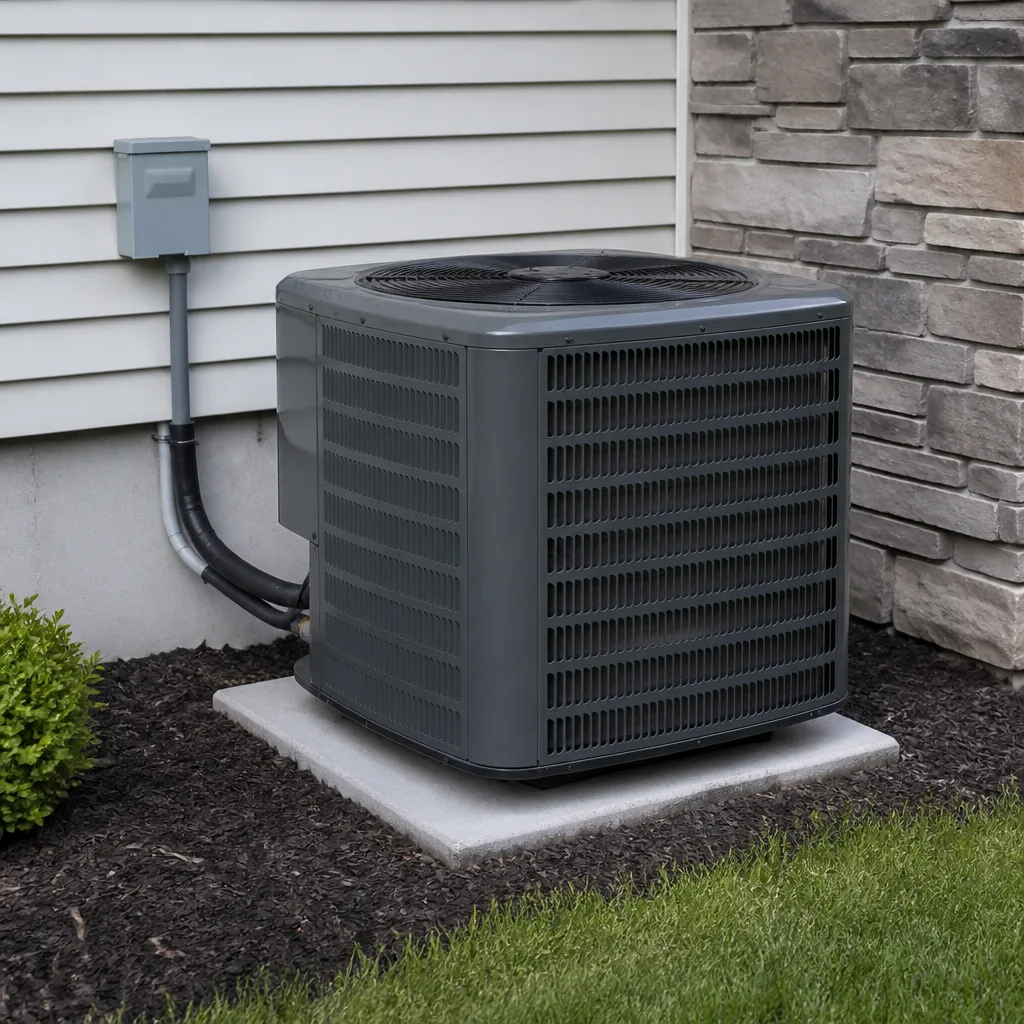 Goodman
Seasonal tune-up and full diagnostic on your Carrier, Trane, or Goodman system - readings shown to you before any repair is proposed
Diagnosis first, numbers second - you approve the repair price before a single part goes in.
Get your free estimateGoodman Capacitor Replacement: The San Diego Owner’s Guide
A Goodman capacitor replacement in San Diego typically runs $175 – $320 installed, parts and labor included, and most swaps are finished in under an hour. We keep Goodman-compatible capacitors stocked on our trucks, so when your system won’t start or the compressor is humming without kicking on, we can usually have you back up and running the same day we arrive. Most homeowners discover the problem the hard way: the AC works fine one evening, then the next afternoon the outdoor unit just sits there silent while the thermostat insists it’s calling for cool. The capacitor is the small cylindrical part that gives your compressor and fan motor the electrical jolt they need to start turning, and when it dies, nothing spins.
Before you keep reading, know this from Victor Mancini, our owner and lead technician: a capacitor stores enough electrical charge to hurt you even when the power is off. We handle the swap safely. Don’t open the service panel and start poking around unless you know exactly how to discharge that stored voltage.
Key takeaways:
- A failed capacitor is the most common reason a Goodman AC won’t start in San Diego.
- Installed replacement typically costs $175 – $320. You’ll get the written price before we touch a tool.
- Most Goodman capacitor failures show up as a humming unit, a spinning fan but no compressor, or a unit that starts sometimes and not others.
- We stock OEM-quality Goodman capacitors and reputable aftermarket equivalents on the truck. Same-day service is usually available.
- Cold Harbour Heating and Air San Diego is an independent service provider. We’re not affiliated with Goodman, but we service their equipment every week.
Which Goodman Models This Applies To
Goodman has used the same basic capacitor design across a huge range of residential units for decades, so if your condenser or air handler was built in the last 20 years, the odds are good we have the right match on the truck. The most common lines we service in San Diego are the GSX, GSZ, and GSC split-system condensers, the ARUF and ASPT air handlers, and the older CK and CLK units still working in plenty of Chula Vista and El Cajon homes.
Here’s the compatibility gotcha most people don’t know: Goodman doesn’t stamp a single “one size fits all” capacitor into every unit. The capacitor has two numbers that matter: the microfarad (µF) rating and the voltage rating. A GSX13 condenser might need a 35/5 µF dual-run capacitor at 440 volts, while an older 10-SEER unit takes something else entirely. Removing the wrong match and guessing gets you a unit that starts hard, runs hot, and kills the new part early. The right way is to read the label on the old capacitor itself, not just the model number on the data plate. The label lists the exact µF and voltage, and sometimes the tolerance. That’s the spec we match.
We install OEM Goodman capacitors when the part is available locally and time allows, and we also carry high-quality aftermarket equivalents from manufacturers like Titan and Amrad. For a part this simple and this important, the aftermarket options from those brands perform every bit as well as OEM. We’ll tell you which one we’re recommending and why before the work starts.
Styles & brands we work with
Signs Your Goodman Capacitor Replacement Is Failing
- The outdoor unit hums but the fan doesn’t spin. You’re hearing the compressor trying to start without the electrical kick it needs. That hum is the motor drawing current and going nowhere. Every minute it sits like that, it’s cooking itself. Turn the system off at the thermostat and call us.
- The fan spins, but the compressor won’t start. A dual-run capacitor feeds both the fan motor and the compressor. One side of it can fail while the other keeps working. You’ll get lukewarm air blowing through the vents because the compressor, the part that actually pumps refrigerant, never came on.
- The unit starts sometimes, not others. A capacitor doesn’t always die all at once. As it degrades, it might hold enough charge to start the motor on a mild morning, then fail to deliver on a hot afternoon. Intermittent starts are a classic failing-capacitor signature in San Diego, where our coastal humidity and summer heat cycles push these parts hard.
- The top of the capacitor is bulging or leaking. If you feel comfortable opening the disconnect and removing the service panel safely, a swollen or split capacitor case is a dead giveaway. The electrolyte inside has broken down from heat and age. Again, don’t touch the terminals. A failed capacitor can still hold voltage.
- Your energy bill climbed and the AC sounds different. When a capacitor is weak, the compressor struggles to start. That hard-start condition draws more amps every cycle and shortens the life of the compressor itself. A faint rattle or a slower spin-up than normal on the fan is another subtle tell.
Replacement Cost & What’s Included
Most Goodman capacitor replacements in San Diego run $175 – $320 installed. That’s the total: the part, the labor, the diagnostic time, and the written guarantee. Here’s what drives the range:
- A single-run capacitor for a small fan-only application lands at the lower end.
- A dual-run capacitor for a typical Goodman condenser sits mid-range, around $210 – $280.
- If the original failure damaged the fan motor or contactor as a secondary issue, your total repair may fall into our broader AC repair range of $175 – $765, and we’ll show you exactly why before any work begins.
- Emergency calls on hot San Diego afternoons don’t carry an overtime surcharge with us. The price we quote is the price you pay.
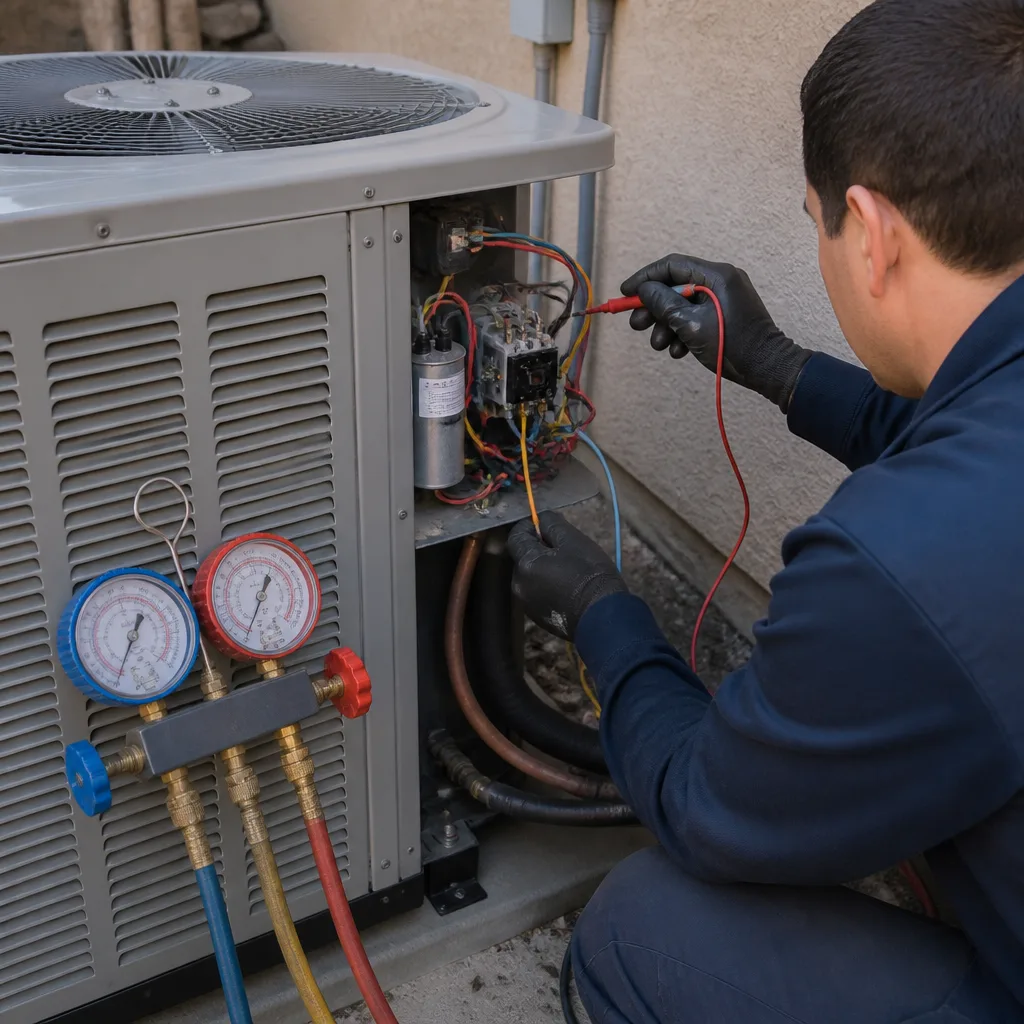
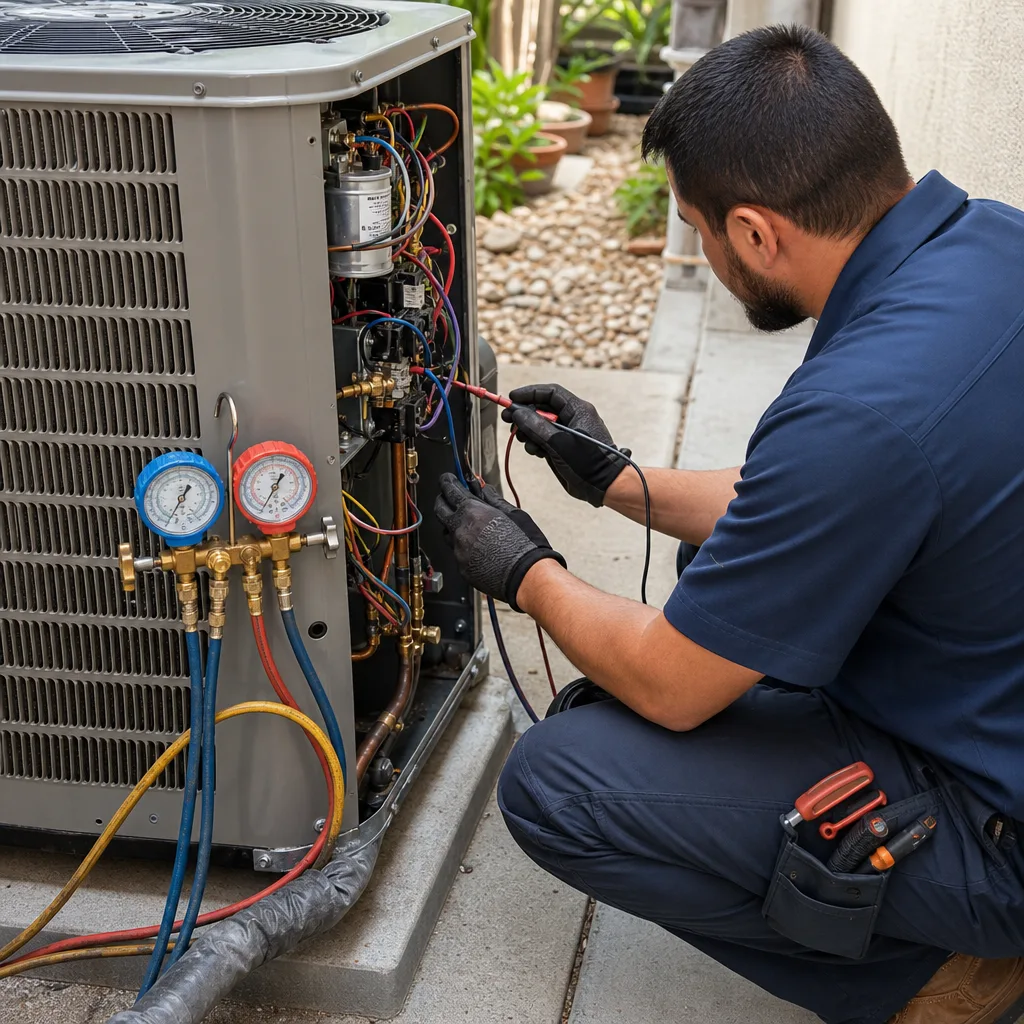
Every capacitor replacement includes a written price handed to you before any work starts, and the repair is covered by our 365-Day Done Right Promise. If the new capacitor fails within a year, we come back and correct the work at no charge. No phone calls asking you to explain yourself. No re-diagnosis fee. It’s written down before we leave.
See the difference
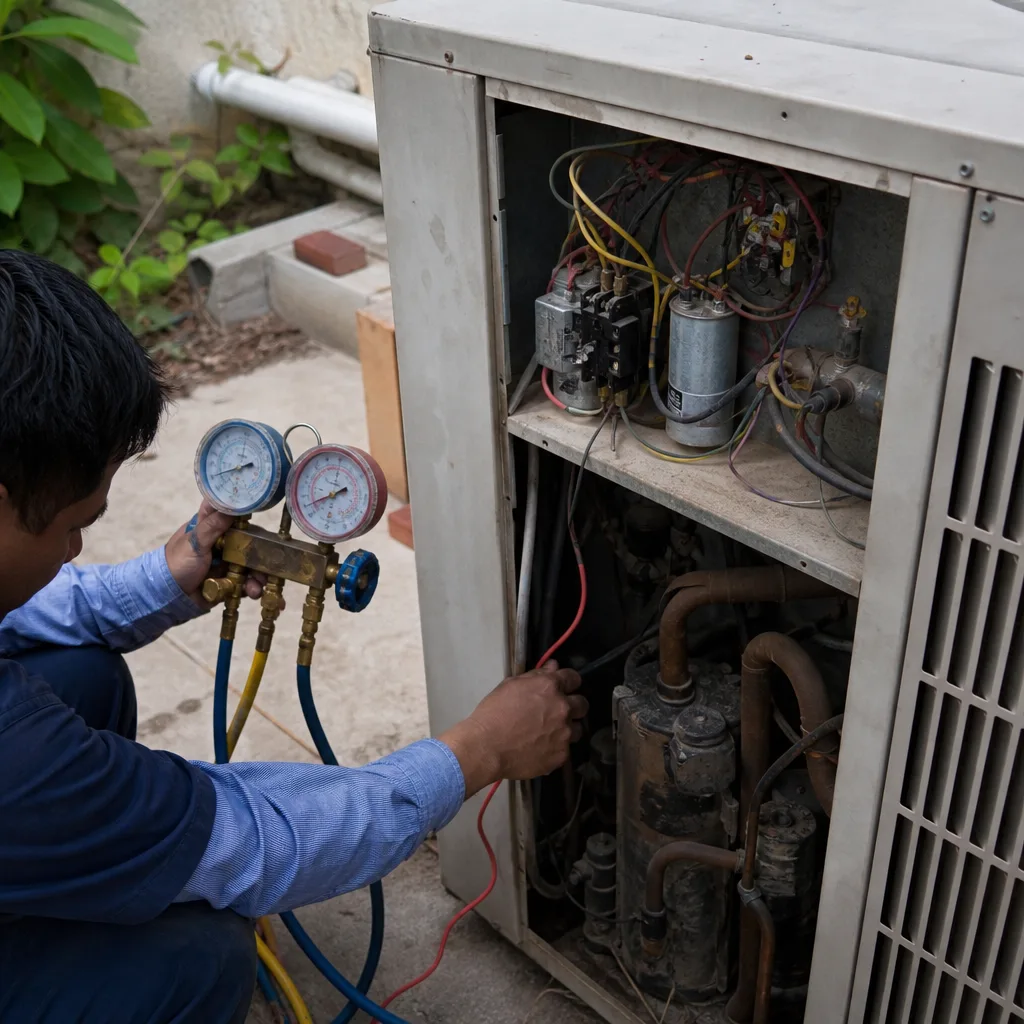 Before
 After
After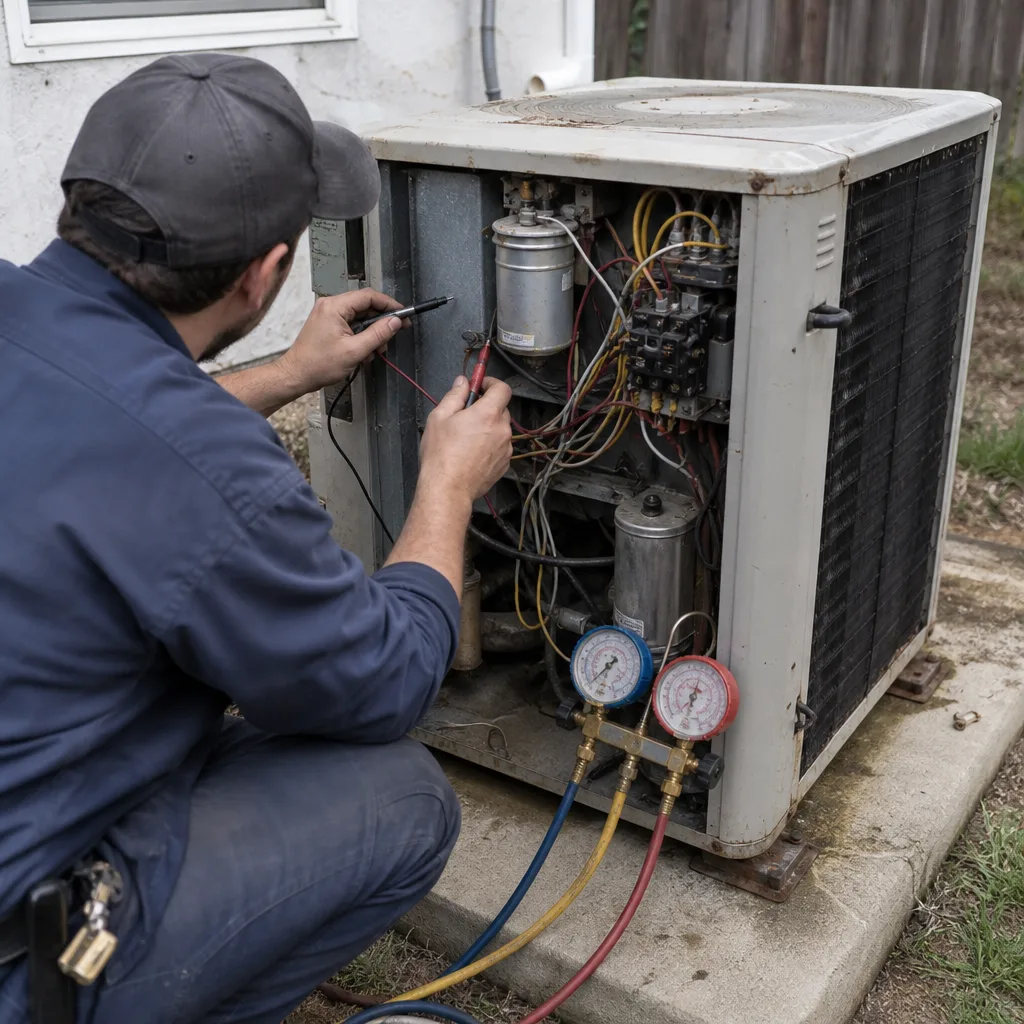 Before
 After
After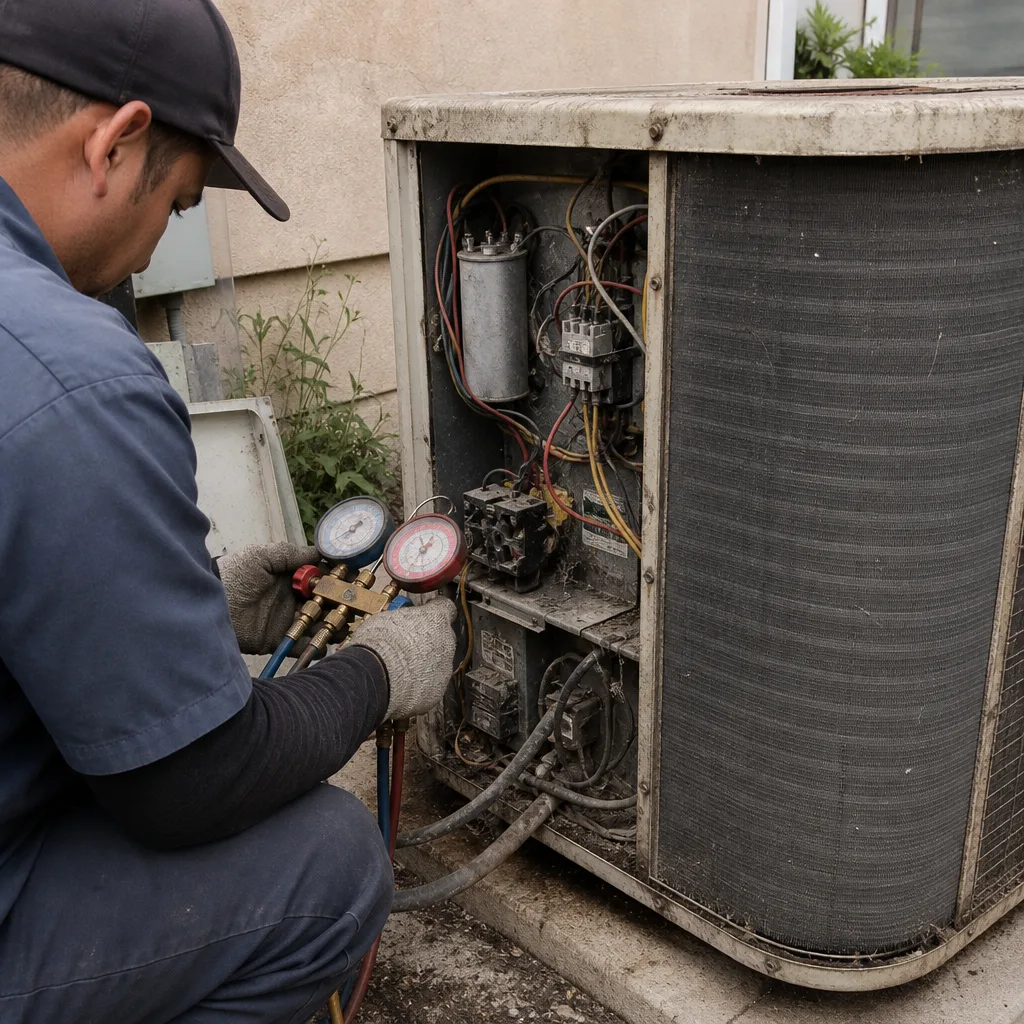 Before
 After
AfterDIY or Call Us?
There’s a safe version of DIY here, and there’s a version that can put you in the emergency room. The safe version: if your Goodman unit won’t start, check your thermostat is set to cool and the breaker hasn’t tripped. Check the outdoor disconnect switch near the unit hasn’t been switched off. Those are owner-appropriate checks. Everything beyond that, honestly, belongs to a trained technician.
Capacitors store direct current even after AC power is cut. A charged capacitor can deliver a shock strong enough to stop your heart, and the voltage rating printed on the side isn’t a suggestion. You also can’t visually identify every failed capacitor with certainty; some look perfect and test dead. And if you install the wrong µF rating, the compressor can overheat and fail, which turns a $200 repair into a $4,000 replacement. If you’ve checked the obvious and the unit still won’t run, call (619) 793-3598. Victor puts it simply: tell us what it’s doing, and we’ll tell you what it needs, no guesswork, no upsell.
FAQs
Expect 5 to 10 years in our climate. San Diego’s coastal humidity, inland heat, and the constant cycling of AC systems from May through October stress capacitors faster than the national average. Units near the coast deal with salt air corrosion on terminals. Units in El Cajon and Santee deal with sustained 90°+ afternoons. Both shorten the lifespan. If your condenser is 8 years old and has never had the capacitor replaced, it’s on borrowed time. Call (619) 793-3598 and we’ll test it during a visit.
No. A capacitor is a sealed component. Once the electrolyte inside degrades and the case bulges, dries out, or loses its microfarad rating, there is no field-repair option. The only correct fix is a new capacitor matched to the original’s µF and voltage specs. The good news: it’s one of the least expensive parts on your Goodman unit to replace, and the swap is fast. We’ll have it done the same visit in most cases.
Most Goodman capacitor replacements take 40 to 60 minutes from arrival to cool air flowing. That includes the diagnostic check, discharging the old capacitor safely, removing it, installing the new one, testing the microfarad reading under load, and confirming the compressor and fan are drawing the proper amps.
Yes. Our trucks carry the most common dual-run and single-run sizes used in Goodman residential condensers and air handlers, plus equivalents that fit Carrier, Trane, and Lennox systems when we’re already on site. For rare specialty sizes we can typically source the exact match same day from local San Diego supply houses, which keeps the job from dragging into a second visit.
Call Cold Harbour Heating and Air San Diego
If your Goodman AC won’t start, hums without spinning, or has been running but not cooling, call (619) 793-3598. A live person answers 24 hours a day, every day. We’ll give you a written price before any work starts, show up in the window we promise, and back the capacitor replacement with our 365-Day Done Right Promise in writing. Victor and the crew have been keeping San Diego homes cool since 2003, and we’re ready when you are. Free estimates, no overtime charge, no surprises.
Written by Victor Mancini, Owner & Lead HVAC Technician, Cold Harbour Heating and Air San Diego at Cold Harbour Heating and Air San Diego, serving San Diego and nearby areas.