
Last updated October 16, 2026
 AC repair
 Furnace & heating
 Heat pumps
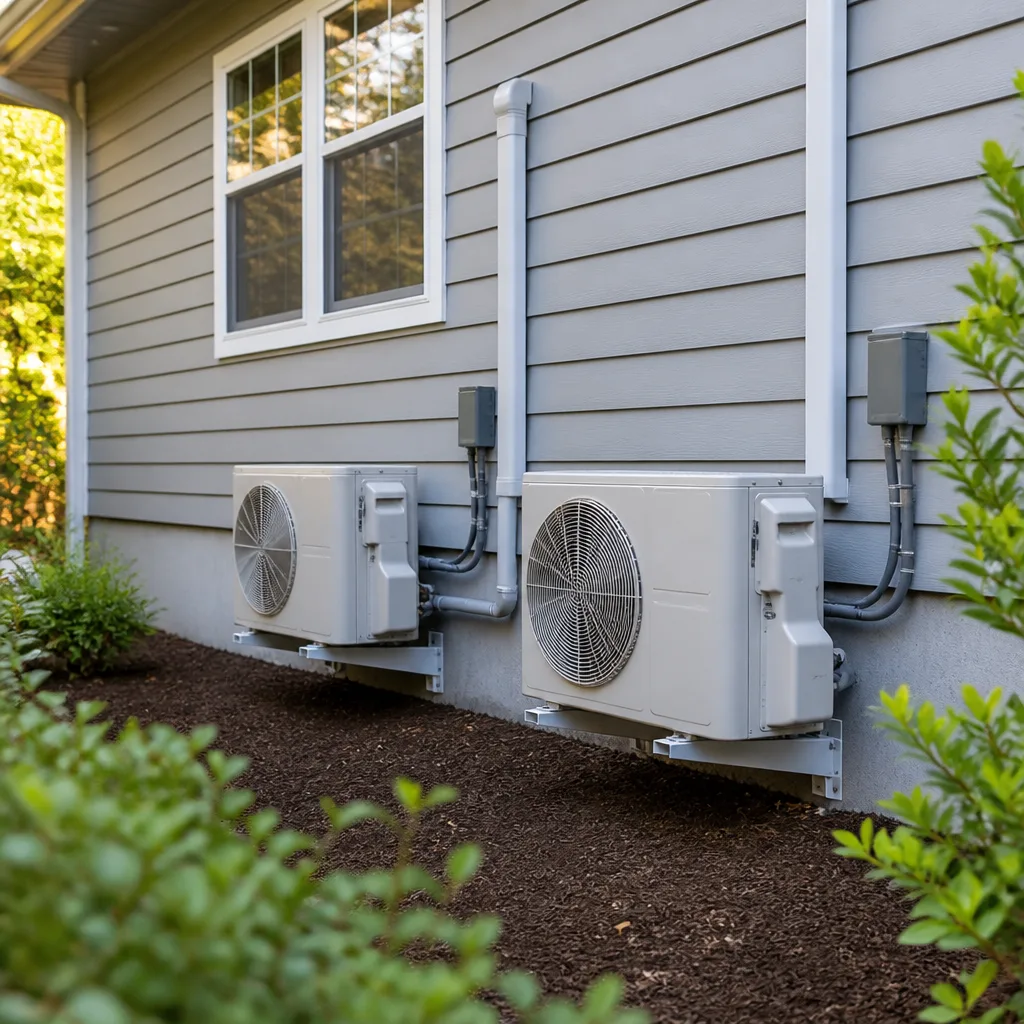 Ductless mini splits
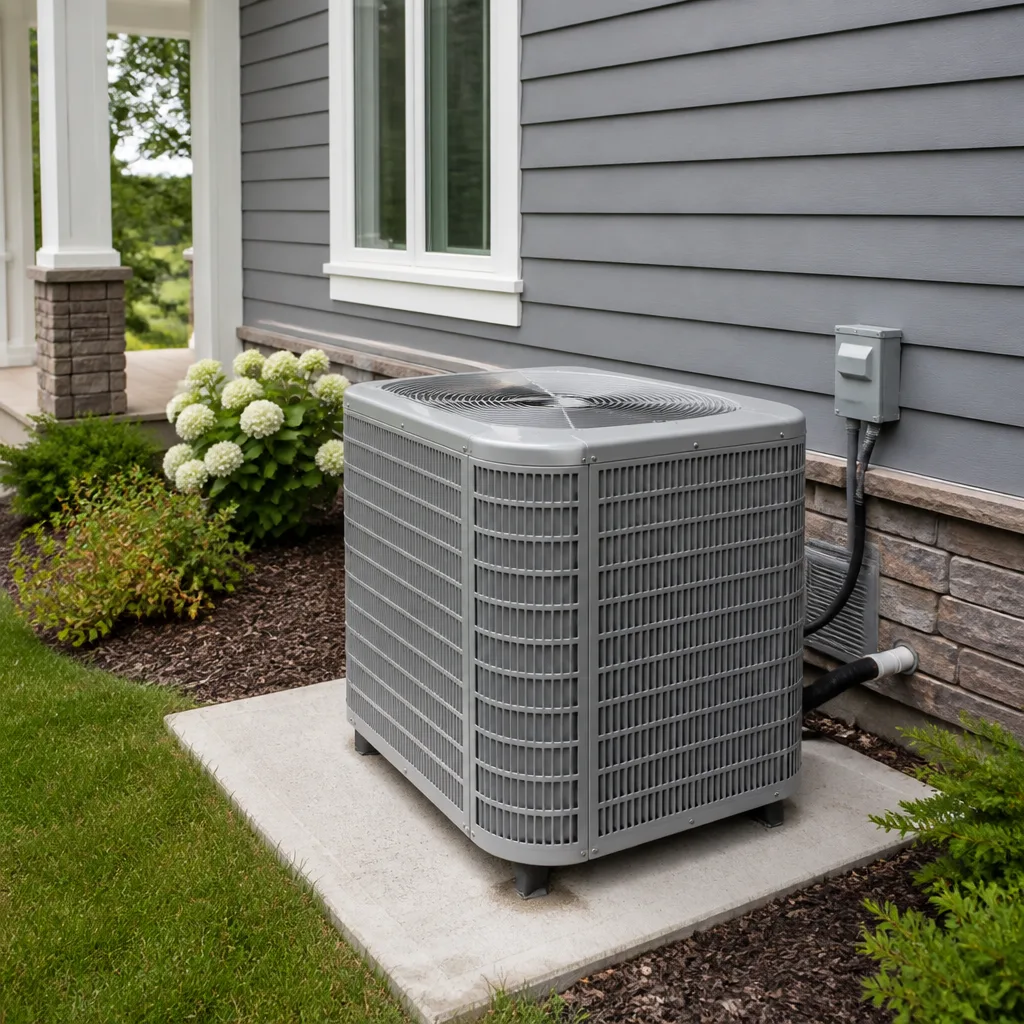 Carrier
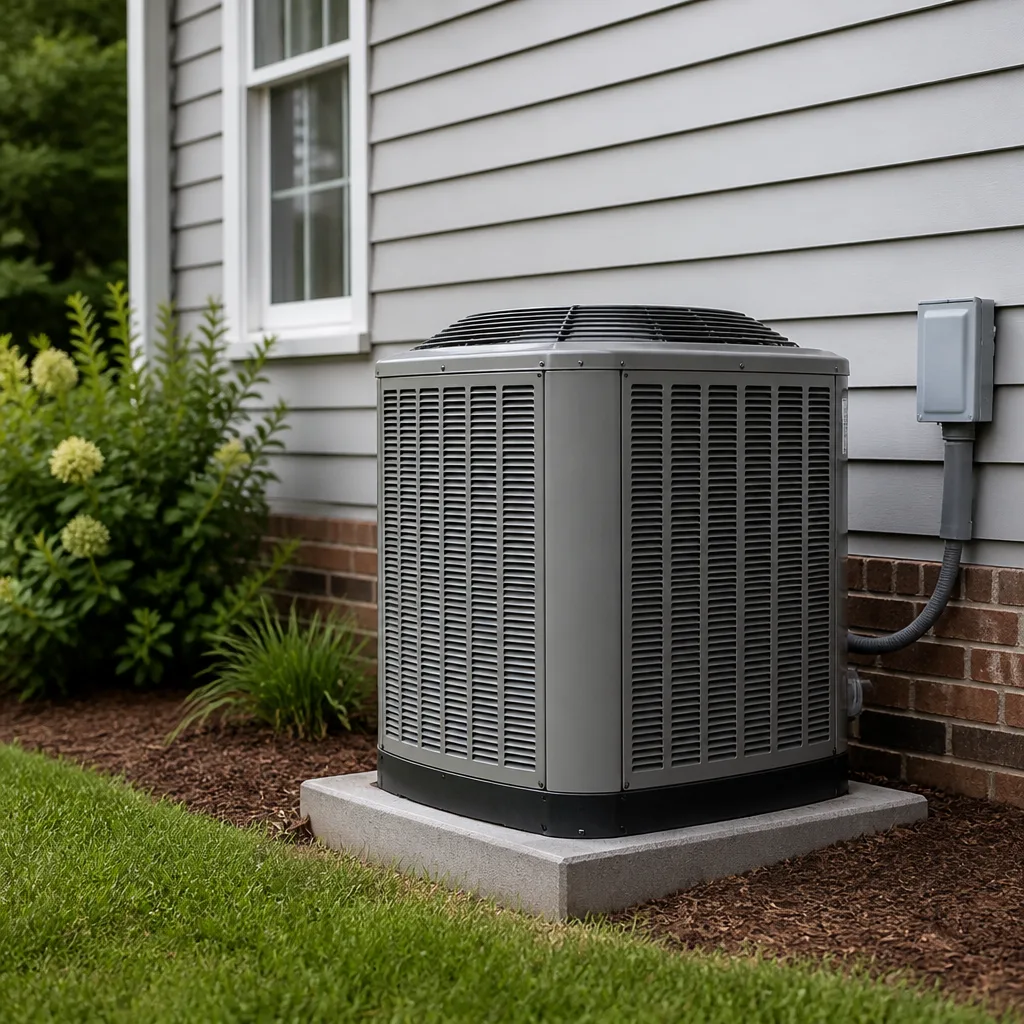 Trane
Trane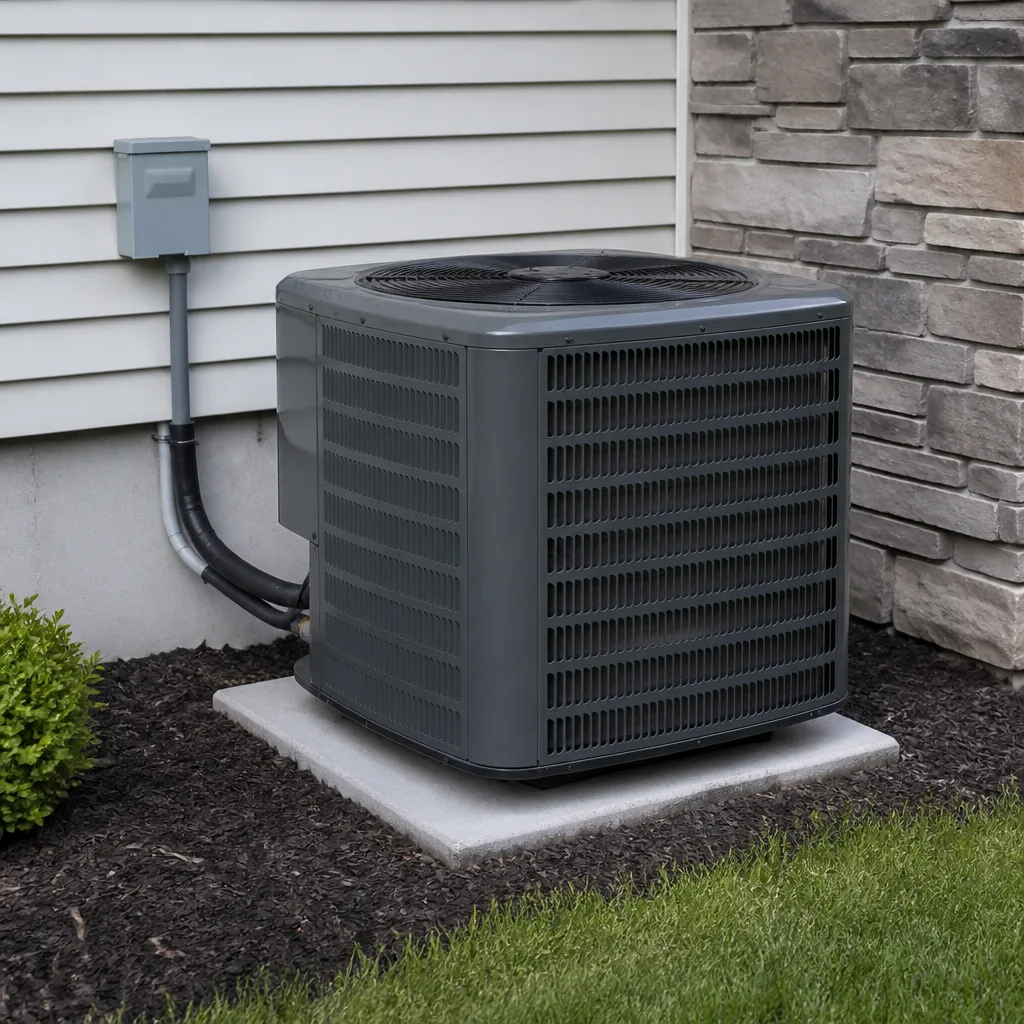 Goodman
Seasonal tune-up and full diagnostic on your Carrier, Trane, or Goodman system - readings shown to you before any repair is proposed
Diagnosis first, numbers second - you approve the repair price before a single part goes in.
Get your free estimateDIY vs Professional HVAC: The San Diego Homeowner’s Decision Guide
Replacing an HVAC capacitor looks like a $12 part and a YouTube video, and it often works fine. What the video doesn’t mention is that an improper installation can void the compressor warranty that still had four years left on it. This guide walks through the real economics of DIY versus professional HVAC work in San Diego, including the legal boundaries most homeowners never hear about until it’s too late, the three tasks that genuinely are safe to do yourself, and the warranty language that determines whether a manufacturer will still honor coverage after a self-performed repair.
Styles & brands we work with
Quick Answer
Most San Diego homeowners should handle three HVAC tasks themselves (filter replacement, thermostat swaps, and outdoor unit debris clearing) and leave everything else to a licensed professional. The dividing line isn’t skill, it’s liability: handling refrigerant without EPA 608 certification is a federal violation, and several common DIY repairs create documented warranty gaps that can cost thousands more than the service call avoided. For any repair involving refrigerant, electrical components beyond a thermostat, or gas lines, call a professional.
Table of Contents
- The Legal Boundaries Every San Diego Homeowner Should Know
- How Warranty Language Actually Works: What Voids Coverage and What Doesn’t
- Three DIY Tasks That Are Genuinely Safe and Worth Doing Yourself
- Three Tempting DIY Fixes That Cost More Than They Save
- The Hidden Cost of a Partial Fix: When Symptom Treatment Outpaces Diagnosis
- What a Professional Diagnostic Visit Actually Delivers Beyond the Repair
- San Diego-Specific Factors That Change the DIY Calculus
- Common Mistakes to Avoid
- When to Call a Professional
- Frequently Asked Questions
- The Bottom Line
The Legal Boundaries Every San Diego Homeowner Should Know
The most important fact in the DIY versus professional debate is one that almost no homeowner learns until a problem occurs: handling refrigerants in California without an EPA 608 certification is a federal violation, not a technicality. This applies to homeowners, not just contractors. Section 608 of the Clean Air Act prohibits any person from adding, removing, or otherwise handling refrigerant without proper certification, and penalties can reach tens of thousands of dollars. That $30 can of R-410A from an online seller isn’t just a gray-market purchase, it’s a legal exposure. If you connect a gauge set to a residential AC system in San Diego without EPA 608 certification, you’re breaking federal law, full stop.
California adds another layer. State law requires anyone performing HVAC work for compensation to hold a C-20 contractor’s license through the Contractors State License Board. That part doesn’t apply to a homeowner working on their own home, but it does mean that any paid helper, handyman, or unlicensed acquaintance who touches your system is operating illegally in California. If something goes wrong, your homeowner’s insurance may decline the claim because the work was performed by an unlicensed individual. This is a bigger deal in San Diego than in many cities because the region has a significant population of unlicensed handymen advertising HVAC services on community boards and social media groups.
Gas furnace work carries a separate set of concerns. Carbon monoxide is a genuine, measurable risk in San Diego homes, particularly in older neighborhoods like North Park, South Park, and Clairemont where furnace closets may not meet modern ventilation standards. A homeowner who replaces a gas valve incorrectly can create a CO leak that a professional would have caught during a combustion analysis. The liability isn’t just legal; it’s physical. We recommend treating anything involving gas lines, heat exchangers, or venting the same way you’d treat refrigerant: not DIY territory.
How Warranty Language Actually Works: What Voids Coverage and What Doesn’t
Manufacturer warranties are contracts, and contracts are written to protect the manufacturer. The typical residential HVAC warranty from brands like Trane, Lennox, and Goodman contains language that voids coverage if the equipment is serviced by someone other than a “qualified service professional” or if components are installed improperly. Here’s the part most San Diego homeowners miss: you don’t have to cause the failure for the warranty to be voided. You just have to create the documented condition that makes the manufacturer decide not to pay.
Consider a capacitor replacement. The capacitor itself is a $10 to $30 part, and replacing it is genuinely straightforward on many systems. But if you install the wrong microfarad rating, or wire it backward, or buy a generic part instead of the OEM specification, and a compressor fails 18 months later, the manufacturer’s warranty investigator will find the non-spec capacitor. That’s a documented gap. The compressor warranty, which might have had four or more years remaining on a mid-range Lennox or Goodman unit, is now void. The replacement cost for a compressor in San Diego typically runs $1,800 to $3,400 installed. The $12 capacitor swap just became a four-figure liability.
Rheem’s residential warranty documentation, for example, explicitly requires that “all repairs and services must be performed by a licensed HVAC contractor” for warranty coverage to remain valid. Trane uses similar language in its base warranty terms. Homeowners rarely read these documents at purchase, and they’re often not provided clearly at installation, but the language is there and manufacturers do enforce it. We’ve assisted San Diego homeowners who lost valid warranty coverage because a handyman replaced a control board with a “compatible” part from a supply house, and the manufacturer declined a subsequent compressor claim based on the non-OEM part.
There’s a second warranty layer most homeowners overlook: the installation labor warranty from the original contractor. If a homeowner or unlicensed person modifies the system, the installing contractor is typically released from their labor obligations. That means even if the manufacturer still honors its parts warranty, you’re paying full labor rates, which in San Diego run $120 to $180 per hour depending on the contractor and the season. DIY work doesn’t just risk the manufacturer coverage; it can burn the labor warranty that was bundled into your original installation.
Three DIY Tasks That Are Genuinely Safe and Worth Doing Yourself
Not everything should be left to a professional. There are three HVAC maintenance tasks that are safe, legal, and genuinely cost-effective for San Diego homeowners, and doing them yourself will extend the life of your equipment and improve its efficiency.
1. Filter Replacement
This is the single highest-value DIY task in HVAC. A clogged filter raises static pressure, reduces airflow, and shortens the life of the blower motor and compressor. In San Diego’s coastal climate, filters should be checked every 30 days during heavy use and replaced every 60 to 90 days, depending on the filter type and whether you have pets. Here’s the specific method we recommend:
- Turn the system off at the thermostat before removing the filter.
- Locate the filter slot, typically in the return grille near the furnace or air handler, or in a filter rack beside the unit.
- Remove the old filter and note the size printed on the frame. Common residential sizes include 16x20x1, 20x25x1, and 16x25x1.
- Match the arrow printed on the new filter’s frame with the direction of airflow, which is toward the blower motor or furnace.
- Slide the new filter in and close the slot.
Expect to pay $8 to $22 for a standard 1-inch pleated filter at home improvement stores in San Diego, or $25 to $60 for higher-MERV filters that capture more particulates. Be careful not to install a filter with too high a MERV rating for your system; MERV 13 or higher can restrict airflow in older duct systems and cause freezing.
2. Thermostat Swaps
Replacing an old thermostat with a smart or programmable model is a legitimate low-risk DIY project for most homes, provided you’re working with a low-voltage system. Most forced-air HVAC systems in San Diego use 24-volt thermostat wiring, which is safe to touch. Here’s the step-by-step:
- Shut off power to the furnace and AC at the circuit breaker.
- Remove the old thermostat faceplate and take a clear photo of the wire connections before disconnecting anything. Label each wire with masking tape if the colors don’t match standard conventions.
- Connect the new thermostat base using the photo as your reference. Standard wire colors are Red (R, power), White (W, heat), Yellow (Y, cooling), Green (G, fan), and Blue or Black (C, common).
- Mount the new faceplate and restore power.
- Run the new thermostat’s setup, configuring it for your system type: forced air, heat pump, or gas furnace.
One caution: if your home has a heat pump, you’ll need to configure the thermostat for heat pump operation and connect the O/B reversing valve wire correctly. Get that wrong, and the system will heat when it should cool. If you’re uncertain, a professional AC repair visit in San Diego costs less than a mistaken thermostat installation that causes a compressor to run in the wrong mode for a season.
3. Outdoor Unit Debris Clearing
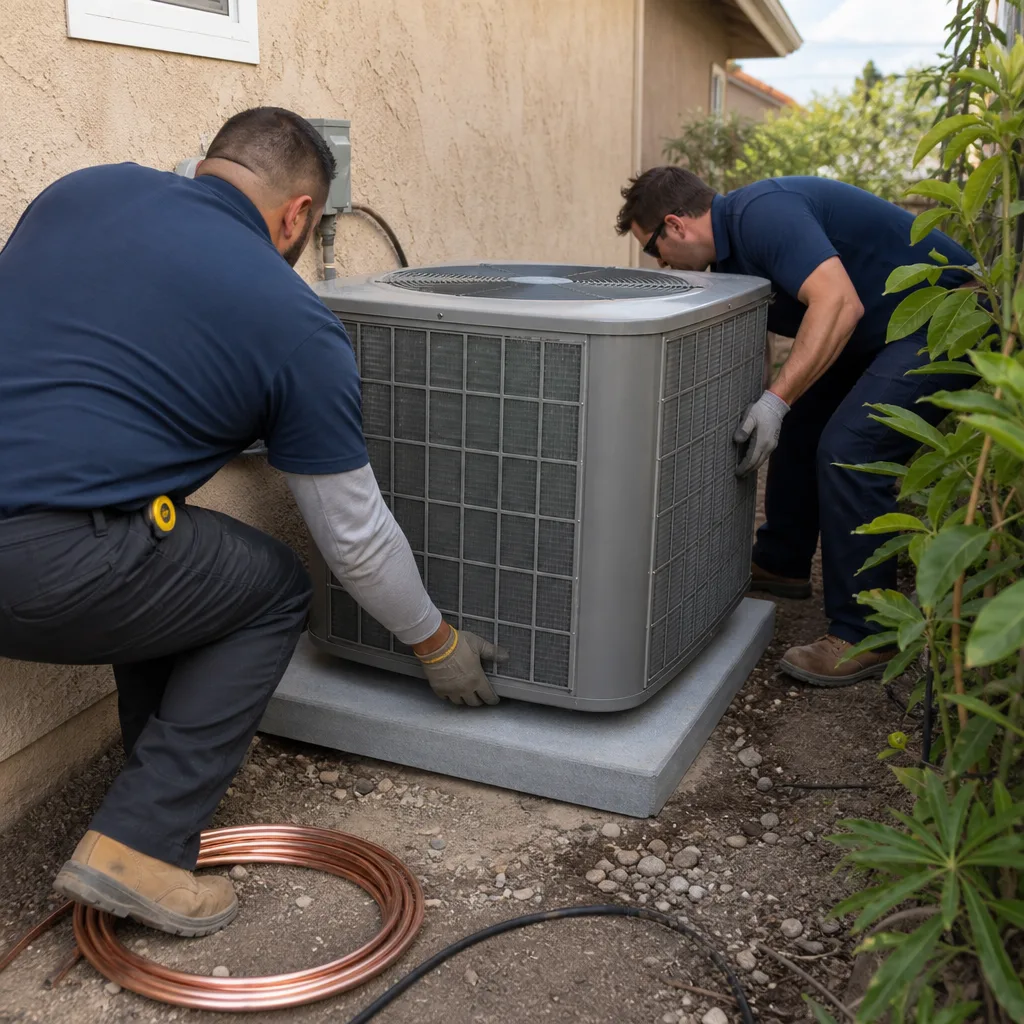
Your condenser unit sits outside and collects leaves, pollen, dust, and San Diego’s generous supply of eucalyptus debris. Clearing the area is safe and takes 20 minutes:
- Turn off the system at the breaker.
- Clear vegetation, leaves, and debris from within a 2-foot radius around the unit.
- Use a garden hose with a spray nozzle to gently wash the condenser fins from the inside out, not the outside in. Direct the spray downward, not horizontally. High pressure or spraying horizontally against the fins will bend them and reduce efficiency.
- While the unit is open, visually inspect the fins for damage. If more than 15% of the fin surface is flattened, call a professional for fin combing.
Never use a pressure washer on a condenser coil. A pressure washer will fold the fins flat and the efficiency loss will cost you more in electricity than a professional coil cleaning would have cost. The San Diego climate, with its marine layer and fine coastal dust, tends to build up on condenser coils faster than the national average, so coastal homeowners in Point Loma, Pacific Beach, and La Jolla should do this every 60 to 90 days.
Three Tempting DIY Fixes That Cost More Than They Save
Some DIY tasks look manageable because the part is cheap or the process seems simple. In our experience across San Diego, these three are the most common traps.
1. Refrigerant Top-Offs
The temptation is understandable: a system that’s cooling poorly might just need “a little Freon,” right? Wrong on two counts. First, as covered above, handling refrigerant without EPA 608 certification is illegal for everyone, including homeowners. Second, and more importantly, a system that needs refrigerant has a leak. Adding refrigerant without finding and repairing the leak doesn’t fix the problem; it just postpones it while the system continues to waste energy and the compressor works under stress. A proper leak search and repair from a San Diego HVAC professional typically runs $250 to $700 depending on the leak’s location and repair complexity. A burned-out compressor from running the system low, by contrast, runs $1,800 to $3,400. Topping off is paying money to delay a larger bill.
2. Capacitor Swaps
The capacitor is the component that gives the compressor and fan motors their starting boost. It fails, the fan won’t spin or the compressor won’t start, and the part costs $10 to $30. The swap looks like an afternoon project. The problem is that capacitors are rated far more precisely than homeowners assume: microfarad (µF) rating, voltage rating, and physical configuration all must match the original or the motor will overheat and fail prematurely. A capacitor with a 5 µF difference from spec can burn out a condenser fan motor within a season. That fan motor replacement is $300 to $600 in San Diego. Plus, as covered above, a non-spec capacitor left in the unit creates the very warranty gap that manufacturers use to decline compressor claims. If you’re determined to tackle this one, at minimum match the exact microfarad and voltage printed on the original, not the closest thing at the supply house. Better yet, have the work done by someone who does it daily.
3. Duct Sealing
Leaky ductwork is a genuine problem in San Diego, especially in homes built before 1990 where ducts run through attics and crawlspaces. The DIY approach involves foil tape and mastic applied to accessible duct joints. That part isn’t illegal and won’t void a compressor warranty. What it will do is miss the majority of the leaks, because the significant leakage in most San Diego homes occurs in duct runs that aren’t accessible without specialized equipment. A proper duct sealing job uses an Aeroseal process or a professional pressure test and manual sealing, and it corrects leakage systematically rather than patching only the visible joints. We’ve measured duct systems in Rancho Bernardo and Scripps Ranch homes where 25% to 35% of conditioned air was leaking into the attic, and a homeowner’s tape job addressed perhaps 10% of it. The energy savings that make duct sealing worthwhile only materialize when the work is done properly.
The Hidden Cost of a Partial Fix: When Symptom Treatment Outpaces Diagnosis
The most expensive mistake we see in San Diego isn’t a bad repair; it’s a repair that treats the symptom while the underlying cause continues to do damage. That’s the hidden cost of a partial DIY fix, and it shows up in three patterns.
The first pattern is the freeze-thaw cycle. A homeowner notices ice on the indoor coil or the outdoor lineset, reads online that low airflow causes freezing, and replaces the filter. The filter was dirty, sure, but the underlying cause was a refrigerant undercharge from a slow leak. The system thaws, runs another six weeks, and freezes again. Each freeze event stresses the compressor. By the time a professional is called, the compressor has sustained damage that would have been avoided if the leak had been found during the first service call.
The second pattern is the reset-button loop. A furnace stops producing heat in the winter. The homeowner finds the flame rollout switch or the high-limit switch, presses the reset, and the system fires back up. What’s actually happening is that the high-limit switch is tripping because the heat exchanger is overheating, which is a serious condition. In a gas furnace, an overheating heat exchanger can crack, and a cracked heat exchanger releases carbon monoxide into the conditioned air. Every reset is a roll of the dice. A professional in this situation performs a combustion analysis and inspects the heat exchanger, and the service call is a small price compared to the risk profile of repeatedly resetting a safety switch.
The third pattern is the quiet degradation. A system is running but not as efficiently as it should. The homeowner doesn’t notice, because the system still cools, just not as well or as cheaply. A professional diagnostic would catch a failing run capacitor before it takes out the compressor, or a dirty evaporator coil before it causes freeze-up, or an overcharged system before it damages the compressor valves. The professional visit costs $100 to $200; the compressor it prevents costs ten to twenty times that.
What a Professional Diagnostic Visit Actually Delivers Beyond the Repair
When you pay a professional for a diagnostic visit, you’re buying more than a repair. You’re buying a measurement. That’s the part most homeowners don’t understand because they’ve never seen a full diagnostic workup.
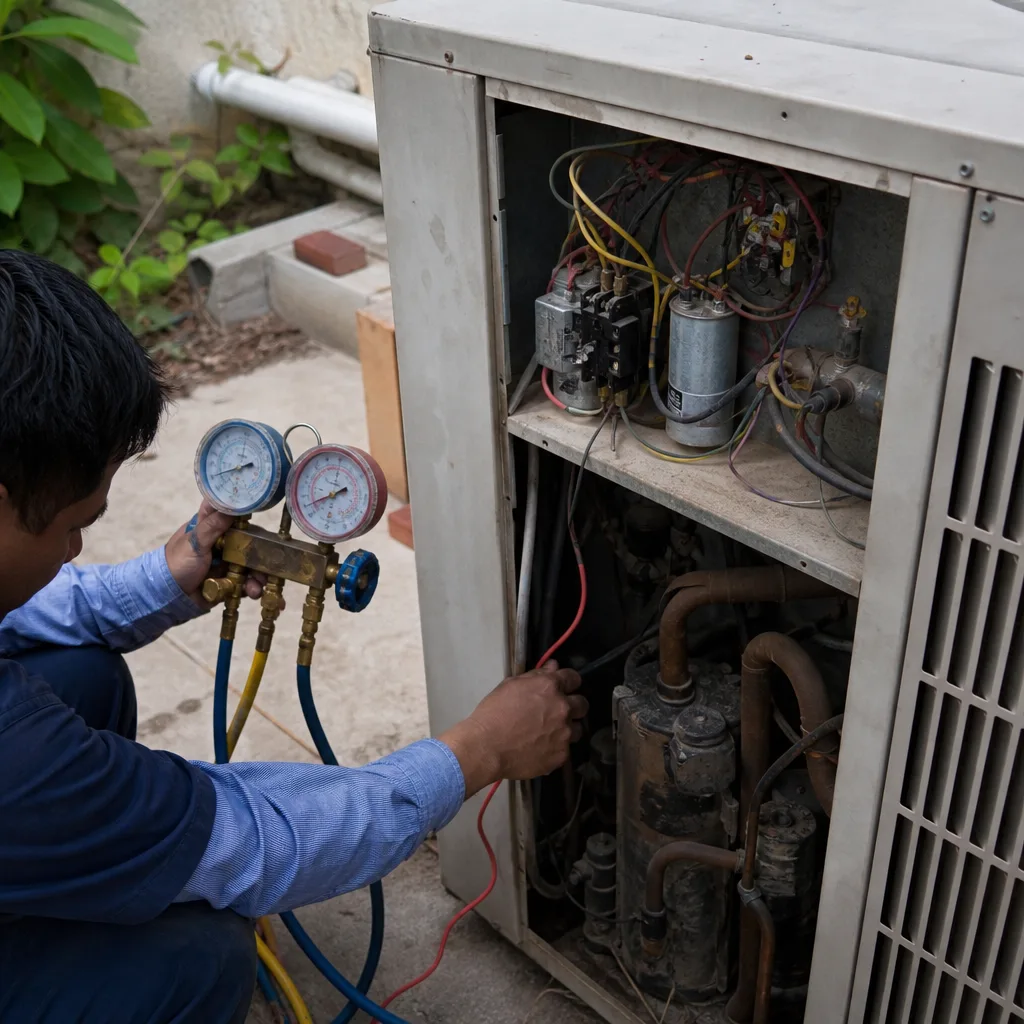
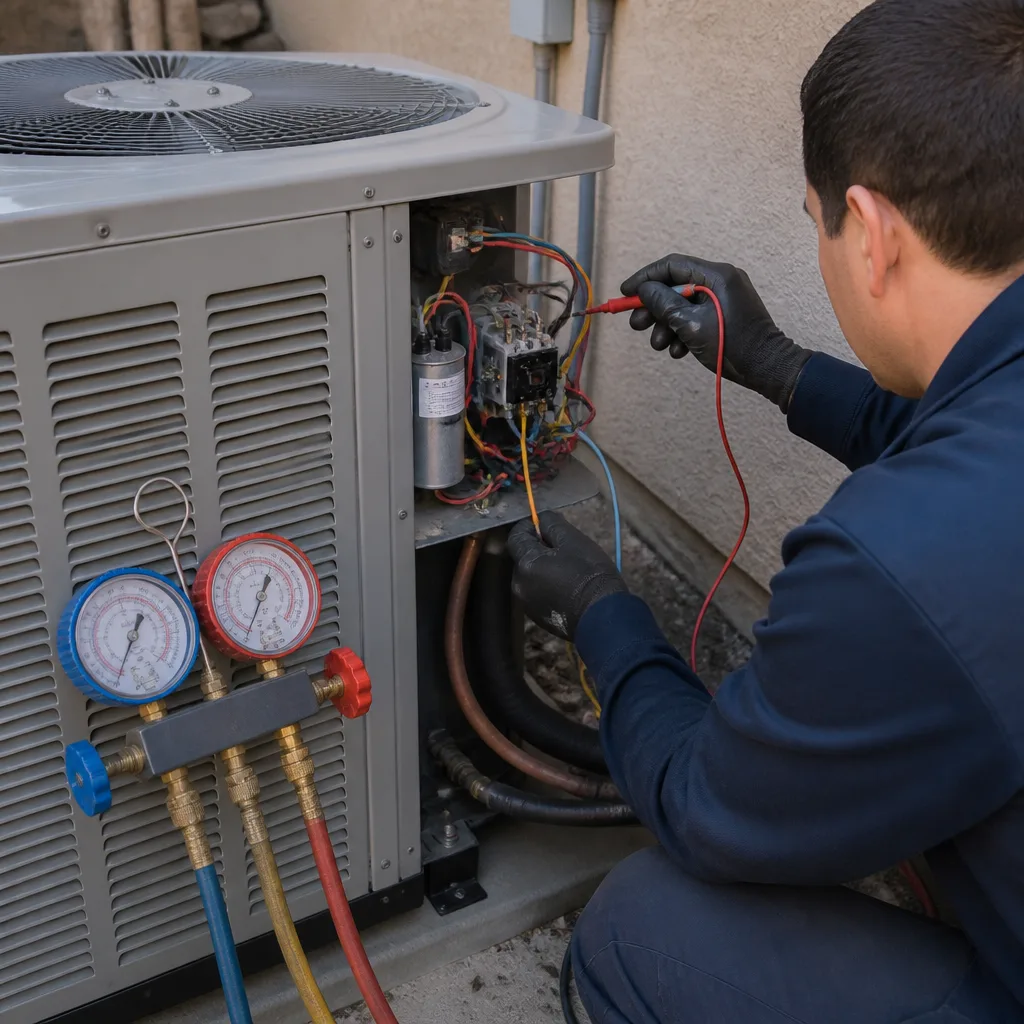
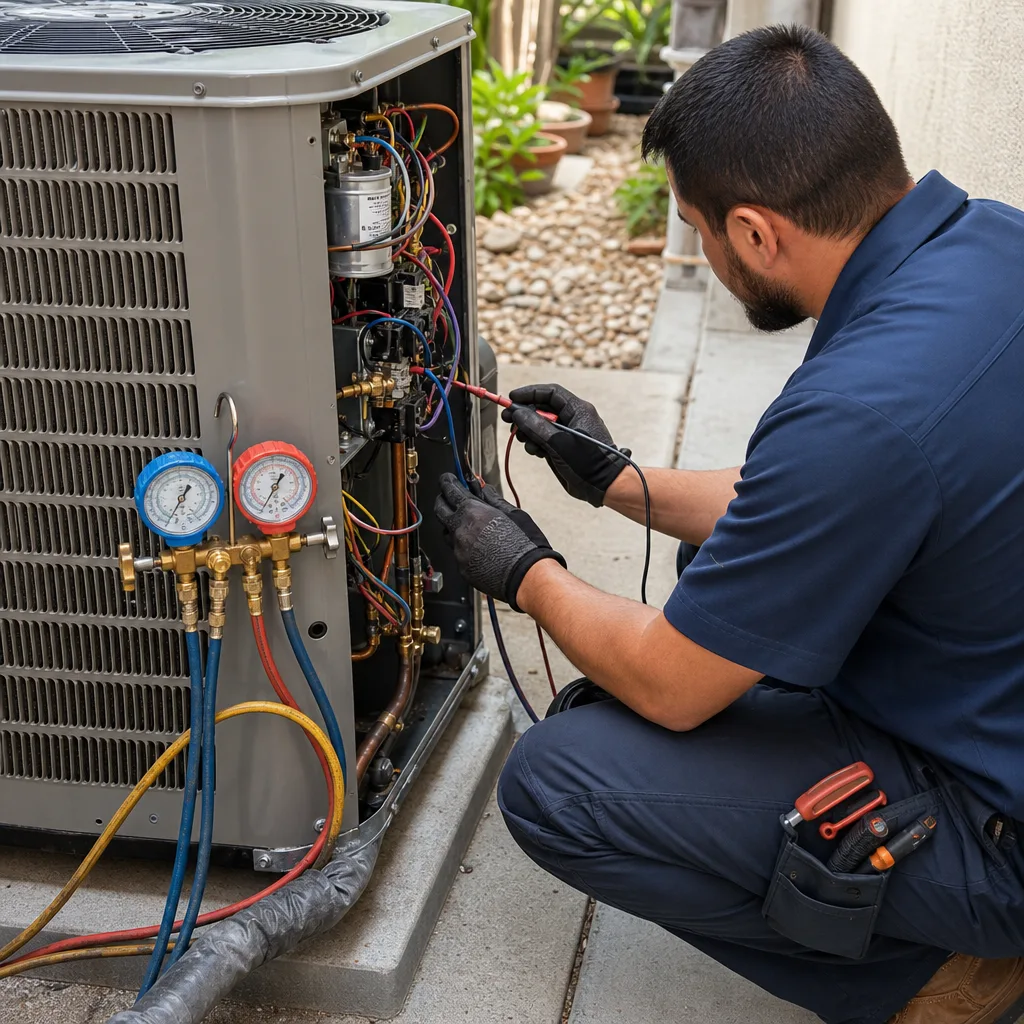
A proper professional diagnostic on a residential AC system in San Diego includes these measurements, all of which are documented on paper:
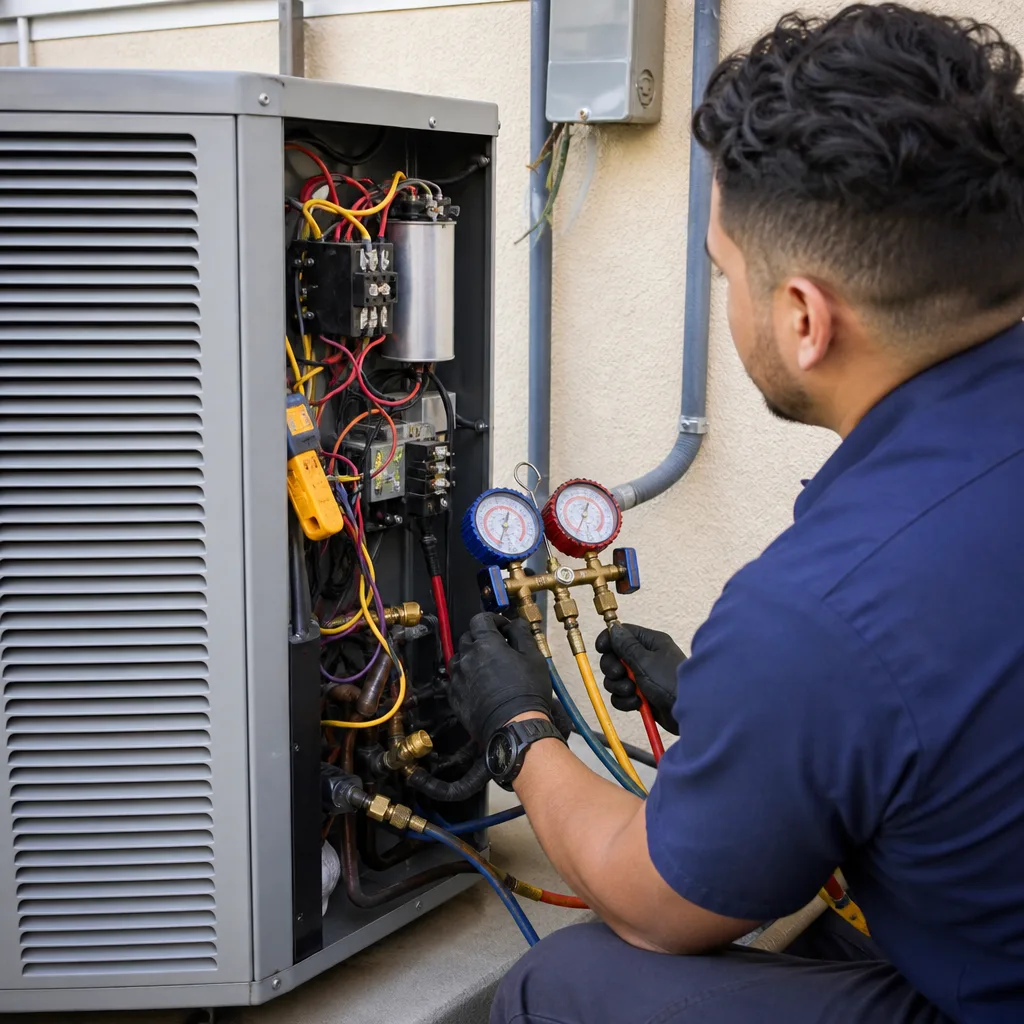
- Refrigerant pressures, both high side and low side, compared against the manufacturer’s charging chart for the current outdoor temperature and indoor conditions. This tells the technician whether the system is undercharged, overcharged, or correctly charged, and whether there’s a restriction in the lineset.
- Temperature split across the evaporator coil, typically measured at the return and supply registers. A healthy system shows a 15 to 20 degree split under normal San Diego conditions. A lower split means the system is underperforming.
- Superheat and subcooling, which indicate how efficiently the refrigerant is moving through the system and whether the expansion valve is working properly.
- Electrical readings on the compressor, fan motor, and capacitor: voltage, amperage, and microfarad. These readings catch components that are running out of spec but haven’t failed yet.
- Static pressure, which measures airflow restriction across the filter and coil. High static pressure is the silent killer of blower motors and compressors.
- Condenser coil condition, visually assessed and measured for fin damage, dirt buildup, and airflow obstruction.
All of this is written down. That written record is the part that protects the homeowner in future warranty or insurance conversations. If a compressor fails 11 months after a diagnostic visit, that diagnostic report is evidence of the system’s condition at that moment. It’s the same principle as a maintenance log on a car. The manufacturer can see that the system was properly maintained and within spec, and that makes warranty claims substantially harder to deny.
Beyond the measurements, a professional diagnostic from a company like ours at Cold Harbour Heating and Air San Diego includes a written price for any recommended work, delivered before work begins. That’s a company-specific standard, not an industry standard. Many companies give verbal estimates that grow at the door. A written price is a different document, and it’s worth asking for it specifically.
San Diego-Specific Factors That Change the DIY Calculus
The DIY versus professional decision doesn’t happen in a vacuum. San Diego’s specific climate, housing stock, and market conditions all shift the math in ways that national guides miss.
First, the climate. San Diego’s coastal zones, from Coronado through La Jolla up to Carlsbad, experience a marine layer for much of the year. That means humidity is higher than most people expect, and high humidity increases the load on the AC system’s dehumidification function. A system that’s marginally charged will freeze more readily in high-humidity conditions than in dry heat. Inland areas like El Cajon, Santee, and Poway get genuinely hot in summer and cold enough in winter that furnaces run regularly. A system in these areas cycles more frequently, which accelerates component wear. The homeowner who’s thinking about DIY maintenance in El Cajon is working with a system under more stress than one in Mission Beach.
Second, the housing stock. San Diego has a large number of homes built between 1960 and 1985, many of which still have their original ductwork. Those ducts are often undersized for modern equipment and leaky. A homeowner replacing a system with higher-efficiency equipment without addressing ductwork is spending thousands on efficiency that never reaches the rooms. This is a professional assessment issue; a proper load calculation and duct inspection is not a DIY task.
Third, the market. San Diego’s HVAC market is more expensive than the national average, which makes the DIY temptation stronger and the cost of mistakes higher. Service calls from licensed contractors run $100 to $200 just to show up, plus labor at $120 to $180 per hour. A full system replacement from a reputable company in San Diego runs $8,000 to $15,000 depending on equipment efficiency, home size, and ductwork condition. When labor costs are this high, saving a service call by attempting a repair looks attractive. But the same high labor costs mean that a mistake is also more expensive to correct.
Fourth, the permitting environment. The City of San Diego requires permits for HVAC equipment replacement, and the California Energy Code (Title 24) imposes specific testing and documentation requirements. A DIY replacement isn’t just risky; it’s unpermitted work that will surface when you sell the home. Buyers in San Diego’s competitive market increasingly hire inspectors who catch unpermitted HVAC work, and it becomes a negotiating chip against you.
Common Mistakes to Avoid
- Buying refrigerant online without certification. This is a federal crime, not a convenience purchase, and the penalties scale with the quantity. It’s also a warranty-voiding action if you connect it to your system.
- Installing a “universal” capacitor. Universal replacement kits are built for distributors, not for specific equipment. The wrong rating will kill a motor, and the manufacturer will see the non-spec part when a warranty claim is filed.
- Ignoring a tripped safety switch. A high-limit or rollout switch that trips again after reset is telling you something specific. Pressing reset repeatedly on a gas furnace in a San Diego winter is a carbon monoxide risk.
- Sealing ducts with duct tape. Vinyl duct tape, the everyday kind from the hardware store, degrades and fails within a season in San Diego attics. Proper duct sealing uses mastic or foil-backed tape designed for HVAC use.
- Using a pressure washer on the condenser. Every summer we see bent condenser fins from pressure washing. The repair costs more than a professional coil cleaning would have.
- Assuming the system needs refrigerant when it’s actually an airflow problem. Dirty filters, closed registers, and blocked returns cause low cooling performance more often than actual refrigerant losses, and the fix is free or cheap.
- Skipping the diagnostic and guessing at the part. The most expensive DIY repair is the one that doesn’t fix the problem, because you’ve now bought a part, installed it, and still need to call a professional. The diagnostic fee is usually less than the wasted part.
When to Call a Professional
Call a professional when the problem involves refrigerant, electrical work beyond a thermostat swap, gas lines, heat exchangers, ductwork, or any repair that would affect warranty coverage. Also call when a system has frozen, when a safety switch has tripped more than once, when you smell gas or any unusual odor, or when a system simply isn’t cooling or heating the way it should despite new filters and clear debris. Cold Harbour Heating and Air San Diego offers free estimates in San Diego. Call (619) 793-3598 and a live person will answer, any hour, any day.
For more on specific repair scenarios, see our guides to furnace repair in San Diego and what to expect during a professional AC repair visit. If you’re considering replacement rather than repair, start with San Diego AC installation costs and options. And if you’d like to see who we are first, start at the Cold Harbour Heating and Air San Diego home page.
Frequently Asked Questions
No. Adding refrigerant to any residential AC system without EPA Section 608 certification is a federal violation that applies to homeowners as well as contractors. The fine structure starts in the tens of thousands of dollars, and California has no exemption for DIY work on your own home. A system that needs refrigerant also has a leak, and the leak needs professional repair, not a top-off.
Filter replacement, thermostat swaps on standard low-voltage systems, and outdoor condenser debris clearing are all safe, legal, and worthwhile DIY tasks for most San Diego homeowners. Each has specific methods that matter (correct filter direction, correct thermostat wiring configuration, correct coil washing technique), but none of the three touches refrigerant, gas, or high-voltage electrical work, and none creates a warranty gap.
It can, and it often does. Manufacturer warranty language from brands like Trane, Lennox, Rheem, and Goodman typically requires service by a qualified professional and allows warranty rejection when non-OEM parts or unqualified labor are involved. The warranty isn’t voided because the manufacturer can prove you caused the failure; it’s voided because your work created a documented condition that releases the manufacturer from coverage. A non-spec capacitor or a non-OEM control board is sufficient in most cases.
A diagnostic service call from a licensed San Diego contractor typically runs $100 to $200, with labor billed at $120 to $180 per hour for any repair work that follows. Some companies, including Cold Harbour Heating and Air San Diego, provide a written price for any recommended repair before work begins, so the diagnostic fee is the ceiling on your commitment. Call (619) 793-3598 for a free estimate.
The most common mistake we see is the capacitor replacement with a non-spec part. The homeowner sees a $12 fix, installs a universal or incorrectly rated capacitor, and the system runs until the fan motor or compressor burns out 6 to 18 months later. The replacement cost at that point runs $300 to $3,400 in San Diego, and the manufacturer’s warranty claim is denied because of the non-spec component.
You can physically install a furnace, but you shouldn’t, for three reasons: the City of San Diego requires a permit for equipment replacement, which means the work must be inspected; gas line and venting work carries carbon monoxide risk that a professional combustion test catches; and an unpermitted, non-professional installation will be flagged during a home sale inspection and become a negotiating liability. A proper installation by a licensed contractor also preserves manufacturer warranties, which a DIY installation typically voids from day one.
The Bottom Line
The DIY versus professional HVAC decision in San Diego comes down to three filters: legality, warranty, and consequence. If a task touches refrigerant, it’s illegal without certification. If it creates a non-spec or non-OEM part trail, it risks warranty coverage worth thousands. If a mistake has consequences beyond a nuisance, meaning fire, carbon monoxide, or compressor failure, the downside is measured in four figures. The three safe DIY tasks, filter replacement, thermostat swaps, and condenser cleanup, deliver genuine value to homeowners willing to learn the right methods. Everything else should go through a professional, and in San Diego, that professional should put their price and their guarantee in writing before work begins.
Written by Victor Mancini, Owner at Cold Harbour Heating and Air San Diego, serving San Diego since 2003.
See the difference
 Before
 After
After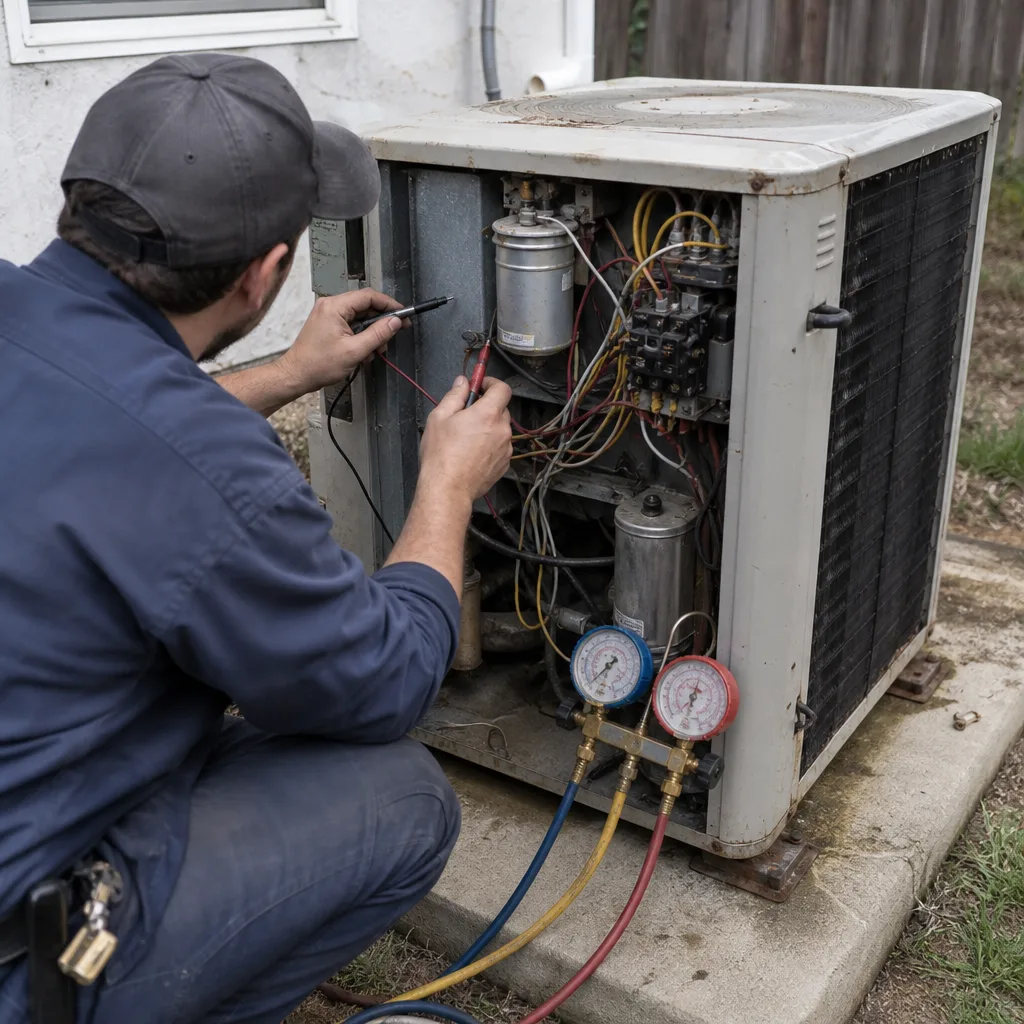 Before
 After
After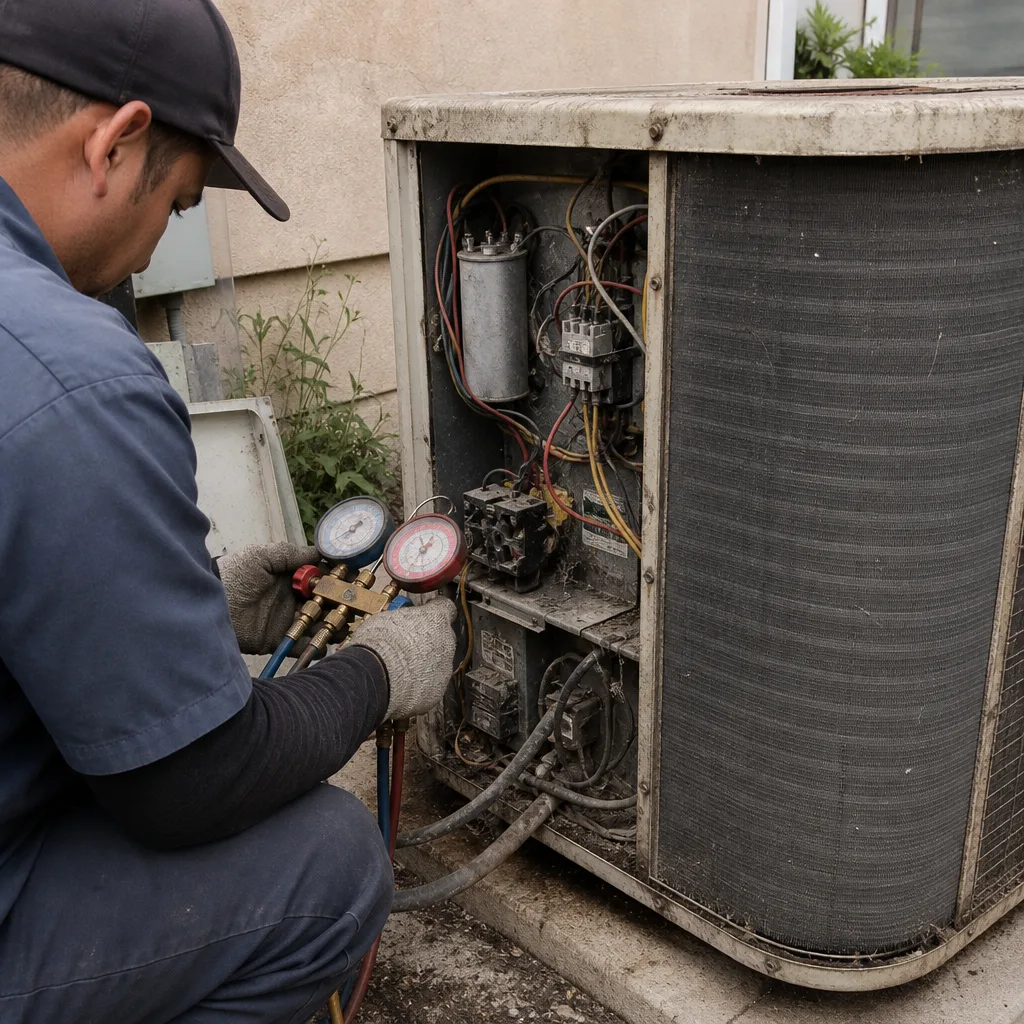 Before
 After
After