
Last updated October 16, 2026
 AC repair
 Furnace & heating
 Heat pumps
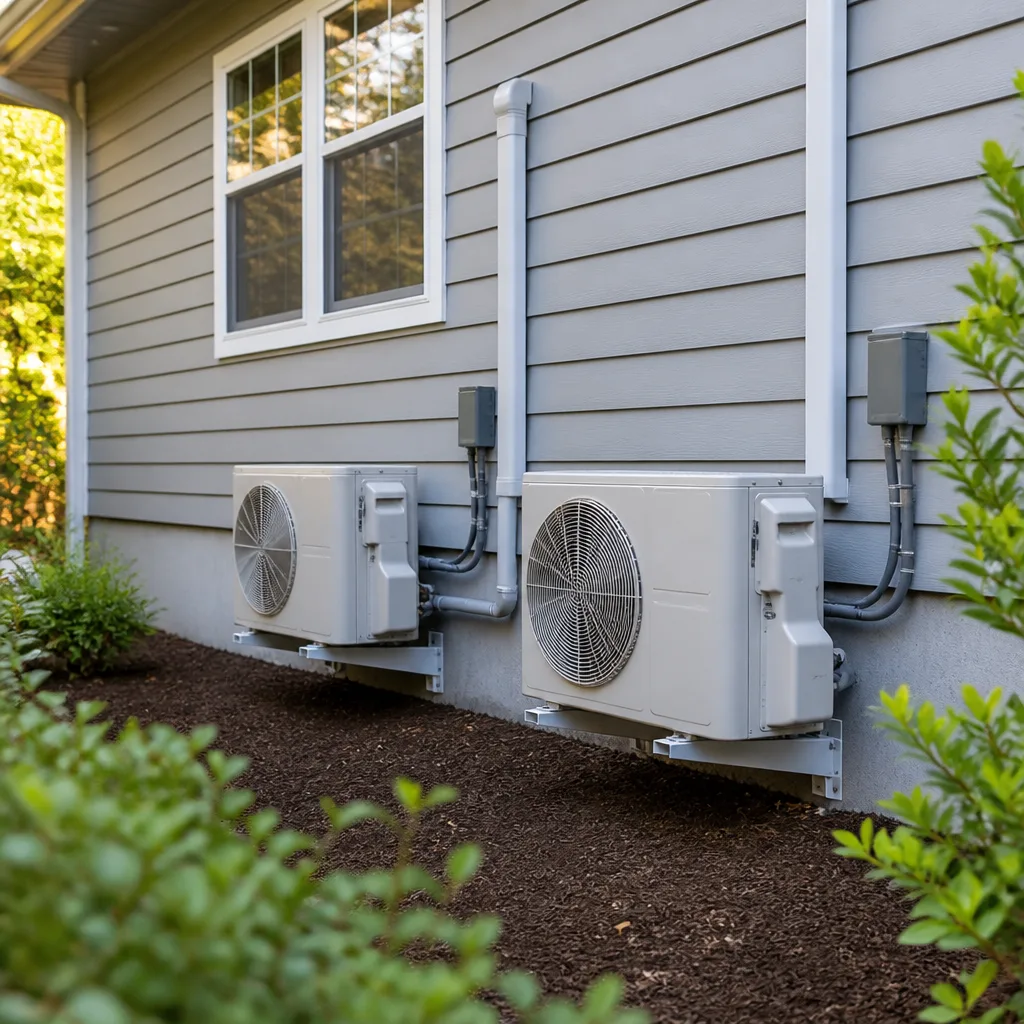 Ductless mini splits
 Carrier
 Trane
Trane Goodman
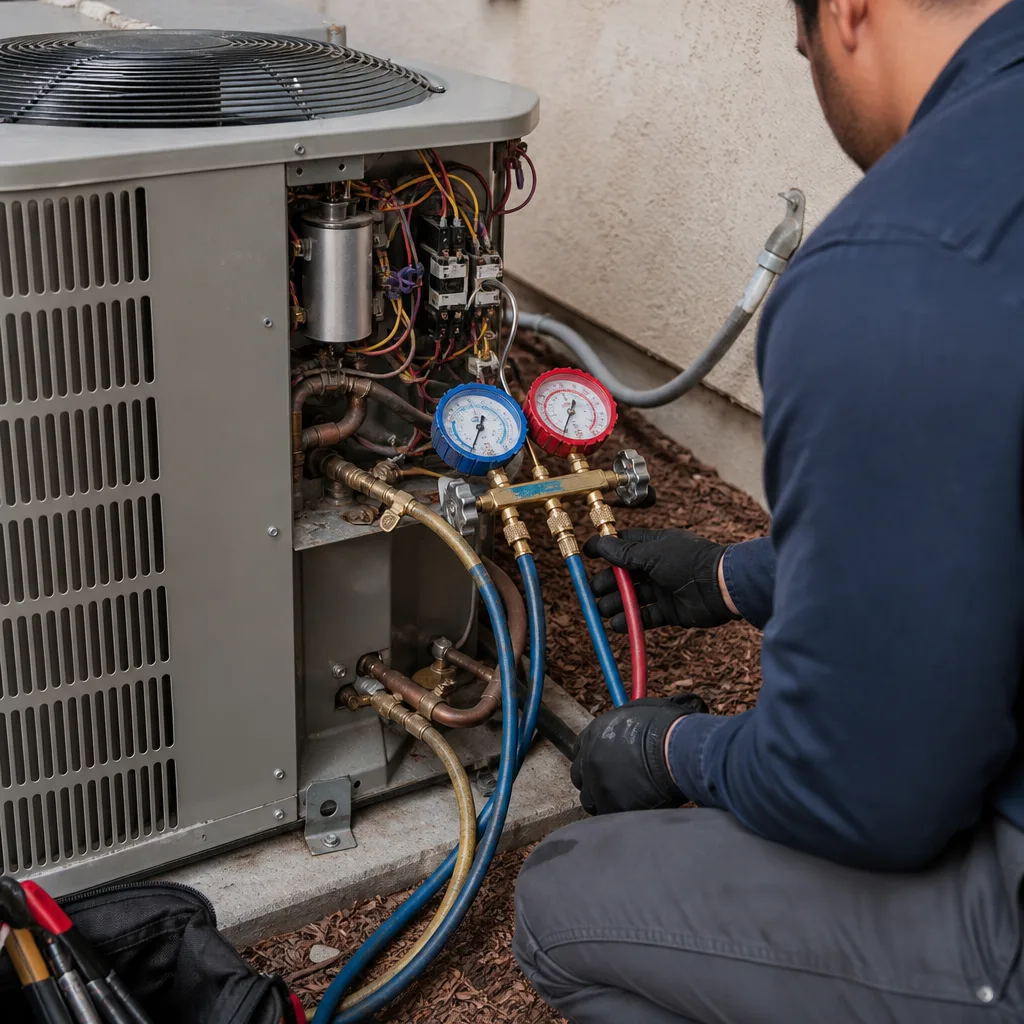
Seasonal tune-up and full diagnostic on your Carrier, Trane, or Goodman system - readings shown to you before any repair is proposed
Diagnosis first, numbers second - you approve the repair price before a single part goes in.
Get your free estimateHVAC Cost Breakdown: The San Diego Homeowner’s Reference for 2026
The same 3-ton AC replacement in San Diego costs $6,800 in one house and $11,400 in another, not because one contractor is gouging, but because attic access, electrical panel capacity, refrigerant line condition, and permit complexity all compound in the second house. Most cost guides publish a wide range and leave you to guess where your home falls. This guide maps every variable that moves a San Diego job from the low end to the high end, so you can estimate your own project before the first phone call. For HVAC Permits, Codes & Inspections in CA: What You Need to Know, see our dedicated overview. By the time you finish reading, you will know what a fair 2026 price looks like for your specific house, not a generic “San Diego average.”
Styles & brands we work with
Quick Answer
In San Diego during 2026, a full AC replacement typically costs between $6,200 and $12,800 depending on system size, efficiency rating, and the condition of your existing ductwork and electrical panel. A furnace swap runs $3,800 to $7,200, while a complete heat pump conversion with rebates applied usually lands between $9,500 and $16,500 before SDG&E incentives. The single biggest variable is not the brand name on the equipment; it is what the installers find when they open your attic, closet, or mechanical room.
Table of Contents
- 2026 Cost Table: What San Diego Jobs Actually Run
- The Six Job-Site Factors That Push a Quote from Mid to High
- SDG&E and California Rebates for 2026: How to Claim Them Yourself
- How to Read a Line-Item Quote Without Getting Fooled
- Repair or Replace: The Real Cost of Delaying a Decision
- Equipment Tiers Explained: What You Pay For at Each Level
- Hidden Charges and Add-Ons That Are Legitimate Versus Padded
- Common Mistakes to Avoid
- When to Call a Professional
- Frequently Asked Questions
- The Bottom Line
2026 Cost Table: What San Diego Jobs Actually Run
Prices below reflect what we see across San Diego County in 2026, from Clairemont and Mission Valley up through Poway, Escondido, and down to Chula Vista. They include equipment, installation labor, basic electrical connections, refrigerant if needed, city permit fees where required, and haul-away of the old unit. They do not include duct replacement, which is a separate job and discussed below.
| Job Type | Low End | Mid Range | High End | What Drives the Range |
|---|---|---|---|---|
| 2-ton AC replacement (14 SEER) | $5,900 | $7,200 | $9,400 | Attic access, line set replacement, pad condition |
| 3-ton AC replacement (16 SEER) | $6,800 | $8,500 | $11,400 | Electrical panel capacity, coil match, duct leaks |
| 4-ton AC replacement (17 SEER) | $8,200 | $10,300 | $14,000 | Two-story runs, zoning, second return air |
| Furnace swap (80% AFUE, 60k-80k BTU) | $3,800 | $4,900 | $7,200 | Flue condition, gas line size, closet versus attic |
| Heat pump conversion (3-ton, 16 SEER2) | $9,500 | $12,400 | $16,500 | Panel upgrade, backup heat strip, thermostat wiring |
| Ductless mini-split (single zone, 12k BTU) | $3,400 | $4,600 | $6,800 | Wall type, line set length, condensate routing |
| Mini-split multi-zone (two heads) | $7,200 | $9,100 | $12,300 | Distance between heads, electrical circuit availability |
One thing worth understanding about the low end: a $5,900 2-ton replacement almost always means a garage or ground-level closet install with the existing line set in good condition, a pad that is level, and an electrical panel with spare capacity. When those conditions are not met, the same job moves toward $9,400 not because anyone is overcharging but because the installer is now running new copper, replacing a disconnect, and possibly pulling a new circuit. San Diego homes built before 1985 frequently have panels that were sized for a different era, and that single issue pushes dozens of quotes each year from mid to high before a single dollar of equipment is discussed.
The Six Job-Site Factors That Push a Quote from Mid to High
When two neighbors with similar houses get wildly different quotes for the same system, one of these six conditions is almost always responsible. Understanding them before you call means you can walk through your own home and know roughly where you stand.
- Attic access and working conditions. A furnace or air handler in a wide, floored attic takes a crew half a day. The same unit in a low-clearance attic with trusses at 24 inches on center takes a full day and a smaller technician. In older San Diego neighborhoods like North Park and South Park, where attics were framed tight and insulation is shallow, expect the high end of any range for attic-installed equipment. A garage or closet install in a newer Rancho Bernardo or Otay Ranch home typically lands at the low end.
- Second-story equipment. When the air handler sits in a second-floor closet or above a hallway ceiling, the crew is hauling a 120-pound unit up a flight of stairs, setting a tarp line, and working in a finished space. That adds 8 to 14 percent to the labor line compared with a ground-floor mechanical room. Homes in Carmel Valley and Scripps Ranch with second-story air handlers consistently run higher on installation cost, and it has nothing to do with the equipment invoice.
- Electrical upgrades. A 14 SEER unit may pull the same amperage as the 1998 unit it replaces, but a 17 SEER variable-speed system often does not. If your panel is at capacity, the job now includes a subpanel or a service upgrade. In San Diego, a 200-amp service upgrade runs $2,500 to $4,500 on its own, and it is sometimes unavoidable for heat pump conversions in older homes. If a quote includes “panel work” or “breaker and disconnect upgrade,” ask exactly what is being added and why.
- Permit complexity. The City of San Diego requires a mechanical permit for equipment replacements, and the cost runs $150 to $450 depending on the scope. That is legitimate and non-negotiable. What changes the quote is when the permit inspection uncovers something that was never code-compliant, like a previous homeowner’s unpermitted wiring or an improperly vented furnace. The installer now has to correct it before the inspector signs off. That is not a scam line item; it is the cost of a previous mistake surfacing.
- Existing ductwork condition. San Diego homes with original 1970s and 1980s ductwork routinely lose 20 to 30 percent of conditioned air through leaks and collapsed sections before it reaches a single vent. A replacement quote that includes duct sealing or partial duct replacement on a 3-ton system can legitimately add $1,500 to $4,000. If your ducts are flex duct from the 1990s or earlier and you have hot spots in summer, expect this line item. It is the best money you can spend on an older home because a high-efficiency unit connected to leaking ducts still will not cool the back bedroom.
- Refrigerant line replacement. R-22 systems, which are still common in San Diego houses built before 2010, used mineral oil in the line set. New R-410A or R-32 systems use synthetic oil. If the old copper is the wrong size, pitted, or contains the wrong oil residue, the line set has to be replaced. Running new copper through finished walls or under a slab can add $700 to $2,200. Contractors who skip this step to keep the quote low are setting up a compressor failure inside five years, and the resulting repair will not be covered by any equipment warranty.
If you are deciding between contractors and one quote is $2,000 cheaper with no explanation, this list is your checklist. Ask which of the six factors they accounted for in the quote, and watch how they answer. A contractor who can walk you through each one knows exactly what they are pricing. A contractor who waves it off with “we include everything” may not be including anything specific at all.
SDG&E and California Rebates for 2026: How to Claim Them Yourself
California and SDG&E are pushing hard on heat pump adoption, and the 2026 incentive stack is meaningful enough to change the math on a furnace-to-heat-pump conversion. The key programs right now:
- TECH Clean California. A statewide program offering $1,000 to $3,000 per qualifying heat pump system for space heating, with higher amounts for low-to-moderate income households and for homes currently heated by propane or electric resistance. The program requires the contractor to be TECH-registered, and the rebate is applied at the point of sale, not after the fact.
- SDG&E Residential Heat Pump Rebate. Runs $300 to $800 depending on system type and efficiency tier. This is a separate check issued after installation and can stack with TECH Clean California.
- Golden State Rebates. A streamlined online rebate platform for heat pump water heaters and, in many cases, HVAC conversions. You upload your invoice and receive payment in 4 to 8 weeks.
- Federal 25C Tax Credit. Not California-specific but worth bundling into your math. The 2026 credit covers up to $2,000 for qualifying heat pump installations, claimed on your federal taxes. It is a credit, not a deduction, meaning it reduces your tax bill dollar for dollar.
You do not need a contractor to “handle” the rebates. The application process for TECH Clean California and Golden State Rebates is homeowner-direct, and the forms take roughly 20 minutes. What you do need is a contractor who provides a compliant invoice with the right equipment model numbers and AHRI reference numbers clearly listed. If a contractor offers to file your rebate paperwork for a fee, decline; the same paperwork is yours to file at no cost.
A helpful move before you commit to a heat pump conversion: pull your last 12 months of SDG&E bills and look at your winter gas usage. If you are spending $900 or more a year heating with a 15-year-old furnace, the rebate stack usually brings a heat pump within $1,500 to $2,500 of a basic furnace swap, and the operating cost difference narrows that gap further over five years in San Diego’s mild climate. Heat pump economics make more sense here than almost anywhere else in the country because you are not asking the system to fight sub-zero winters.
How to Read a Line-Item Quote Without Getting Fooled
A legitimate HVAC quote has line items that correspond to physical work. A padded quote has line items that sound technical but do not correspond to anything the technician will actually touch. Here is how to tell the difference.
Genuinely materials-driven line items:
- Equipment model number and tonnage, with the AHRI reference number for the condenser-coil-furnace match. If there is no AHRI number, you may be quoted a mismatched system that will not deliver its rated efficiency.
- Line set replacement, with the estimated length in feet and the reason for replacement stated. As discussed above, this is frequently necessary on R-22 changeouts.
- Condensate drain work, including a float switch if you are installing in an attic. A float switch is a $35 part that prevents a $4,000 ceiling repair; it should appear on every attic install quote.
- Disconnect and whip, meaning the electrical shutoff box and the flexible conduit to the outdoor unit. Required by code. Should be under $200 in parts.
- Permit fees, listed at actual cost, not rounded up to a suspiciously tidy number.
Line items that deserve a second question:
- “Startup and testing” with a separate dollar amount. Commissioning a new system is part of installation. If it is a separate charge, ask why.
- “Administrative processing” or “job coordination fee.” That is margin by another name, and the equipment and labor lines already cover it.
- Any line item with a brand jargon word but no actual work description, like “ProTech Plus Package” or “Performance Assurance Plan.” Ask what physical work is performed, and if the answer is “peace of mind,” remove it from your comparison.
- Miscellaneous materials above $300 without a description. “Miscellaneous” in HVAC generally means fasteners, sealant, and straps. That should not cost more than $150 even on a long job.
The strongest differentiator between a fair quote and a padded one is whether the contractor is willing to explain each line before you sign. A written price delivered before any work begins, with every line item itemized and explained, is the standard every homeowner should hold. In our experience, San Diego homeowners who ask for line-item detail before signing are the ones who report the fewest surprises at the end of the job.
Repair or Replace: The Real Cost of Delaying a Decision
Most homeowners decide whether to repair or replace an aging system with sunk-cost logic: “I just put $600 into it last year, so I should get another year out of it.” That reasoning keeps people paying for repairs on a 16-year-old compressor until they have spent a third of a replacement on a system with no remaining life. If you’re unsure whether your system is failing, our HVAC Warning Signs: A San Diego Homeowner’s Reference Guide covers the key symptoms. The better framework is compounding failure risk.
Here is how compounding failure actually works. A system that fails one major component at year 12 has a roughly 50 percent chance of a second major failure within 24 months, and a 75 percent chance within 36 months. That is not a warranty statistic; it is what we see in San Diego, where salt air near the coast accelerates coil corrosion and systems run year-round in inland communities like Santee, El Cajon, and Lakeside. A $600 blower motor replacement feels reasonable until the system leaks refrigerant the following summer, and then the contactor burns out the winter after that. You have now spent $1,800 to $2,400 keeping a system alive that will still need a $9,000 replacement, and none of those repairs added a day to its functional life.
The repair decision gets clearer when you apply one rule: if the repair cost multiplied by the age of the system in years exceeds the cost of replacement, replace it. A $900 compressor repair on a 14-year-old system equals $12,600 in repair-cost-years, far above the $8,500 replacement cost. By contrast, a $250 capacitor replacement on a 7-year-old system is $1,750 in repair-cost-years, and replacing the whole system would be financially irrational. The rule is crude, but it consistently beats the sunk-cost instinct.
One more San Diego-specific factor: refrigerant cost. R-22 is no longer produced or imported in the United States, and the remaining stock in 2026 trades at $120 to $180 per pound. A system that leaks 3 pounds a year is costing you $360 to $540 annually just to keep it running, before the leak is even fixed. If your system uses R-22 and has needed a recharge twice in the last three years, the leak will not self-heal, the refrigerant will not get cheaper, and every summer you wait just moves more money into a unit with no future. AC repair in San Diego shops that still carry R-22 will tell you the same thing, often with an apology.
Equipment Tiers Explained: What You Pay For at Each Level
Every manufacturer sells the same basic architecture in three tiers, and the brands you will hear most often in San Diego, Bryant, Carrier, Trane, and American Standard, all structure their product lines this way. Understanding the tiers helps you separate real value from marketing language.
Single-stage, 14-15 SEER. The unit runs at full speed or off, like a light switch. It cools effectively, costs the least to buy and repair, and has the fewest electronic components to fail. In San Diego’s coastal climate, where summer highs in Point Loma and La Jolla rarely break 85, this tier is often genuinely sufficient. Our Seasonal HVAC Care for San Diego: Year-Round Homeowner’s Guide explains when simpler systems make the most sense. The efficiency difference between 14 and 20 SEER matters little when the system runs 120 hours a year. This is the value tier, and it is not a compromise for mild-climate homes.
Two-stage, 16-17 SEER. The system runs at roughly 65 percent capacity most of the time and full capacity on the hottest days. This does two useful things: it removes more humidity at low speed, and it quiets the system. In San Diego’s inland valleys, where July and August reliably push past 95 in Santee, Ramona, and Escondido, two-stage systems keep temperature swings tighter and do not blast cold air in short cycles. Expect to pay $1,200 to $2,400 more than single-stage for the same tonnage.
Variable-speed, 18-20+ SEER. The compressor modulates from roughly 30 percent to 100 percent capacity. It is the quietest, most comfortable, most efficient tier, and the most expensive to repair out of warranty. A variable-speed compressor replacement can run $2,500 to $3,800, which is why the parts warranty length matters more at this tier. For a San Diego homeowner with a poorly insulated 1970s home and rooms that never cool evenly, the comfort improvement is real. For a homeowner in a tight, shaded, coastal home, it is overkill. The honest answer is that tier three is a luxury spend in our climate, not a necessity.
What you should not do is buy tier three equipment and skimp on the install. A poorly installed variable-speed system underperforms a properly installed single-stage, partly because variable-speed systems are sensitive to duct sizing and static pressure. If a salesperson quotes you a 20 SEER system without measuring your ducts, walk away. That is the single most common way San Diego homeowners end up with expensive equipment that never lives up to its rating.
Hidden Charges and Add-Ons: Legitimate Versus Padded
Some add-ons on a San Diego HVAC quote are genuinely necessary. Others are sales commissions wearing work clothes. Here is a short guide to the ones you will see most often.
- Surge protection: legitimate, usually $150 to $400. A hard-start kit and surge suppressor protect the compressor electronics from the voltage spikes that happen when San Diego’s grid strains on summer afternoons. In homes with frequent breaker trips or brief blackouts, this pays for itself. If you live in an area with stable power, it is optional.
- UV air purification: borderline, usually $600 to $1,200. UV lights kill microbial growth on the evaporator coil. In a humid, musty home, they help. In a dry San Diego home with no coil growth, they are spending money on a problem you do not have. Ask to see a photo of your coil before agreeing to pay for this.
- Electrostatic or media air filter upgrade: legitimate quality-of-life, $200 to $500. A 4-inch media filter catches far more and lasts 6 to 12 months versus a 1-inch filter. It also protects the coil, which matters for the equipment warranty. Not a scam, but not essential.
- Duct cleaning add-on at the time of installation: often premature. If you are replacing the equipment and your ducts leak or are deteriorating, duct sealing or replacement is the right spend. Duct cleaning alone without sealing is a recurring cost that does not address the actual problem. If a quote includes $1,200 for duct cleaning on top of a replacement, ask whether the ducts have been inspected and whether sealing would do more for the money.
- “Labor warranty extension” to 10 years: evaluate carefully, $500 to $1,500. The parts warranty from most manufacturers runs 10 years on the compressor when registered, but labor is only covered for the first year or two. A labor warranty extension is a form of insurance, and like all insurance, it is priced above expected claims. If you are buying a variable-speed system, the math often favors the warranty. If you are buying single-stage, it usually does not.
The test for every add-on is the same: what physical thing changes, and what does the failure or absence of that thing cost me. If the answer is honest and specific, the add-on may be worth it. If the answer is abstract, you are buying a phrase. That distinction never changes, whether you are in Chula Vista or Carlsbad.
Common Mistakes to Avoid
- Getting one quote. A single estimate tells you one company’s pricing model. It does not tell you the market range. For any job over $5,000, get three quotes from companies with verified local presence and compare the line items, not just the bottom line.
- Choosing the lowest quote without comparing scope. A job that omits line set replacement, permit fees, or duct sealing is not cheaper; it is underestimating the same job. When the final bill comes in $2,500 higher, it will not be a bait-and-switch; it will be the real cost of the work the other quotes already included.
- Replacing equipment without inspecting the ducts. In a San Diego home with original 1980s ductwork, the ducts are the bottleneck, not the equipment. A new 17 SEER unit on leaky ducts cools no better than the 10 SEER unit you removed. Ask for a duct inspection before signing any replacement quote.
- Focusing on brand over installer. Carrier, Trane, Bryant, and American Standard all build reliable equipment, but a good unit installed poorly fails in half its expected life while a mid-tier unit installed well runs 18 years. The installer’s workmanship matters more than the logo on the condensing unit.
- Deferring maintenance until something breaks. A $129 tune-up in the spring catches a failing capacitor or low refrigerant before either becomes a $900 Labor Day repair. San Diego’s summer is when every HVAC company runs at capacity, and emergency service on a 95-degree day is the most expensive service there is.
- Replacing an AC without considering a heat pump. If your furnace is nearing its end too, a heat pump conversion with 2026 rebates may cost little more than an AC-only replacement while eliminating the need for a separate furnace. The rebate stack is stronger in 2026 than it has ever been, and it will not stay at current levels forever.
- Signing a contract that does not itemize the work. A quote that says “3-ton AC replaced, $9,800” tells you nothing. A real quote says what equipment, what efficiency, what line set work, what electrical work, what permit fees, and what guarantee. If it is not on paper, it is not part of the job.
When to Call a Professional
Some HVAC decisions are safe to research independently for weeks. Others need a professional on-site because the information you need cannot be gathered from behind a screen. Call a professional when your system is making a sound you have never heard before, when your electric bill has jumped 30 percent without a corresponding weather change, when you see ice on the copper lines at the outdoor unit, or when rooms that used to hold temperature no longer do. These are diagnostic situations, and the longer they go unaddressed, the more expensive the underlying problem becomes. Cold Harbour Heating and Air San Diego offers free estimates in San Diego, call (619) 793-3598. A live person answers, at any hour, and we schedule a firm arrival window rather than an all-day wait.
Frequently Asked Questions
A full HVAC replacement in San Diego in 2026 typically runs between $8,500 and $19,000 depending on system size, efficiency tier, and whether you are replacing both heating and cooling equipment plus the ductwork. An AC-only replacement on a 3-ton system usually lands between $6,800 and $11,400, while adding a furnace brings the total toward the top of that range. For an exact quote on your specific home, call (619) 793-3598, estimates are free and the price is always provided in writing before any work begins.
If the repair cost multiplied by the unit’s age in years exceeds the replacement cost, replace the system now rather than paying for another season of repairs. A $900 compressor repair on a 15-year-old system represents $13,500 in repair-cost-years against a $9,000 replacement, making repair the more expensive option even though the single bill looks smaller in the moment. The calculation changes if the system is under 10 years old and the repair is under $400.
San Diego homeowners in 2026 can stack TECH Clean California rebates of $1,000 to $3,000 for heat pump conversions, SDG&E rebates of $300 to $800, and a federal 25C tax credit of up to $2,000 on qualifying systems. The rebate application for TECH Clean California and Golden State Rebates is homeowner-direct and takes roughly 20 minutes online. The key requirement is a contractor invoice with accurate AHRI reference numbers, so confirm that your installer provides proper documentation before the work begins.
The difference almost always comes down to job-site factors rather than contractor greed: attic access difficulty, second-story equipment, electrical panel capacity, permit complications, ductwork condition, and refrigerant line condition. A ground-floor replacement with a good line set and spare panel capacity prices at the low end, while the same equipment in a tight attic with old ducts and a maxed panel prices at the high end. Ask your contractor to walk you through which of these factors are affecting your specific quote.
A straightforward single-stage AC replacement without ductwork changes takes one day for a two-person crew, including removal of the old unit, installation, charging, and testing. Heat pump conversions, attic installations, or jobs that include electrical panel work may take two to three days. We provide a written price before any work begins and schedule a firm arrival window so you are not waiting on an all-day window.
Replace the complete system rather than just the outdoor unit if your indoor coil is more than 12 years old or if the two units are from different manufacturers, because mismatched components void the equipment warranty and underperform. The condenser and coil are engineered as a matched pair, and installing a new condenser on an old coil is the most common way San Diego homeowners end up with a low-efficiency system that fails early. If your furnace is also nearing its service life, consider a heat pump conversion to claim the full 2026 rebate stack.
The Bottom Line
San Diego HVAC pricing in 2026 ranges wider than most guides admit because the job-site variables, attic access, electrical capacity, duct condition, line set condition, permit scope, and equipment tier, matter more than the brand name on the condenser. A homeowner who understands these variables can estimate their own job within 15 percent before making the first call, and a homeowner who reads a line-item quote carefully will not be outperformed by a padded one. The most useful decision rule in this guide is the repair-cost-years test: multiply and compare before you sink more money into an aging system. If you want a written price for your specific home in San Diego, call (619) 793-3598 and talk to a real person. We have been doing this since 2003, and the price we quote is the price you pay, on paper, before the first tool comes out. For more on what we do, visit our Cold Harbour Heating and Air San Diego home page, or read more about our AC installation and furnace repair services in San Diego.
Written by Victor Mancini, Owner at Cold Harbour Heating and Air San Diego, serving San Diego since 2003. Browse more guides & resources from our team.
See the difference
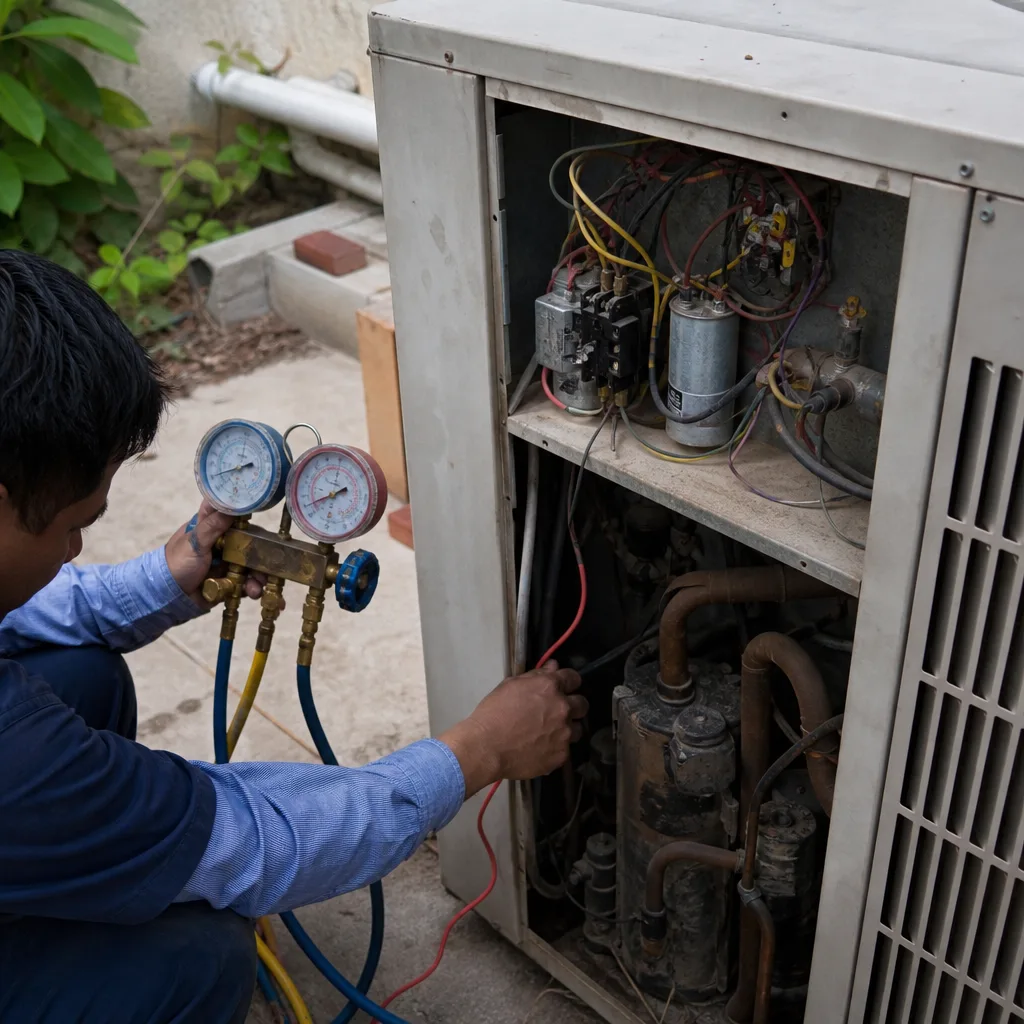 Before
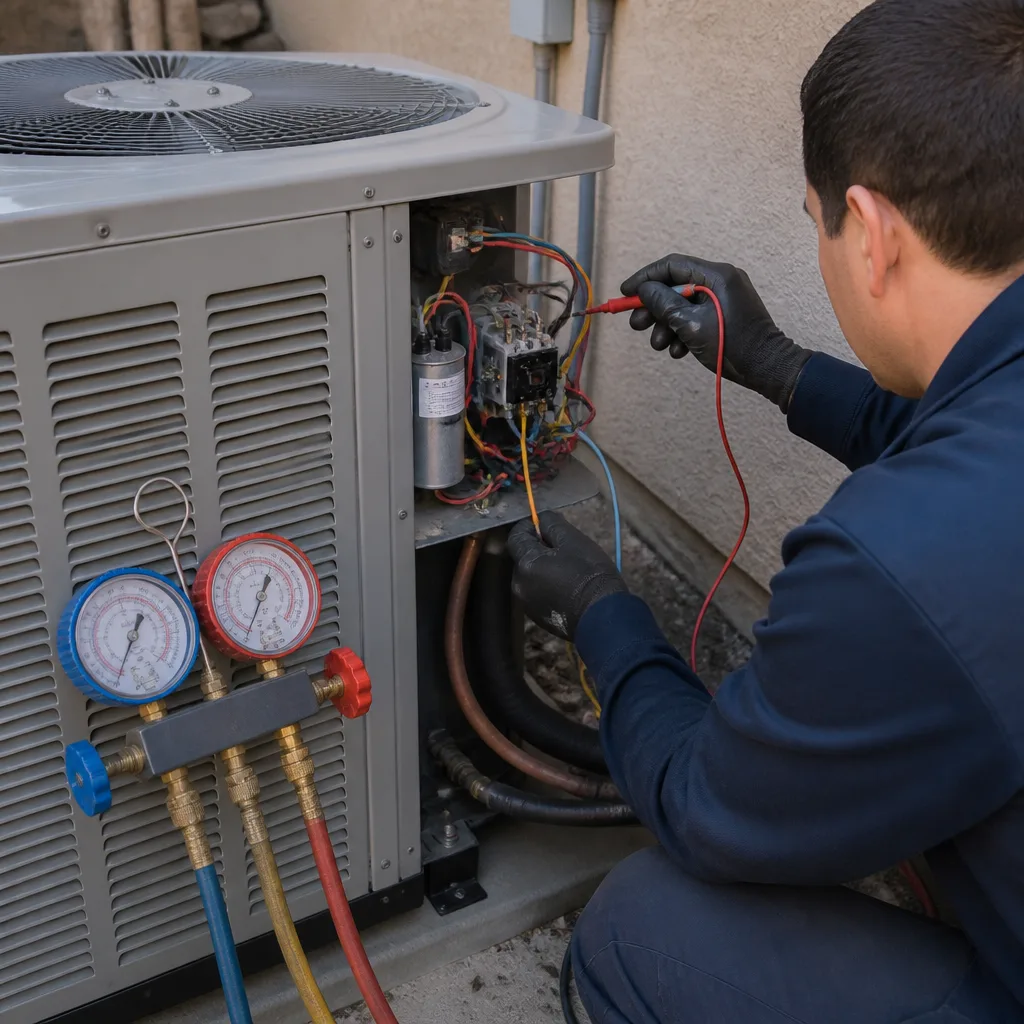 After
After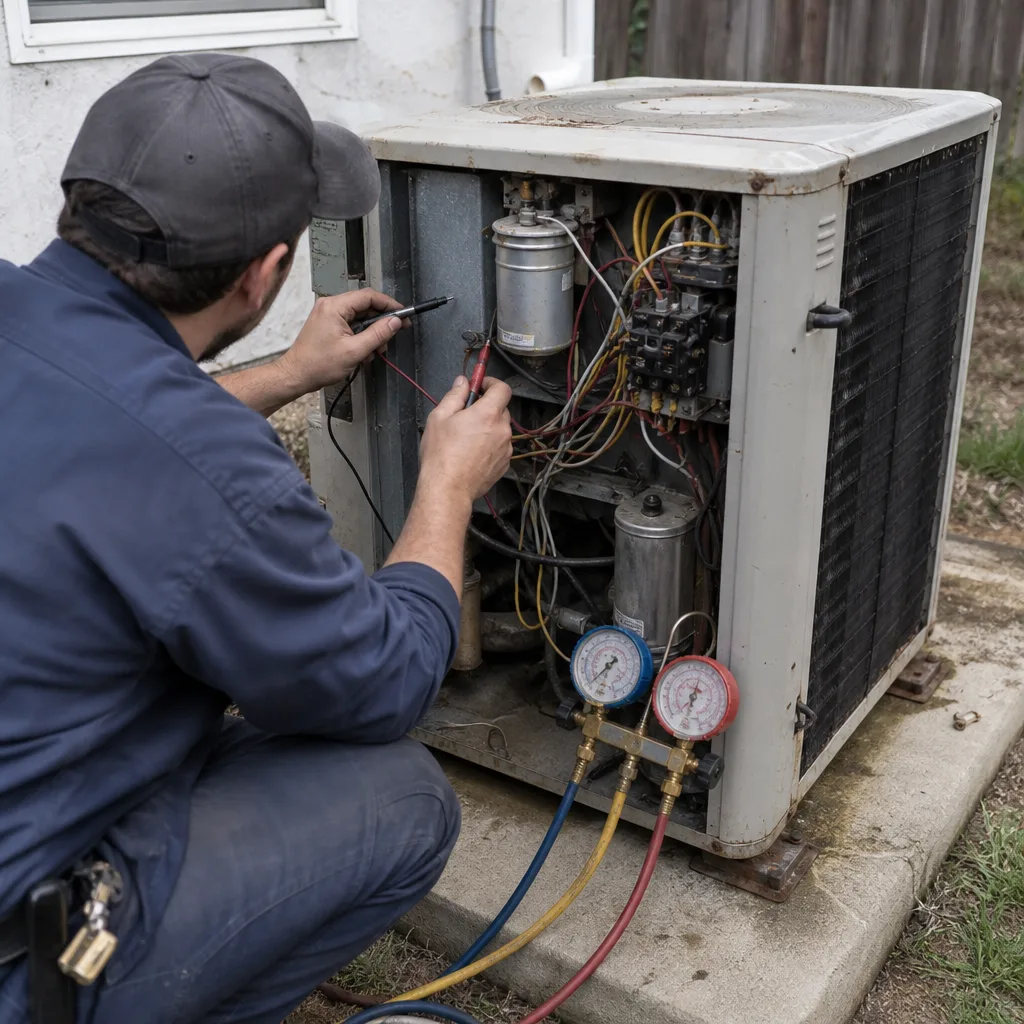 Before
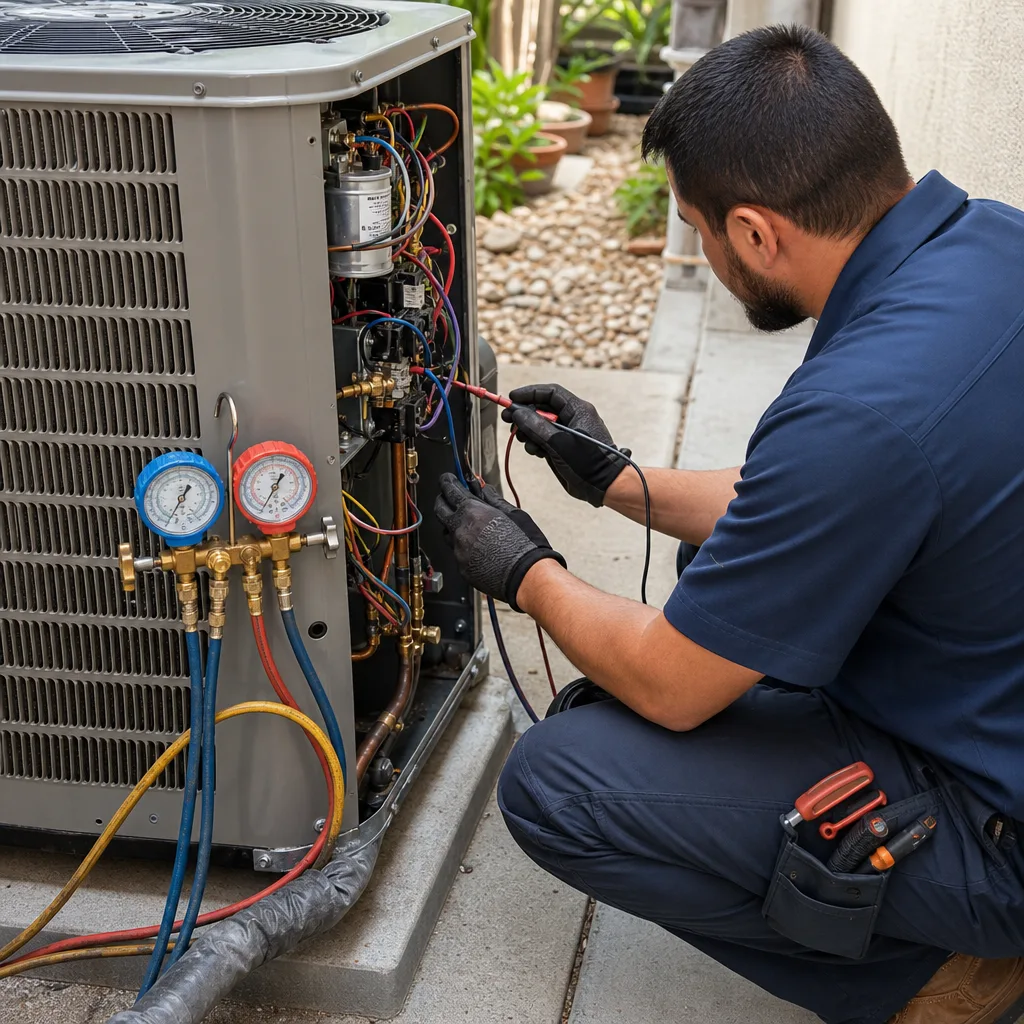 After
After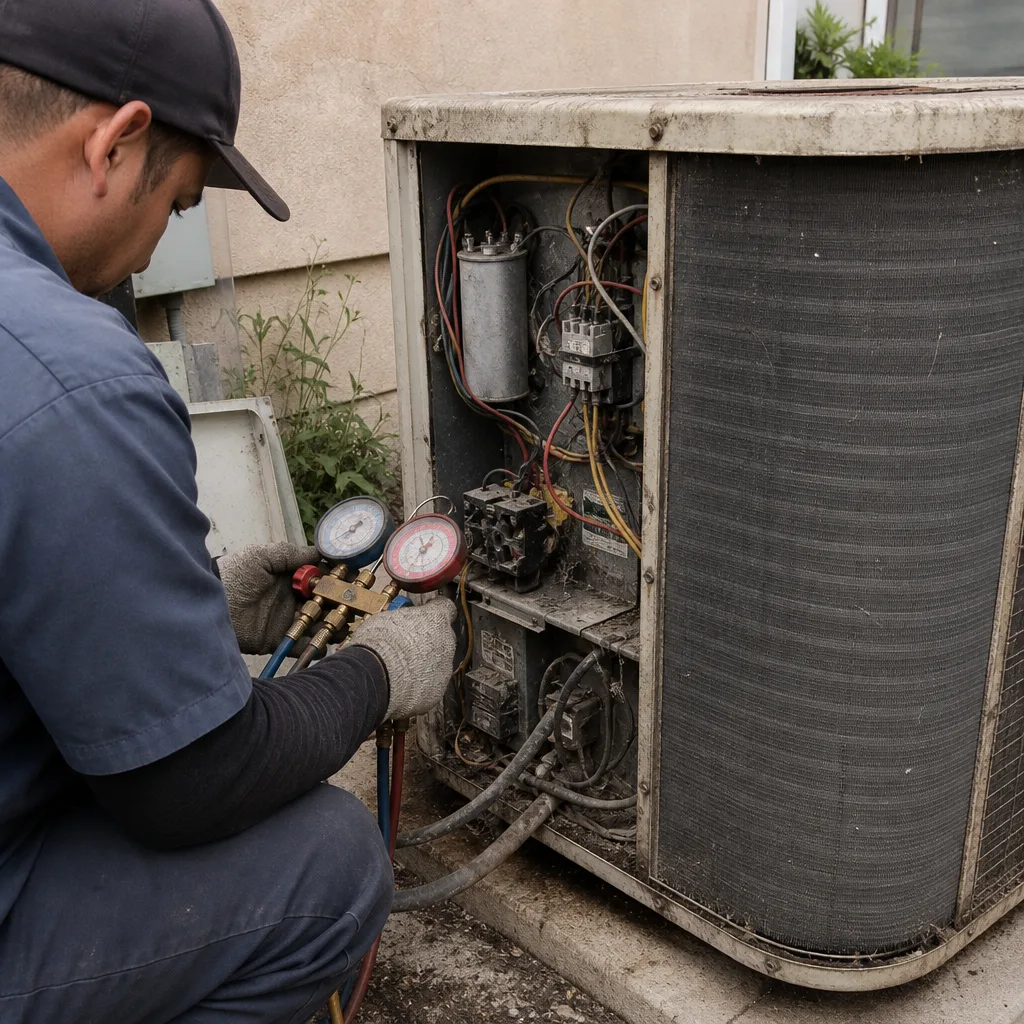 Before
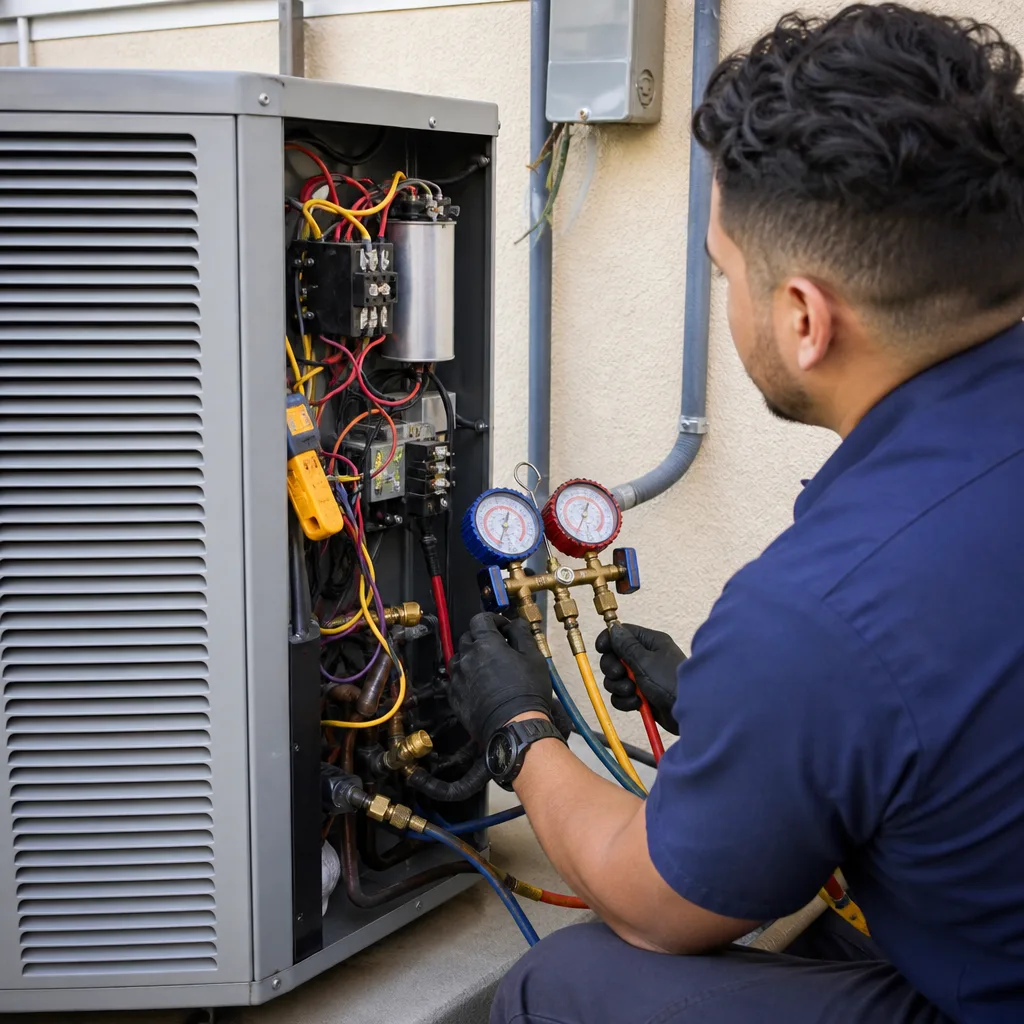 After
After