
Last updated October 16, 2026
 AC repair
 Furnace & heating
 Heat pumps
 Ductless mini splits
 Carrier
 Trane
Trane Goodman
Seasonal tune-up and full diagnostic on your Carrier, Trane, or Goodman system - readings shown to you before any repair is proposed
Diagnosis first, numbers second - you approve the repair price before a single part goes in.
Get your free estimateHVAC Warning Signs: A San Diego Homeowner’s Reference Guide
Most HVAC warning sign guides read like a parts catalog: rattling means this, humming means that. The problem is, nobody tells you which sounds and smells mean shut the system down this minute and which ones can wait until your next paycheck. A refrigerant hiss behind your condensing unit and a refrigerant smell at your supply vents are different emergencies in different places, and treating them the same either panics you unnecessarily or lulls you into ignoring something that becomes a $4,000 compressor job by Labor Day. This guide-along with our Complete Guide to HVAC in San Diego-covers the warning signs that actually show up in San Diego homes, from clairemont to Chula Vista, with a plain-English urgency rating for every one of them. By the end, you’ll know what to shut off, what to photograph, what to write down, and what to tell the person on the phone.
Styles & brands we work with
Quick Answer
The HVAC warning signs you should never ignore in a San Diego home are: ice or frost on any refrigerant line or indoor coil, a burning or electrical smell from the vents, any sound that resembles grinding or clanking metal, a system that turns on and off every few minutes, water pooling around the indoor unit, and any refrigerant smell inside the living space. If you notice frost, burning smells, clanking, or indoor refrigerant odor, turn the system off now and call a professional. Everything else can wait a few days but should not be ignored for more than a week. Most of these failures cost under $450 to fix if caught early, versus $1,800 to $4,500 once the compressor or heat exchanger gives out.
Table of Contents
- The Urgency Tier System: Shut Down, Schedule, Watch
- Sounds That Mean Something: What You’re Actually Hearing
- Smells That Matter: Refrigerant, Burning, and Musty
- Ice and Frost: The July Freeze-Up Explained
- Short-Cycling: The Most Expensive Habit Your AC Has
- San Diego-Specific Symptoms: Humidity, Salt Air, and Coastal Mold
- How to Document Symptoms Before the Technician Arrives
- Warning Signs That Are Actually Contractor Red Flags
- Common Mistakes to Avoid
- When to Call a Professional
- Frequently Asked Questions
- The Bottom Line
The Urgency Tier System: Shut Down, Schedule, Watch
Every HVAC symptom falls into one of three buckets. The first is Shut It Down Now: turn the system off at the thermostat and, if you’re comfortable doing so, at the breaker, then call a professional. The second is Schedule This Week: keep using the system but make a call within the next few days. The third is Watch and Log: start a note on your phone, jot down what you saw, and check again in a couple of weeks. Here’s how the common signs sort out.
Shut It Down Now: any burning or electrical smell from the vents, a grinding or clanking sound from either unit, ice on indoor coils, refrigerant smell inside the home, water dripping from the ceiling near the indoor unit, or a thermostat that’s showing the house at 85 degrees when the system has run all day. These either carry fire risk, compressor risk, or air-quality risk. A burning smell inside an air handler is often the blower motor overheating, and every hour it runs is one hour closer to melted wire insulation.
Schedule This Week: weak or uneven airflow from some registers, a hissing sound outside, a slight musty smell on startup, water pooling around the outdoor unit (as opposed to the indoor one), a thermostat two or three degrees off, or a monthly electric bill that jumped $60 with no change in usage. These are early-stage issues you can catch with an AC Repair Maintenance Checklist for San Diego Homeowners. A small refrigerant leak, for example, drops efficiency and stresses the compressor. A musty smell is often coil mold, which grows in San Diego’s coastal humidity and spreads through the ductwork.
Watch and Log: a single unusual click at startup that doesn’t repeat, a register that occasionally feels warmer than the others on moderate days, a faint whistle that only happens at 2 a.m., a condensate line that drips more slowly than it used to. Write down the date, time, outdoor temperature, and exactly what you noticed. If it recurs, call. Patterns are diagnostic gold for a technician.
We built this tier system because the most common mistake we see in San Diego is the opposite of the one most guides warn about. Homeowners here tend to under-react. They feel the system limping along, figure San Diego weather is mild enough, and try to nurse it through one more season. By the time we arrive, the capacitor is fried, the compressor is overheated, and a $220 repair has turned into a $3,800 replacement. The tiers exist so you don’t have to be an expert to know when to act.
Sounds That Mean Something: What You’re Actually Hearing
Every AC makes sound. That’s normal. The fan runs, the compressor hums, the condensate pump clicks. The question is which sounds are new, which are loud, and which have a texture that doesn’t belong. Here’s a breakdown of the sounds we hear described most often by homeowners in San Diego, from Mission Valley up to Oceanside.
Hissing. A steady hiss from the outdoor unit usually means refrigerant is escaping through a pinhole leak in a coil or a fitting. If the hiss is inside at the supply vents, that’s a different and more serious sign: refrigerant is leaking into the airflow that enters your living space. The first version is a Schedule This Week issue. The second is Shut It Down Now, because breathing refrigerant is not something to gamble with. A hiss right after a fresh install can also be the equalization of pressure through the expansion valve, but if it’s been months or years since the install, assume a leak.
Grinding or clanking. Metal-on-metal means a bearing has failed in the blower motor, the fan motor, or the compressor itself. The sound travels through the ductwork, so the motor outside might sound like it’s coming from your bedroom. When a bearing loses its lubrication, the shaft wobbles. The wobble wears out the surrounding housing. Let it run long enough and the motor seizes entirely. This is a Shut It Down Now sound. In our experience, catching a failing blower motor bearing before it seizes is the difference between a $350 motor replacement and a $1,200+ repair that includes the cage, wheel, and sometimes the circuit board.
Humming without starting. A deep buzz from the outdoor unit that doesn’t transition into the whir of the fan usually points to a failed start capacitor. The capacitor stores the electrical charge that gets the compressor’s motor spinning. When it fails, the motor just sits there and hums. This is one of the cheapest and most common fixes we do: most capacitor replacements in San Diego run $150 to $280, parts and labor included. The catch is that humming without starting for too long will eventually overheat the motor itself. Give the unit two or three attempted startups max, then shut it off and call. If you have AC repair in San Diego, a technician can confirm the capacitor on site with a multimeter in under ten minutes.
Clicking at startup that repeats. One click is usually a relay. Clicking that repeats every few seconds for a minute or more is often a thermostat, control board, or low-voltage wiring issue. This is Watch and Log territory for one occurrence, Schedule This Week if it becomes a pattern. Take a short video, note the time, and send it to the technician before the visit.
Whistling or screaming. A high-pitched whistle often means airflow is being forced through a restriction, like a dirty filter, closed supply dampers, or undersized ductwork. A scream is a motor at the end of its life. A whistle on a system with a clean filter and open registers is worth a call. A scream is a shutdown.
Rattling. Rattling usually means a panel, a screw, or a piece of insulation has come loose. It’s the least urgent sound on this list, but don’t ignore it forever. Loose panels can allow water ingress, and loose insulation can end up wrapped around a spinning blower wheel.
Smells That Matter: Refrigerant, Burning, and Musty
Odor is the warning sign people most often talk themselves out of. But smell is the only diagnostic signal that works even when you’re in another room and the system is on the other side of the house. Here are the smells that show up in San Diego homes and what each one means.
Burning or electrical odor. A smell like burning plastic, hot wires, or singed dust is almost always an overheating component. In the outdoor unit, it can be a capacitor leaking its dielectric fluid or a compressor motor pulling too many amps. In the indoor unit, it’s usually the blower motor or the control board. Sometimes the smell is just dust burning off the heat strips when the system is run for the first time in the fall. That smell clears in 10 or 15 minutes. A burning smell that doesn’t clear, or that gets worse, means shut the system down and call. Electrical fires in HVAC equipment are rare but real, especially in older San Diego homes where breakers and wiring predate modern load demands.
Refrigerant smell. Modern residential refrigerants like R-410A and R-454B are mostly odorless at low concentrations, but an acrid, sweet, or chemical odor near the indoor vents can indicate a substantial indoor coil leak. This is one of the few truly urgent HVAC smells. Refrigerant displaces oxygen and is heavier than air, which means it pools in low spots. If you smell something chemical and the AC has been running, shut the system down, open windows, and call a professional. The same caution applies to any chemical smell around the outdoor unit, especially if you also hear hissing.
Musty or mildewy. This is the most common smell in San Diego because it’s often a consequence of where we live, not what we did wrong. Coastal humidity means the evaporator coil in your indoor unit stays wet longer than it would in a dry climate. That wet coil is a perfect surface for mold and mildew to grow. A musty smell on startup is often coil mold. In a system with a dirty coil and restricted airflow, the mold spreads into the ductwork, and then the smell comes and goes with the blower. It can also be a clogged condensate drain pan, which holds standing water. A musty smell is a Schedule This Week issue, but if anyone in the household has asthma or respiratory sensitivities, treat it more urgently. For homes along the coast from La Jolla to Point Loma, annual coil-cleaning is not a luxury. It’s the most effective preventative measure available.
Rotten eggs or gas. If you smell rotten eggs near a gas furnace, that’s not the furnace. That’s the mercaptan odorant added to natural gas. Leave the house, don’t turn anything on or off, and call SDG&E from outside. This is the only item on this list where the HVAC company isn’t your first call. After the utility clears the property, schedule a furnace inspection.
Ice and Frost: The July Freeze-Up Explained
It’s 78 degrees in July in San Diego, and your air conditioner has ice on it. It’s counterintuitive, but ice on an AC is never a sign that the system is cooling really well. Ice is a sign that the system is starving for heat absorption, and in a properly functioning AC, the refrigerant absorbs heat from your indoor air. When it can’t absorb enough heat, the coil temperature drops below freezing and the moisture in the air turns to ice.
In the San Diego climate, a frozen indoor coil in the middle of summer is almost always one of three things: low refrigerant from a leak, a dirty air filter, or a blower motor that isn’t moving enough air. Low refrigerant is the most common cause when the filter is clean and the blower is running normally. A refrigerant leak means there’s less cooling fluid in the lines, which means the coil gets colder than it should, which means ice. The ice itself then restricts airflow further, which makes the coil even colder. It’s a death spiral.
What to do:
- Shut the system off at the thermostat.
- Turn the fan setting from Auto to On. This runs warm indoor air over the frozen coil and melts the ice. Do this for a few hours. Don’t try to chip the ice off. You’ll puncture a coil.
- Check the air filter. If it’s clogged with dust or pet hair, replace it.
- If the filter is clean, you’re almost certainly looking at a refrigerant leak. Call a professional. Most leak searches and repairs in San Diego run $350 to $650, depending on where the leak is. Top the repair off and it’s done. Skip the leak search and just recharge the system and you’ll be back in the same place by August.
We see frozen coils in every San Diego neighborhood, but the pattern is consistent: those who turn the system off and call us the same day get a leak search and repair. Those who let it keep running while they go to work for three straight days often end up needing a new compressor, because the compressor is pumping against a block of ice and starving for the refrigerant that normally cools its own windings. That repair is rarely under $1,800. The cold harbour in our name comes from a roadside shelter where travelers waited out bad weather; your AC shouldn’t be making its own weather.
Short-Cycling: The Most Expensive Habit Your AC Has
Short-cycling is what technicians call a system that runs in short bursts, usually 5 to 10 minutes at a time, instead of the 15 to 20 minute cycles a properly sized system produces on a San Diego summer afternoon. You’ll hear the compressor kick on, run for a few minutes, and shut off. Then it starts again ten minutes later. The most obvious sign is that the system never seems to satisfy the thermostat, but the house also never gets truly uncomfortable. It’s that limbo state where you keep checking the thermostat and it’s always right around the set point but never exactly there.
The causes are simpler than the symptom seems. The number one cause we see in San Diego is an oversized system. When a system is too big for the house, it blasts cold air, satisfies the thermostat almost immediately, and shuts off before it’s had a chance to actually dehumidify or balance the temperature. The second cause is a refrigerant issue, either low charge or a restriction in the line. The third is a thermostat with a bad temperature sensor or poor placement, like a thermostat mounted on a wall that gets direct afternoon sun.
Why does short-cycling matter? Every compressor startup is the hardest working moment in the compressor’s life. It pulls its highest amps, generates its highest heat, and wears its bearings at their fastest rate. A system that short-cycles eight times an hour is accumulating that startup wear four times faster than a system running two solid cycles per hour. Short cycling also prevents the oil from circulating through the compressor, which means the motor runs dry. And in a place like San Diego, where the AC runs for months at a stretch, short-cycling doesn’t just shorten the compressor’s life. It multiplies your electric bill, because startup power is the most expensive power your system uses.
If you notice short-cycling, here’s the order to check: replace the air filter, make sure the thermostat isn’t in direct sunlight, and check that the outdoor unit is clear of debris and vegetation. If it still short-cycles, call for a diagnosis. A technician checking refrigerant charge and measuring the ductwork’s static pressure can tell you whether the issue is mechanical or sizing related. If it’s an oversized system, a full AC installation in San Diego with proper load calculations is the only real fix. If it’s a refrigerant issue, keep reading.
San Diego-Specific Symptoms: Humidity, Salt Air, and Coastal Mold
San Diego’s climate is famously mild, but mild isn’t the same as easy on HVAC equipment. Three regional factors shape every system’s health here, and they’re all under-discussed in generic HVAC guides written by national content mills. Our Seasonal HVAC Care for San Diego: Year-Round Homeowner’s Guide is built specifically for this climate.
Coastal humidity and coil mold
Homes within a mile or two of the coast in places like Pacific Beach, Ocean Beach, and Carlsbad live with marine layer humidity for a big chunk of the year. That humidity hangs in the air and settles on the indoor coil, keeping it damp for hours after each cycle ends. In a dry inland climate like Poway or El Cajon, a coil dries out in minutes. Here, it stays wet. That’s the whole story with coil mold: same equipment, different microclimate. If you smell a musty odor when the blower first kicks on, and the smell fades within five minutes, that’s classic early-stage coil mold. Schedule a coil cleaning. Ignore it and the mold blooms into the ductwork, which is a much bigger job.
Salt air and outdoor coil corrosion
West of Interstate 5, the marine layer doesn’t just deposit moisture. It deposits salt. Salt accelerates corrosion on aluminum and copper, which are the two metals that make up your outdoor condensing coil. A condensing coil that would last 18 years in Santee might last 10 years in Del Mar, purely because of salt. The warning sign is a coil that develops a white, chalky bloom on the fins at a young age, or fins that flake off when you brush against them. If your outdoor unit lives within sight of the ocean, wash the coil with fresh water once or twice a year using a garden hose on a gentle spray. It’s a small habit that buys years. In our experience, coastal San Diego systems wear out the outdoor coil first, not the compressor.
July freeze-ups are almost never thermostat problems
Here’s the instructive regional thing: a unit that freezes over in July in San Diego is almost always low on refrigerant. Not a thermostat issue, not a control board issue, not a blocked condensate line. The reason is simply that San Diego summer temperatures are high enough to run the system hard, but not so brutally high that a dirty condenser gets the blame the way it would in Phoenix. In Phoenix, a frozen coil in July is sometimes a dirty outdoor coil robbing efficiency. Here, where the outdoor unit runs at relatively low ambient temperatures and the indoor coil still freezes, a refrigerant leak is the overwhelming likelihood. If your filter is clean and the system freezes in July, tell the tech you suspect a leak and ask for a leak search rather than a plain recharge.
How to Document Symptoms Before the Technician Arrives
The single most valuable thing you can do before calling an HVAC company is to write down and photograph what you’re seeing. It saves diagnostic time, which saves you money, and it prevents the most common point of failure in a service relationship: the symptom that disappears the moment a technician pulls into the driveway. AC problems are notorious for being intermittent. The system clanks at night but purrs by morning. Here’s exactly what to capture.
- Record a 30-second video of the sound. Stand near the outdoor unit and record the condenser running. Then stand near the indoor unit and record the blower. Do it at the time the symptom is worst, not after. A rattling stop-start captured on video saves a technician an hour of guessing.
- Photograph the outdoor unit from three angles. The sides, the top, and the electrical disconnect box. Include the model number plate. A photo of the nameplate tells us the age, refrigerant type, and serial number before we ever arrive.
- Log the symptom with conditions. Write down the date, time, outdoor temperature, thermostat setting, and the symptom. “July 14, 9:30 p.m., 71°F outside, thermostat set to 74, condenser hums but fan doesn’t turn” is a complete sentence to a technician.
- Photograph any ice, water, rust, or discoloration. Ice on a coil is photographic evidence of a refrigerant or airflow problem. Water stains on the ceiling below the indoor unit are evidence of a condensate issue. Rust on the coil means salt air corrosion. All of these are diagnostic.
- Write down the system’s age and recent history. If you know the system was installed in 2016, say so. If you had a refrigerant recharge last summer, say so. If a neighbor mentioned their system froze in March, keep that to yourself, but the system’s own history matters.
This documentation habit is worth real money. A technician who arrives with a clear picture of the symptom, a model number, and a history spends their first 20 minutes at your house confirming rather than investigating. That’s the difference between a $180 diagnostic visit and a $180 diagnostic visit plus an extra labor hour on the repair.
Warning Signs That Are Actually Contractor Red Flags
Not every warning sign is coming from your equipment. Some of the most expensive warning signs we hear about in San Diego are behaviors from HVAC companies themselves. A homeowner who recognizes these patterns saves thousands of dollars, because the scam in HVAC is rarely a fake breakdown. It’s a real breakdown paired with a high-pressure sales pitch.
Quote before diagnosis. If a technician hands you a quote for a new system before they’ve opened the unit, measured the static pressure, checked the refrigerant, or pulled the panel off the air handler, that’s a signal problem. A legitimate recommendation requires a diagnosis. We put the price in writing before any work begins, but that written price comes after the diagnosis, not in place of it.
Pressure to replace rather than repair. There are legitimate cases where replacement is the honest answer. A compressor failure on a 14-year-old R-22 system in San Diego often makes replacement more economical than repair. But if the push is immediate, emotional, and paired with financing paperwork the same day, pump the brakes. Ask for the diagnostic findings in writing, including the specific measurements that justify replacement. A legitimate company will happily explain its reasoning.
No written diagnosis. You have a right to know what the technician found and what they measured. A refusal to provide a written diagnosis is a refusal to be accountable. Every repair we do carries a written guarantee that’s valid for 365 days, but the paper trail starts at diagnosis, not at repair.
Price that changes at the door. This is the oldest red flag in the book. The phone quote says one number. The technician sees the system and says another. Sometimes the second number is legitimate, because seeing the system matters. But if the original figure was described as firm and then changes before any work starts, find another company. The Kingswell Way exists because this exact scenario happened often enough that someone decided to put the promise in writing.
Common Mistakes to Avoid
- Running a frozen system. The ice acts as an insulator, but the compressor keeps pumping. The result is liquid refrigerant reaching the compressor, which is destructive. Ice on the coil means shut it off.
- Repeatedly adding refrigerant without finding the leak. Every refrigerant recharge without a leak search is a payment plan for the same failure. In San Diego, the leak is often in the indoor coil, and it won’t fix itself.
- Ignoring a musty smell because it’s “just the house.” The house didn’t smell musty when you bought it. A musty smell that starts after the AC runs is an HVAC issue, full stop.
- Assuming a noisy system is an old system and old systems are just noisy. Systems don’t develop new sounds as a personality quirk. A new sound is a new problem.
- Waiting until the first heat wave to check the AC. In San Diego, the first serious heat wave hits in May or June. Every HVAC company gets slammed at once. Test your system in March or April, when you can get an appointment the same week. A furnace repair in San Diego in October follows the same pattern.
- Calling anyone with a truck and a magnet. California requires C-20 HVAC contractors. A handyman with a van isn’t licensed to touch refrigerant. Ask for the contractor’s license and check it at the CSLB website. State-licensed and insured is the floor, not the ceiling.
- Doing refrigerant work yourself. Refrigerant is regulated by the EPA for good reasons. Adding refrigerant without understanding superheat and subcooling is how you destroy a compressor. This is a job for a trained professional with the right manifold gauges and the right training.
When to Call a Professional
Call a professional if you experience any of the Shut It Down Now signs: burning smell, grinding metal, indoor refrigerant odor, ice on the indoor coil, or water coming from the ceiling near the indoor unit. Call the same week for musty smells, short-cycling, hissing outdoors, weak airflow, or a significant one-month jump in the electric bill. Call to schedule a system check for any Watch and Log symptom that repeats three or more times in a month. Cold Harbour Heating and Air San Diego offers free estimates in San Diego, plus more guides & resources on our blog. Call (619) 793-3598 and a live person will answer, any hour, any day of the year.
Frequently Asked Questions
Urgent means burning or electrical smells, grinding or clanking sounds, ice on the indoor coil, refrigerant odor inside the home, or water leaking through the ceiling. Shut the system down and call a professional immediately. Everything else, including hissing outdoors, musty smells, and short-cycling, can generally wait a few days.
An AC freezes when it can’t absorb enough heat from the indoor air. In San Diego, where ambient temperatures stay moderate, the cause is almost always low refrigerant from a leak, a clogged air filter, or a blower motor that’s not moving enough air. Turn the system off, set the fan to On to melt the ice, and replace the filter. If it still freezes, you have a refrigerant leak.
Usually a deep hum that doesn’t transition into the normal chug of the compressor followed by the fan starting, or a grinding clank that comes from the outdoor unit. A humming compressor that won’t start is often a failed capacitor, which is a $150 to $280 fix. A grinding compressor is usually terminal and points to replacement.
It’s a mold or mildew issue, which is more of a respiratory irritant than a structural danger, but it’s not something to ignore. In San Diego’s coastal humidity, coil mold grows quickly and spreads into the ductwork. Have the coil cleaned and the drain pan checked. If anyone in the home has asthma or allergies, treat it as an urgent maintenance item.
Repair if the system is under 12 years old, the repair cost is under half the replacement cost, and the compressor and indoor coil are still in good shape. Replace if the compressor or indoor coil has failed on an R-22 system, or if the unit is over 15 years old and needs a repair that costs more than a few hundred dollars. Any replacement should be a full AC installation in San Diego with proper load calculations, not a same-size swap.
Most common fixes run in the $150 to $650 range depending on the part and the system. Capacitors, contactors, and small electrical repairs run $150 to $300. Refrigerant leak searches and repairs run $350 to $650. Blower motors run $350 to $700. Compressor replacement runs $1,800 to $4,500, which is why catching problems early matters. Call (619) 793-3598 for an exact quote on your system. Estimates are free.
The Bottom Line
Most HVAC failures in San Diego are not sudden. They’re slow, announced by sounds and smells and ice and short-cycles that a homeowner can spot with no training at all. What separates a $220 capacitor replacement from a $3,800 compressor swap is not knowledge. It’s attention and a willingness to act on the tier system: shut it down, schedule this week, or watch and log. The cold harbour was a place travelers waited out bad weather; your home should be the same. When one of these warning signs shows up, write it down, record it if you can, and call a professional who will put the diagnosis and the price in writing. At Cold Harbour Heating and Air San Diego home, that’s the standard on every job, every time.
Written by Victor Mancini, Owner at Cold Harbour Heating and Air San Diego, serving San Diego since 2003.
See the difference
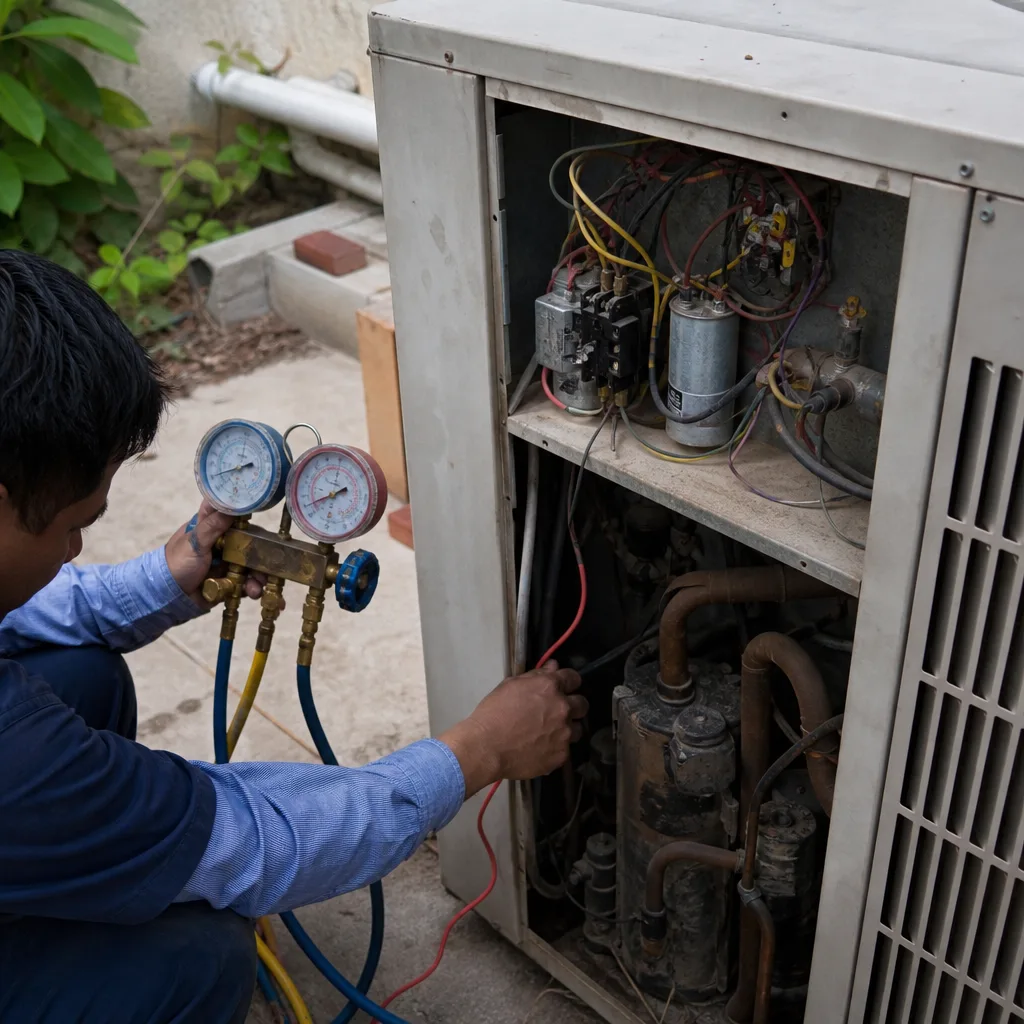 Before
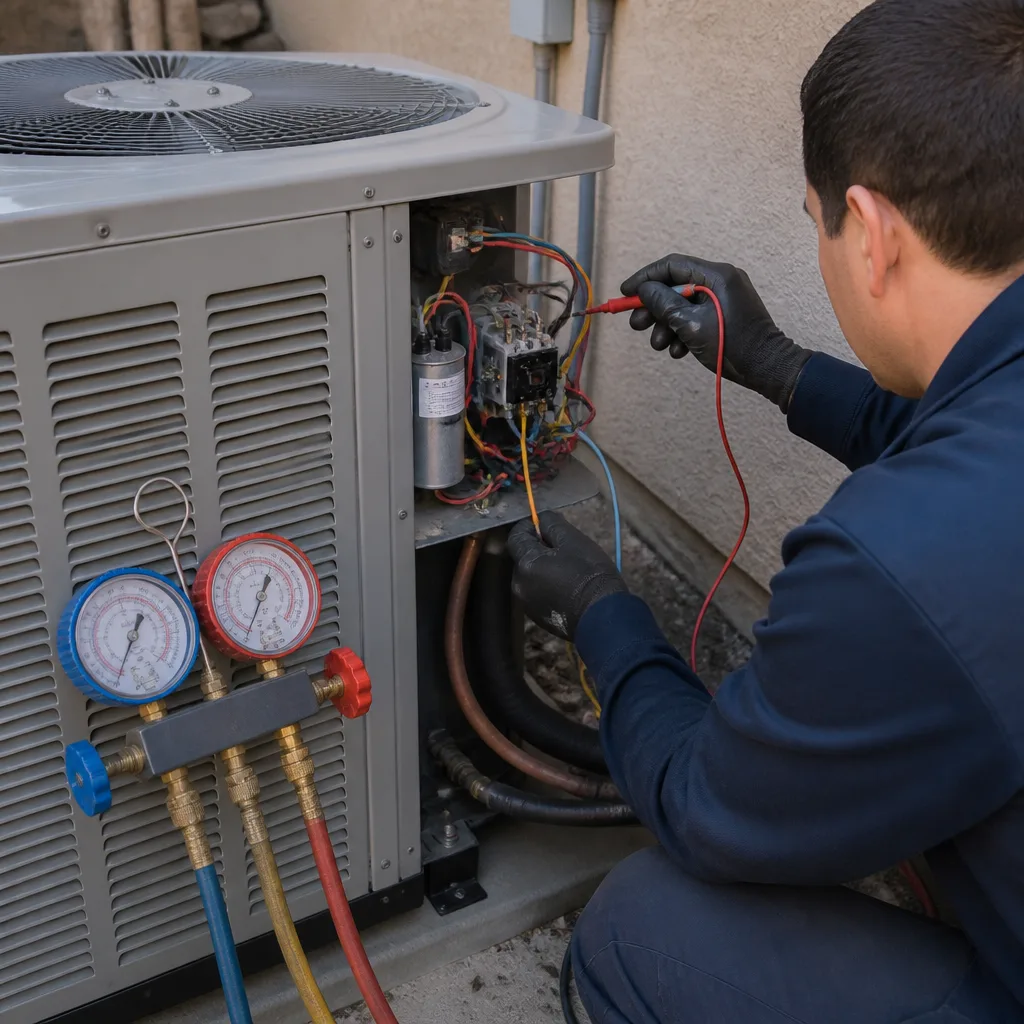 After
After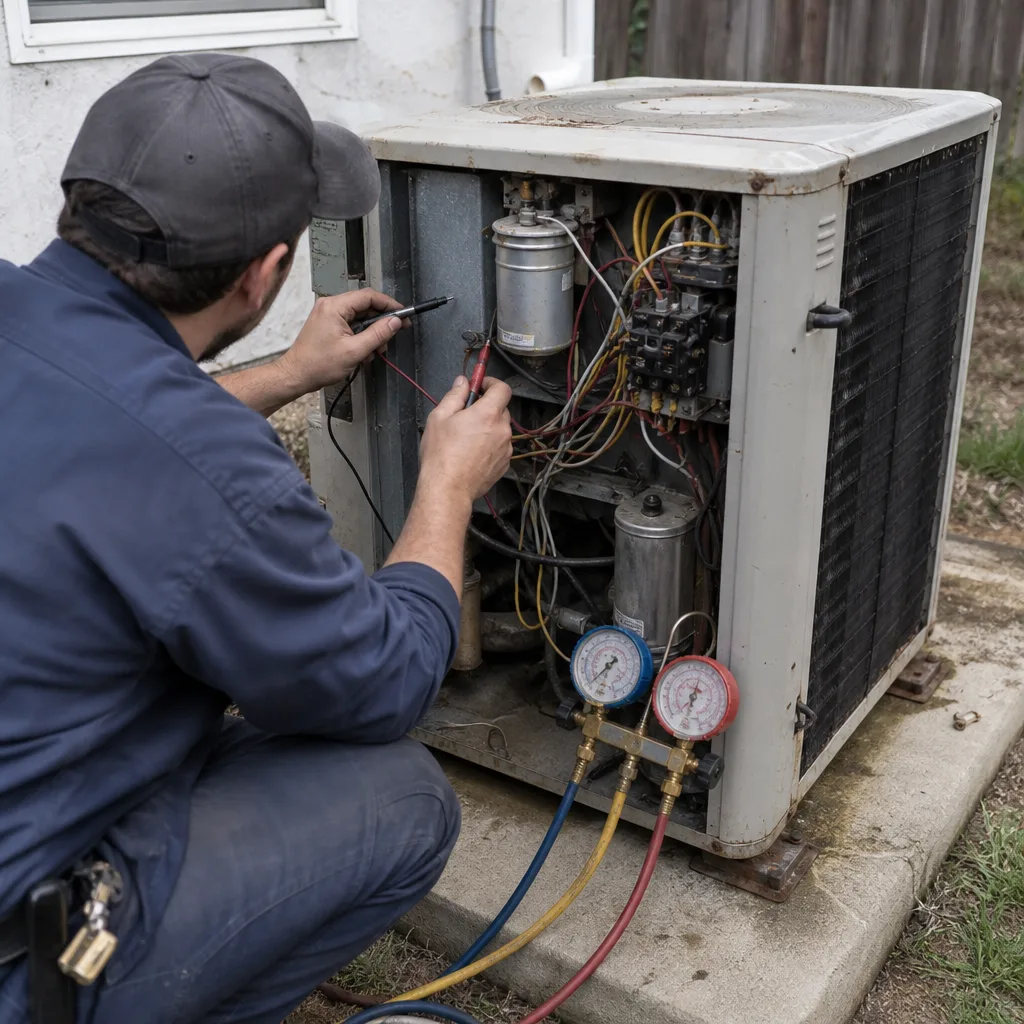 Before
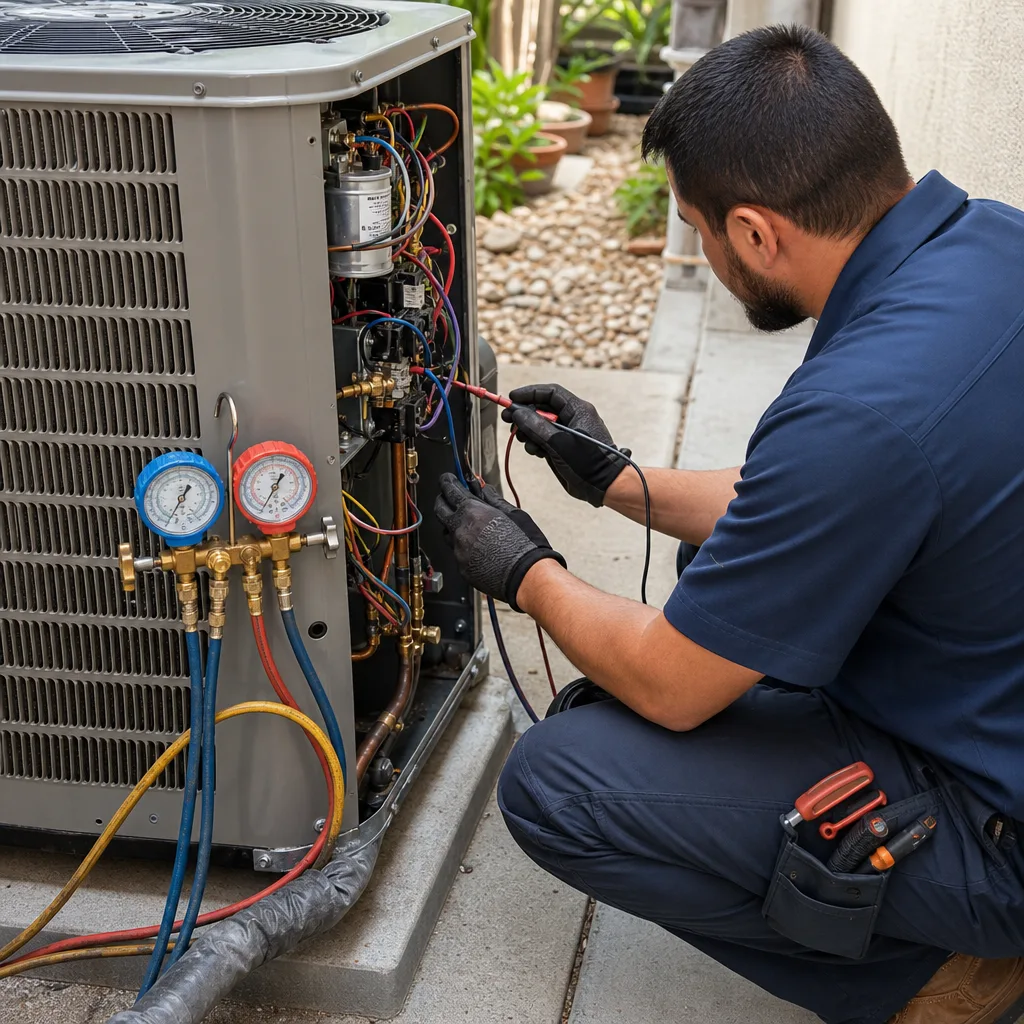 After
After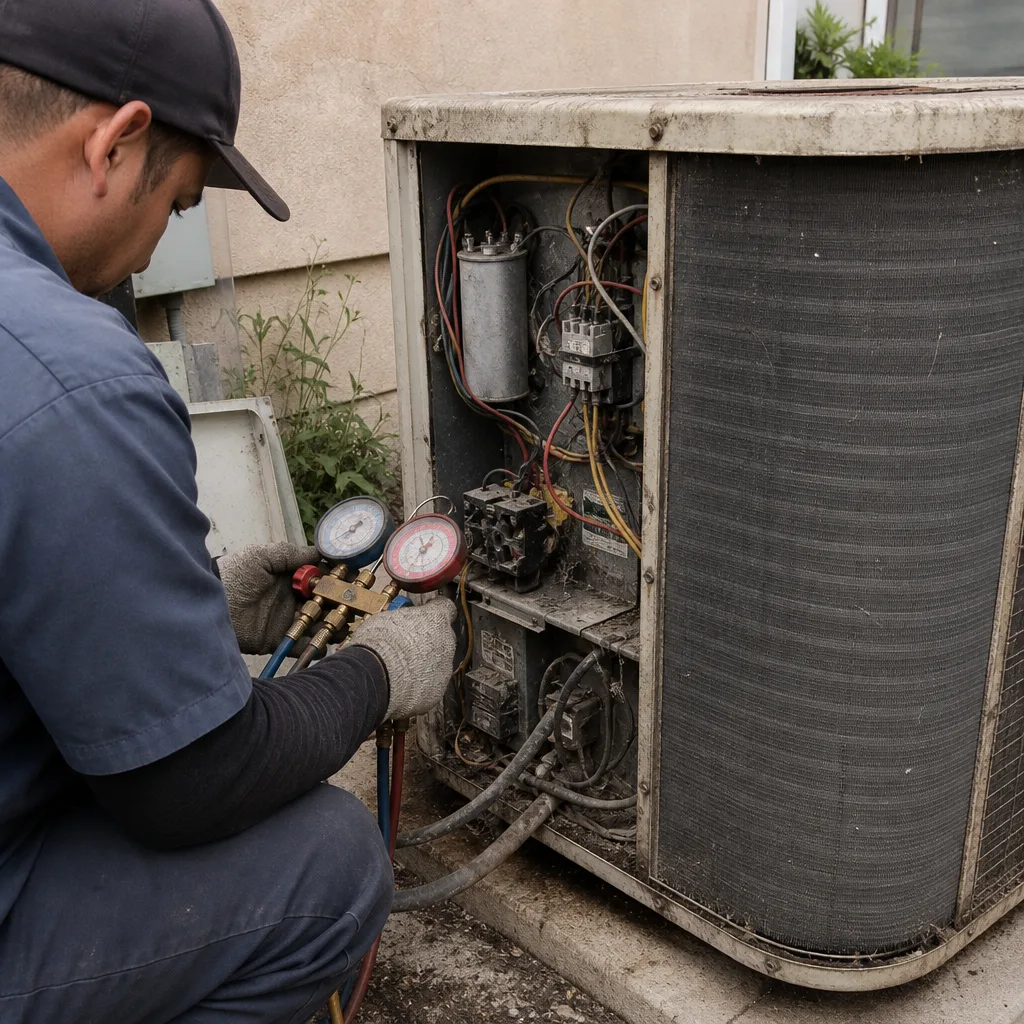 Before
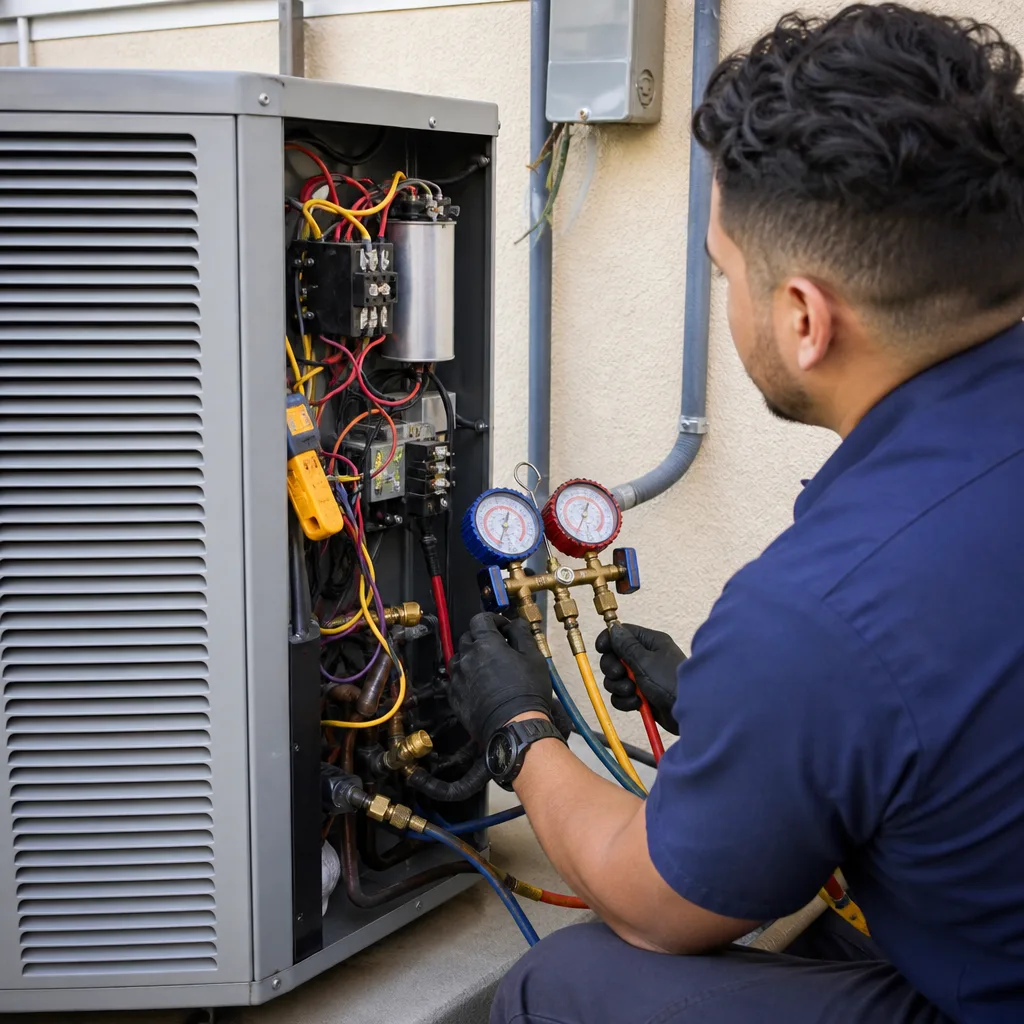 After
After